Cask-It Journal
Highland Park: Why Scotland's Most Northerly Distillery Makes One of Its Greatest Whiskies
Perched on a hill above Kirkwall on the Orkney Islands, Highland Park has been making whisky since 1798. It is the most northerly single malt distillery in Scotland, and in the opinion of Stewart and me, one of the most underrated. Here is why it deserves your full attention.
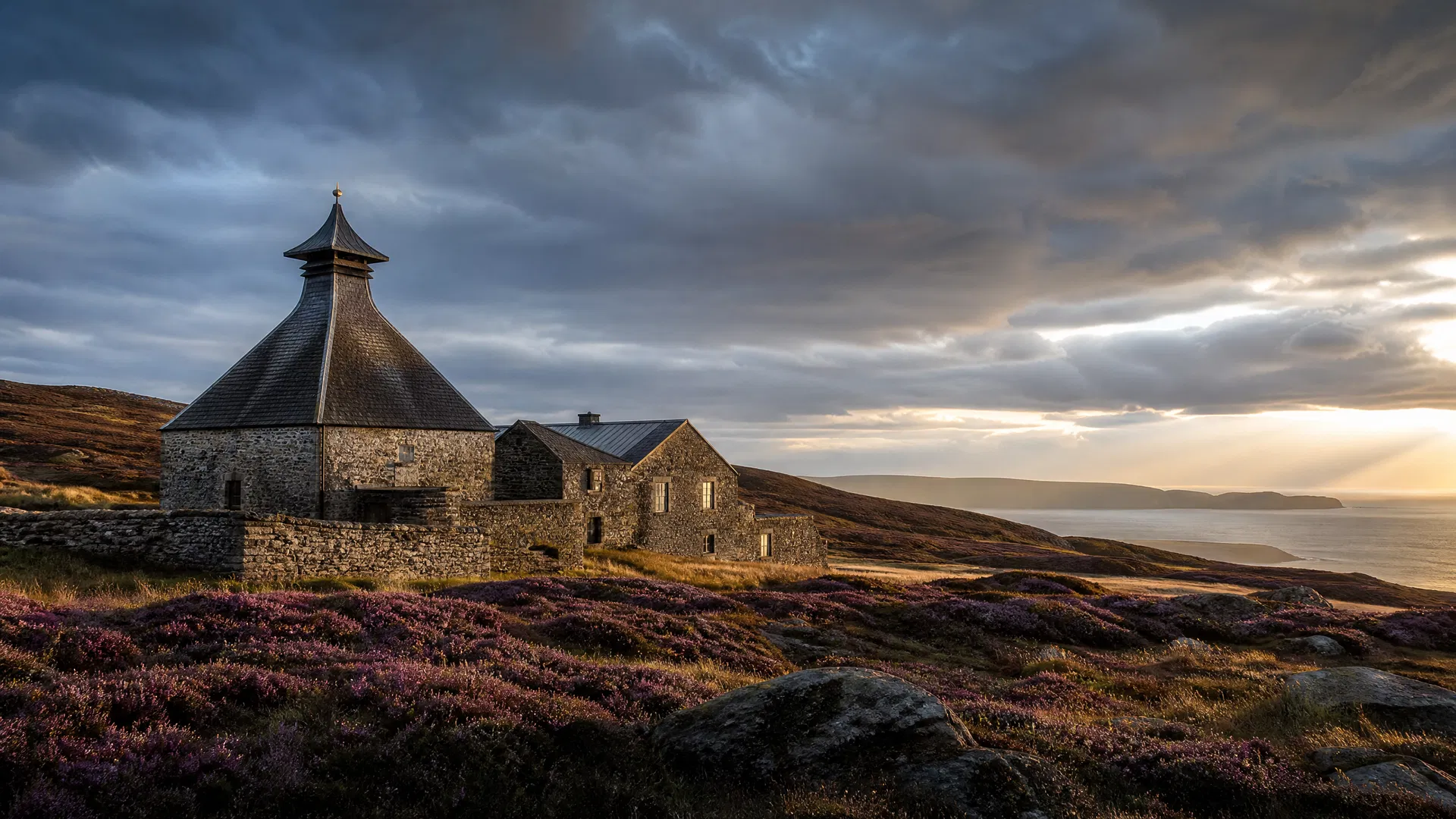
Perched on a hill above Kirkwall on the Orkney Islands, Highland Park has been making whisky since 1798. It is the most northerly single malt distillery in Scotland, and in the opinion of Stewart and me, one of the most underrated. Here is why it deserves your full attention.
I will be honest with you. When I first got serious about Scotch, Highland Park was not on my radar. I was chasing Islay smoke and Speyside sherry like everyone else. It was Stewart who put a glass of Highland Park 18 in front of me and told me to stop talking and start drinking. He was right, as he usually is when it comes to whisky.
The Distillery at the Top of Scotland
Highland Park sits in Kirkwall, the main town on the Orkney archipelago. Orkney is a group of islands off the far north coast of Scotland, closer to Norway than it is to London. To get there, you either fly into Kirkwall Airport or take the ferry from Scrabster or Aberdeen. Neither option is quick. That remoteness is part of the story.
The distillery sits on a hill just above the town, overlooking Scapa Flow, the famous natural harbour that played a significant role in both World Wars. The buildings are low, stone, and weathered. They look exactly like what they are: a working distillery that has been here for over two centuries.
Highland Park was founded in 1798 by Magnus Eunson, a man who was, by day, a butcher and a church officer, and by night, an illicit distiller and whisky smuggler. The story goes that he hid his casks under the pulpit of the church where he worked, knowing that customs officers would be reluctant to search a place of worship. It is the kind of origin story that whisky marketing teams dream about, but in this case it is actually true.
The distillery received its official licence to distil in 1826, nearly thirty years after Eunson first set up his still. It has been in continuous production ever since. Since 1979, it has been owned by the Edrington Group, the same company that owns The Macallan.
The Macallan's Older Sibling
That Edrington connection is worth dwelling on for a moment, because it explains a lot about why Highland Park remains underappreciated. The Macallan is one of the most heavily marketed and collected single malts in the world. It commands enormous prices at auction, it has celebrity endorsements, and it dominates the premium gift market. When Edrington has two distilleries in its portfolio, one of which is The Macallan, the other one is always going to be fighting for attention.
Here is the irony: Highland Park was founded in 1798. The Macallan was not established until 1824, twenty-six years later. Highland Park is the older distillery. It also has a production capacity of 2.5 million litres per year, which is modest compared to the giants of Speyside. That relative scarcity, combined with the lack of marketing noise, means Highland Park punches well above its weight in terms of quality relative to price.
Stewart makes the point that if Highland Park were located in Speyside, it would be considered one of the great distilleries of that region. The fact that it is on Orkney, a place most people have never visited, means it gets overlooked. That is their loss and your gain.
What Makes Highland Park Different
There are two things that set Highland Park apart from almost every other distillery in Scotland. The first is the peat. The second is the floor malting.
Peat is used to dry malted barley, and the character of the peat has a direct influence on the character of the whisky. On Islay, the peat is dense and rich in marine vegetation, lignin from ancient trees, and creosol compounds. That is why Islay whiskies can be intensely smoky, medicinal, and briny. Orkney has no trees. The peat there is composed almost entirely of moss and heather, plants that have been accumulating and compressing on the island for around four thousand years. When you burn Orkney peat, the smoke is lighter, more aromatic, and more floral than anything you get from Islay. It carries the scent of heather rather than the smell of a bonfire.
This heathered peat smoke is what gives Highland Park its distinctive character. The distillery peats its malt to around 30 to 40 parts per million, which is actually higher than many Islay distilleries, but because the peat itself is so different, the result is nothing like an Islay whisky. It is subtle, fragrant, and woven into the spirit rather than sitting on top of it.
The second differentiator is floor malting. Most distilleries in Scotland buy their malted barley from industrial maltsters. Highland Park still malts around 30 percent of its own barley on-site, spreading it across a traditional stone malting floor, turning it by hand with wooden shovels, and drying it in their own kilns over their own Orkney peat. It is labour-intensive, time-consuming, and expensive. They do it because it is the right way to do it, and because it connects the whisky directly to the island it comes from.
Sherry Casks and the Flavour Profile
Highland Park ages its whisky primarily in sherry-seasoned oak casks, sourced from Oloroso sherry producers in Spain. Since 2004, the entire core range has been matured in sherry casks, using both European and American oak. The sherry influence brings dried fruit, richness, and a deep amber colour to the spirit.
What you end up with is a whisky that sits at the intersection of two styles that are usually kept apart. On one side, you have the sherried, fruity richness that people associate with Speyside. On the other, you have the smoke and salinity of the islands. Highland Park brings them together in a way that feels natural rather than forced. It is not a smoke bomb. It is not a fruit cake in a glass. It is both things at once, and the balance is the point.
Stewart describes it as the whisky that converts people who think they do not like peated Scotch. The smoke is there, but it is gentle enough that it does not alarm someone who usually reaches for a Speyside. At the same time, it has enough depth and complexity to satisfy someone who has been drinking Islay malts for years.
The Core Range: Where to Start
Highland Park 12 Year Old is the entry point and a genuinely good whisky for the price. It shows the heathered smoke, some honey and vanilla from the cask, and a light dried fruit character. It is not the most complex whisky in the world, but it is honest and well-made, and it gives you a clear picture of the distillery's style.
Highland Park 18 Year Old is where things get serious. This is the expression that Stewart introduced me to, and it remains one of my favourite drams. The extra six years of maturation deepens everything. The sherry influence is more pronounced, bringing dark chocolate, orange peel, and Christmas cake. The smoke is more integrated. The finish is long and warming. It is a whisky that rewards attention.
Highland Park 21 Year Old takes another step up in complexity and richness. If you can find it, the 25 Year Old is exceptional. It was the first spirit ever to receive a perfect 100-point score at the Ultimate Spirits Challenge, which tells you something about the quality ceiling at this distillery.
For those who want to visit the distillery itself, Highland Park offers a range of tours and tasting experiences in Kirkwall. The most exclusive is a multi-hour session working through expressions from 30 to 56 years old, including the oldest whisky the distillery has ever released. It is not cheap, but for a serious whisky enthusiast, it is the kind of experience that stays with you.
Getting to Orkney
Orkney is not a casual detour. You need to plan for it. The most straightforward option is to fly into Kirkwall Airport from Edinburgh, Inverness, or Aberdeen. Flights are short but can be weather-dependent. The ferry from Scrabster (near Thurso) to Stromness takes around 90 minutes and is a good option if you are already in the far north of Scotland.
Once you are on the main island, known as the Mainland, Kirkwall is the obvious base. The distillery is a short walk from the town centre. Orkney also has extraordinary things to see beyond the whisky: the Ring of Brodgar, Skara Brae, the Italian Chapel, and Scapa Flow itself. If you are going to make the journey, make a proper trip of it.
Scapa Distillery is also on Orkney, just outside Kirkwall. It is a very different style of whisky, unpeated and lighter, but worth visiting while you are there. Two distilleries on one island is a good use of a day.
The Bottom Line
Highland Park is one of those distilleries that whisky people who know it tend to feel strongly about. It has won Best Spirit in the World three times from one of America's most respected spirits critics. It has won the Chairman's Trophy at the Ultimate Spirits Challenge four years running. Its 25 Year Old has a perfect score. And yet it remains, relative to its quality, one of the most accessible and underpriced single malts you can buy.
That will not last forever. Whisky drinkers are getting more adventurous, and the Islands region is attracting more attention. When the wider market catches up with what the enthusiasts already know about Highland Park, the prices will reflect it.
For now, buy the 18. Drink it slowly. Tell people you found it yourself.
Frequently Asked Questions
Is Highland Park a Highland whisky?
Despite the name, Highland Park is not classified as a Highland whisky. It is an Island single malt, produced on the Orkney Islands. The name comes from the area of Kirkwall where the distillery was built, which was historically known as High Park, not from the Scottish Highlands region.
What does Highland Park whisky taste like?
Highland Park has a distinctive flavour profile that combines heathered peat smoke with sherry cask richness. Expect dried fruit, honey, vanilla, and a gentle aromatic smokiness that is lighter and more floral than Islay peat. The 18 Year Old adds dark chocolate, orange peel, and a long warming finish.
How is Highland Park different from Islay whiskies?
The key difference is the peat. Islay peat contains marine vegetation and ancient tree matter, which produces a heavy, medicinal, briny smoke. Orkney peat is composed of moss and heather, producing a lighter, more aromatic, floral smoke. Highland Park is peated to a similar level as some Islay distilleries, but the character of the smoke is entirely different.
Does Highland Park still do floor malting?
Yes. Highland Park is one of the few remaining distilleries in Scotland that still malts some of its own barley on a traditional stone malting floor. Around 30 percent of the barley used is malted on-site, dried over Orkney peat in the distillery's own kilns. The rest is sourced from external maltsters.
Which Highland Park expression should I start with?
Start with the 12 Year Old to understand the distillery's style. If you want to see what Highland Park is truly capable of, go straight to the 18 Year Old. It is one of the best value single malts at its price point and consistently rated among the finest whiskies in Scotland.
Can you visit Highland Park Distillery?
Yes. Highland Park offers distillery tours and tasting experiences in Kirkwall on the Orkney Islands. Tours range from a standard visitor experience to an exclusive multi-hour tasting of aged expressions. Booking in advance is strongly recommended, particularly in summer. The distillery is a short walk from Kirkwall town centre.