
Cask-It Journal
Islay Distillery Self-Drive Tour: The Complete Guide
Islay is the most concentrated whisky island on earth. Eleven working distilleries on one island, each with its own character, its own story, and its own dram. This is how to visit them in one trip.
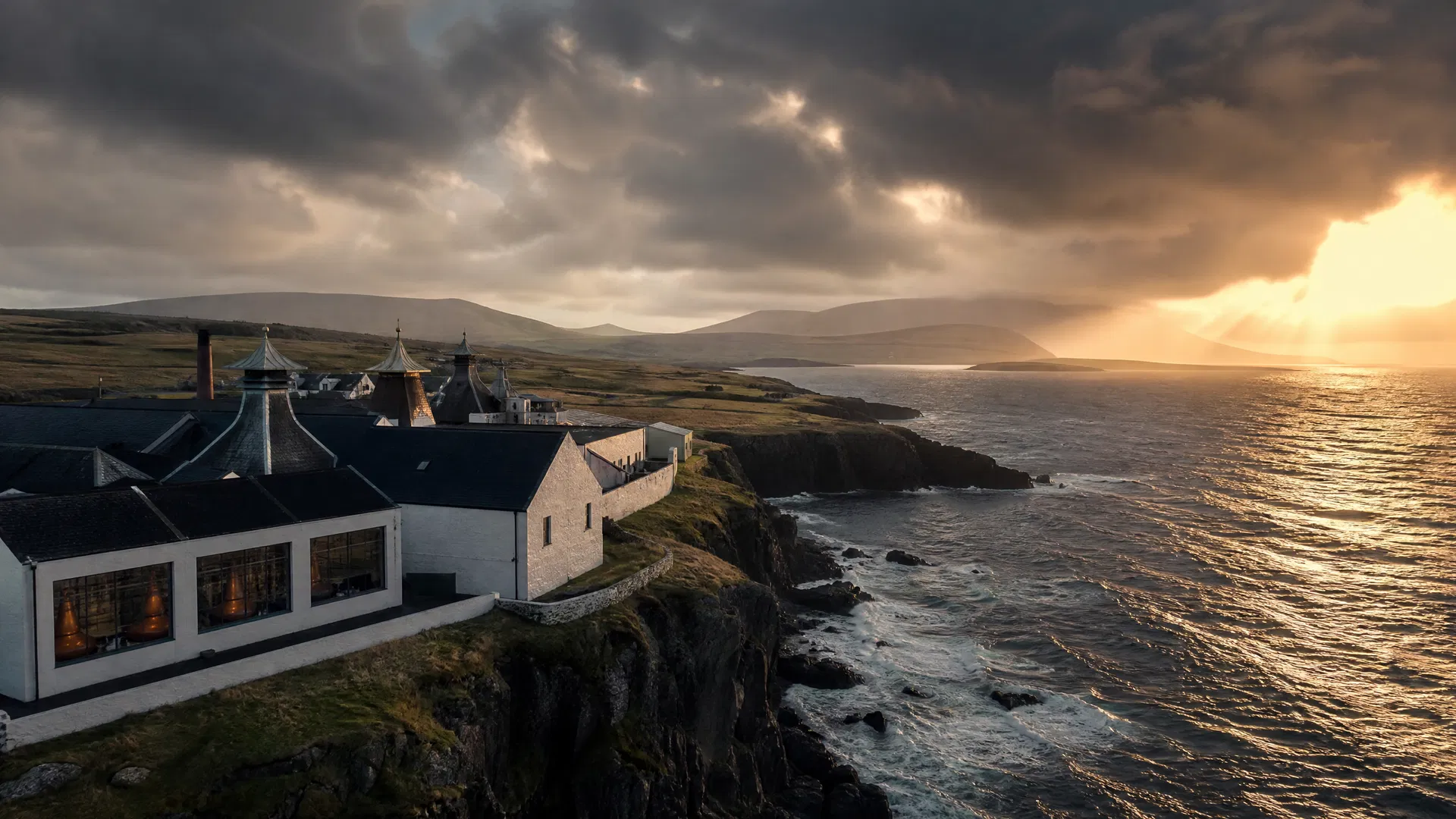
Islay is the most concentrated whisky island on earth. Eleven working distilleries on one island, each with its own character, its own story, and its own dram. You can drive the entire island in under two hours, but you will want to take considerably longer than that.
Stewart and I have put together this guide for anyone planning a self-drive trip to Islay. We have covered the ferry, the route, the distilleries in order, what to book in advance, and what to do when you get there. No fluff, no filler. Just the information you need to make the most of your time on the island.
Getting to Islay: The Ferry
The only way to get a car to Islay is by CalMac ferry from Kennacraig on the Kintyre peninsula. The crossing takes approximately 2 hours to Port Askaig on the north of the island.
Important for 2026: Port Ellen on the south of the island is closed for upgrades until 2029. All ferry traffic currently uses Port Askaig. Book your ferry well in advance, especially in summer. The MV Finlaggan and MV Isle of Islay operate the route, with approximately four sailings daily.
Ferry fares (Summer 2026): Adult passenger single £9.00, return £18.00. Car single £45.40, return £90.80. Book at calmac.co.uk.
From Glasgow, Kennacraig is approximately 2.5 hours by road via Loch Lomond and the A83. From Edinburgh, allow around 3 hours. The A83 through Inveraray is one of the most spectacular drives in Scotland, so leave time to stop.
The Island and the Route
Islay is roughly 25 miles long and 20 miles wide. The main road runs in a rough loop connecting the distilleries, and you can reach every one of them by car on good single-track roads. The island has one main town, Bowmore, which sits roughly in the middle. Most visitors base themselves there or in Port Charlotte.
We suggest a two-day minimum to do the island justice. Three days is better. The distilleries are spread between the south coast, the north coast, and the central belt, so trying to do them all in one day means rushing, and rushing on Islay is missing the point entirely.
The Distilleries
Bunnahabhain
Start in the north. Bunnahabhain sits at the end of a single-track road above Port Askaig, overlooking the Sound of Islay towards Jura. It is one of the most remote and most beautiful distillery settings in Scotland. The whisky is unpeated by Islay standards, producing a rich, sherried, maritime style that surprises people expecting the classic Islay smoke.
The visitor centre is open Monday to Saturday, 10am to 5pm. Tours run daily and the views from the distillery grounds are worth the drive alone, even if you do not go inside.
Cask-It listing: Bunnahabhain Distillery
Caol Ila
A short drive south from Bunnahabhain brings you to Caol Ila, another distillery with extraordinary views across to Jura. Caol Ila is one of the largest producers on the island and the backbone of Johnnie Walker Black Label, though the single malt bottlings have built a devoted following of their own. The peating level sits in the middle of the Islay range, producing a lighter, more coastal smoke than the southern distilleries.
The visitor centre offers tours and tastings. Book in advance in summer.
Cask-It listing: Caol Ila Distillery
Ardnahoe
The newest distillery on Islay, opened in 2018 by the Hunter Laing family after 60 years in the whisky trade. Ardnahoe sits on a hillside above the Sound of Islay with views that will stop you in your tracks. The distillery uses the longest lyne arms in Scotland and traditional worm tubs for condensing, producing a spirit with real weight and texture.
The Bholsa expression, an Oloroso sherry cask release, is the one to try. The visitor centre is open Tuesday to Saturday, 9:30am to 5pm. Tours run at 10:30am and 1:30pm daily.
Read our full article: Ardnahoe Bholsa: Islay's Newest Distillery and Its Finest Dram
Cask-It listing: Ardnahoe Distillery
Bowmore
Head south through the island's interior to Bowmore, the island's main town and home to its oldest distillery, founded in 1779. Bowmore sits directly on Loch Indaal, and the No. 1 Vaults warehouse is one of the most atmospheric spaces in Scottish whisky, built below sea level with the tide lapping at the walls.
The 12 Year Old is the entry point and a reliable benchmark for the Islay style: balanced smoke, sea salt, and a hint of dark fruit. The 15 Year Old Darkest, finished in Oloroso sherry casks, is one of the best value whiskies on the island.
The visitor centre is open Monday to Saturday with tours running throughout the day. The Bowmore distillery shop is one of the best on the island for exclusive releases.
Cask-It listing: Bowmore Distillery
Bruichladdich
A few miles north of Bowmore on the shores of Loch Indaal sits Bruichladdich, the most unconventional distillery on the island. Reopened in 2001 after years of closure, it operates with a philosophy of transparency and terroir that sets it apart from every other Scotch producer. All production is bottled on Islay, all barley is Scottish, and a growing proportion comes from Islay itself.
The Classic Laddie is the unpeated core expression. Port Charlotte is the heavily peated range. Octomore is the most heavily peated whisky in the world, consistently over 100 PPM. The visitor centre is excellent, with tours covering the full production process and a well-stocked shop.
Cask-It listing: Bruichladdich Distillery
Kilchoman
Head west to Kilchoman, the only farm distillery on Islay and one of the youngest in Scotland, founded in 2005. Kilchoman grows its own barley, malts it on site, and bottles on the farm. The whole process, from field to bottle, happens within a few hundred metres. It is as close to a true farm whisky as Scotland produces.
The Machir Bay is the core expression, a lightly peated, bourbon-cask-matured whisky that is approachable and well-priced. The Sanaig, finished in Oloroso sherry casks, is richer and more complex. The visitor centre and cafe are open daily, and the farm setting is unlike anywhere else on the island.
Cask-It listing: Kilchoman Distillery
Laphroaig
Back to the south coast and the three legendary distilleries that define the Islay style. Laphroaig is the most famous, producing a whisky that divides opinion more than any other in Scotland. The peat smoke here is medicinal, iodine-rich, and unmistakable. You either love it or you do not, and the people who love it tend to love it deeply.
The 10 Year Old is the benchmark. The Quarter Cask, matured in small casks for faster development, is the one Stewart reaches for. The Lore, a multi-cask vatting, is the most complex expression in the core range.
The visitor centre is open Monday, Tuesday, Thursday, and Friday from 9:45am to 4:30pm. Closed Wednesdays. Book tours in advance. The Friends of Laphroaig programme gives you a square foot of Islay peat bog and a dram when you visit.
Cask-It listing: Laphroaig Distillery
Lagavulin
A mile east of Laphroaig sits Lagavulin, producing what many consider the finest whisky on the island. The 16 Year Old is a benchmark Scotch whisky by any measure: deep, complex, smoky, and rich with dried fruit and dark chocolate from long maturation in ex-sherry casks. The Distillers Edition, finished in Pedro Ximenez casks, is extraordinary.
The visitor centre is open daily. The bay in front of the distillery, with the ruins of Dunyvaig Castle in the background, is one of the most photographed views in Scottish whisky.
Cask-It listing: Lagavulin Distillery
Ardbeg
The last stop on the south coast road is Ardbeg, the most heavily peated of the three southern distilleries and the one with the most devoted global following. The Ardbeg Committee, a loyalty programme with over a million members worldwide, releases exclusive expressions each year. Ardbeg Day, held annually in June, is one of the great events in the whisky calendar.
The 10 Year Old is the core expression and one of the best value heavily peated whiskies in the world. The Old Kiln Cafe at the distillery serves excellent food and is worth a stop even if you are not doing a tour.
Cask-It listing: Ardbeg Distillery
Port Ellen (Pre-booked Experiences)
Port Ellen was one of Islay's great lost distilleries. It closed in 1983, and its remaining stock became some of the most sought-after whisky in the world. Diageo reopened the rebuilt distillery on 19 March 2024, and new spirit is flowing from its Phoenix and experimental stills once again.
Port Ellen is now a genuine visitor destination, but it is a small, premium operation rather than a casual stop. Experiences must be booked in advance, and walk-ins are not accommodated. If Port Ellen matters to your trip, reserve a place early through the distillery's official booking page.
Practical Information
Where to stay: Bowmore is the most central base. The Harbour Inn has excellent rooms and a whisky bar. Port Charlotte Hotel on the west coast is quieter and has a fine dining restaurant. Self-catering cottages are available across the island and are often the best option for groups.
Getting around: A car is essential. The island has limited public transport. Roads are mostly single-track with passing places. Drive slowly, use the passing places correctly, and wave to every car you pass. That is just how it works on Islay.
When to go: May to September is the best weather window. June brings Feis Ile, the Islay Festival of Music and Malt, which is one of the great whisky events in the world but also the busiest week of the year. Book everything months in advance if you are going during the festival.
Book distillery tours in advance: Laphroaig, Lagavulin, Ardbeg, Bruichladdich, and Ardnahoe all fill up in summer. Book online before you travel.
The Islay Airport: Loganair operates flights from Glasgow to Islay Airport (GlenEglinton) if you prefer to fly. The airport is near Bowmore. A car hire is available from the airport.
The Honest Truth About Islay
Islay is not a quick trip. It rewards people who slow down, take their time, and let the island work on them. The whisky is extraordinary, but so is the landscape, the light, the wildlife, and the people. You will see golden eagles if you are lucky. You will definitely see red deer. The beaches on the west coast are as good as anything in Scotland.
Go for at least three days. Book the ferry and the distillery tours before you leave home. Bring waterproofs. And do not try to do all eleven distilleries in one day. The island will still be there tomorrow morning.
Frequently Asked Questions
How do I get to Islay? The only way to take a car to Islay is by CalMac ferry from Kennacraig on the Kintyre peninsula. During the current Port Ellen ferry terminal redevelopment, sailings use Port Askaig. The terminal closure is unrelated to Port Ellen Distillery, which reopened in March 2024. Book at calmac.co.uk well in advance, especially in summer.
How many distilleries are on Islay? Islay has eleven working distilleries: Ardbeg, Ardnahoe, Bowmore, Bruichladdich, Bunnahabhain, Caol Ila, Kilchoman, Lagavulin, Laggan Bay, Laphroaig, and Port Ellen. Port Ellen accepts pre-booked visitors, while Portintruan remains a future project.
How long do I need to visit all the Islay distilleries? A minimum of two full days on the island, but three days is strongly recommended. Trying to do all eleven distilleries in one day is possible but leaves no time to enjoy any of them. Most distillery tours last 60 to 90 minutes including a tasting.
Do I need to book distillery tours in advance? Yes, particularly in summer. Laphroaig, Lagavulin, Ardbeg, Bruichladdich, and Ardnahoe all fill up weeks in advance during peak season. Book online before you travel.
What is the best time of year to visit Islay? May to September offers the best weather. June brings Feis Ile, the Islay Festival of Music and Malt, which is wonderful but very busy. Book everything months in advance for the festival week. Shoulder season (May and September) offers good weather with fewer crowds.
Where should I stay on Islay? Bowmore is the most central base with the most accommodation options. Port Charlotte is quieter and has a good hotel. Self-catering cottages are popular with groups and are available across the island. Book accommodation well in advance for summer visits.