
Cask-It Journal
Uisge Beatha: The 500-Year History of Scotch Whisky
From illicit Highland stills to a global industry worth billions, the history of Scotch whisky is the history of Scotland itself. Here's the story of how a simple spirit became one of the world's great drinks.
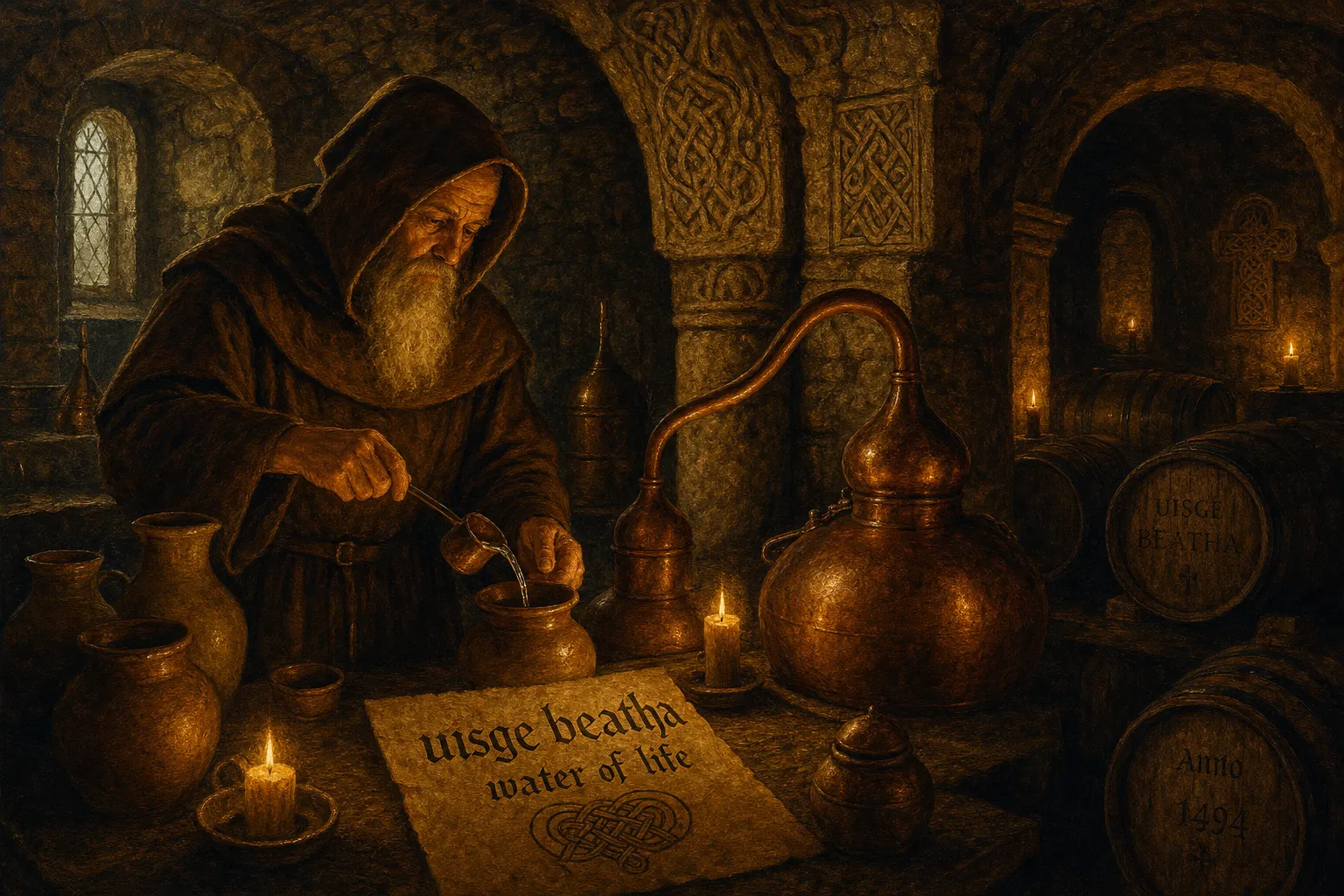
The first written record of Scotch whisky dates to 1494. In the Exchequer Rolls of Scotland, a monk named Friar John Cor of Lindores Abbey in Fife received a royal commission for "eight bolls of malt wherewith to make aqua vitae." Eight bolls of malt would have produced roughly 500 bottles of whisky. Clearly, the king had a taste for it.
But whisky was being made in Scotland long before 1494. The knowledge of distillation came to Scotland from Ireland, brought by monks who had learned the art from Arab alchemists. By the 15th century, distilling was widespread across the Highlands and Islands.
The Age of Illicit Distilling
For most of the 18th century, Scotch whisky was an outlaw spirit. The British government, desperate for revenue after the Act of Union in 1707, imposed heavy taxes on whisky production. The Highlanders responded by moving their stills into the hills and glens, away from the excise officers.
By the early 19th century, an estimated 14,000 illegal stills were operating in Scotland. The government's attempts to suppress illicit distilling were largely futile - the Highlanders were too resourceful, and the demand for whisky too great.
The Excise Act of 1823
The turning point came with the Excise Act of 1823, which made legal distilling economically viable for the first time. The act reduced the duty on whisky and simplified the licensing process. Within a decade, dozens of legal distilleries had opened across Scotland.
The Glenlivet, established by George Smith in 1824, was the first distillery to be licensed under the new act. Its success inspired others, and the modern Scotch whisky industry was born.
The Victorian Boom
The late 19th century was the golden age of Scotch whisky. The phylloxera epidemic that devastated French vineyards in the 1870s and 1880s destroyed the brandy and cognac industries, creating a vacuum that Scotch whisky rushed to fill. Blended Scotch - pioneered by Andrew Usher in the 1860s - proved more accessible than single malts and drove explosive growth in exports.
By 1900, Scotch whisky was being drunk in every corner of the British Empire and beyond. Distilleries were opening at a furious pace. Campbeltown alone had 34 distilleries.
The 20th Century: Boom, Bust, and Revival
The 20th century was a rollercoaster for Scotch whisky. Prohibition in the United States (1920-1933) eliminated the largest export market. Two World Wars disrupted production and diverted grain to food production. The Great Depression crushed demand.
By the 1980s, the industry was in crisis. Dozens of distilleries closed, including iconic names like Port Ellen, Brora, and Rosebank. The "whisky loch" - a massive oversupply of maturing stock - depressed prices and profits.
The revival began in the 1990s, driven by growing demand in Asia and a renewed interest in single malts. Today, Scotch whisky is a global industry worth over £5 billion annually, exporting to 180 countries. And the closed distilleries? Brora and Port Ellen have both reopened. The story continues.
Frequently Asked Questions
What does Uisge Beatha mean?
Uisge Beatha (pronounced ish-keh bah-ha) is the Scottish Gaelic phrase meaning "water of life." It is the origin of the English word "whisky." The Latin equivalent, aqua vitae, was used by medieval monks and scholars to describe distilled spirits, and the Gaelic translation became the common term in Scotland. Over centuries of anglicisation, uisge beatha was shortened first to uisce and then to whisky. The Irish equivalent, uisce beatha, followed the same path to give us the Irish spelling "whiskey."
When was Scotch whisky first made?
The first written record of Scotch whisky dates to 1494, when Friar John Cor of Lindores Abbey in Fife received a royal commission for eight bolls of malt to make aqua vitae. However, distilling in Scotland almost certainly predates this record by many decades. The knowledge of distillation was brought to Scotland by monks from Ireland, who had learned the technique from Arab scholars via continental Europe. The 1494 record is the earliest surviving documentary evidence, not the beginning of the practice.
What was the Excise Act of 1823?
The Excise Act of 1823 was the legislation that transformed the Scotch whisky industry from a predominantly illicit trade into a legal one. Before the Act, the duty on legally produced whisky was so high that it was almost impossible to make a profit, driving most production underground. The Act, championed by the Duke of Gordon and shaped by the work of Philip Ainslie, dramatically reduced the duty and created a licensing system that made legal distilling economically viable. Within a decade, dozens of new licensed distilleries had opened across the Highlands and Lowlands.
Why did so many Scottish distilleries close in the 20th century?
The 20th century brought a series of devastating blows to the Scotch whisky industry. Prohibition in the United States (1920 to 1933) eliminated the largest export market overnight. Two World Wars disrupted production and diverted grain to food use. The Great Depression crushed consumer spending. By the 1980s, a massive oversupply of maturing stock known as the "whisky loch" had depressed prices to the point where dozens of distilleries were no longer economically viable. Iconic names including Port Ellen, Brora, Rosebank, and Littlemill all closed during this period.
Which is the oldest distillery in Scotland?
The oldest continuously operating distillery in Scotland is generally considered to be Strathisla in Keith, Speyside, which has been producing whisky since 1786. Bowmore on Islay, established in 1779, claims to be Scotland's oldest distillery, though the continuity of its operation has been interrupted at various points. Glenturret in Perthshire, which dates its origins to 1763, makes a similar claim. The answer depends on how you define "oldest" and "continuously operating."
How did Scotch whisky become a global industry?
The global expansion of Scotch whisky was driven primarily by the rise of blended Scotch in the second half of the 19th century. Pioneers like Andrew Usher, who created the first commercial blended Scotch in the 1860s, and the Johnnie Walker and Chivas Regal brands produced a more consistent, accessible product than single malts. The phylloxera epidemic that destroyed French vineyards in the 1870s and 1880s created a vacuum in the premium spirits market that Scotch rushed to fill. By 1900, Scotch whisky was being consumed across the British Empire and beyond.