
Cask-It Journal
Deanston Distillery: Great Family, Great Fun, Great Whisky
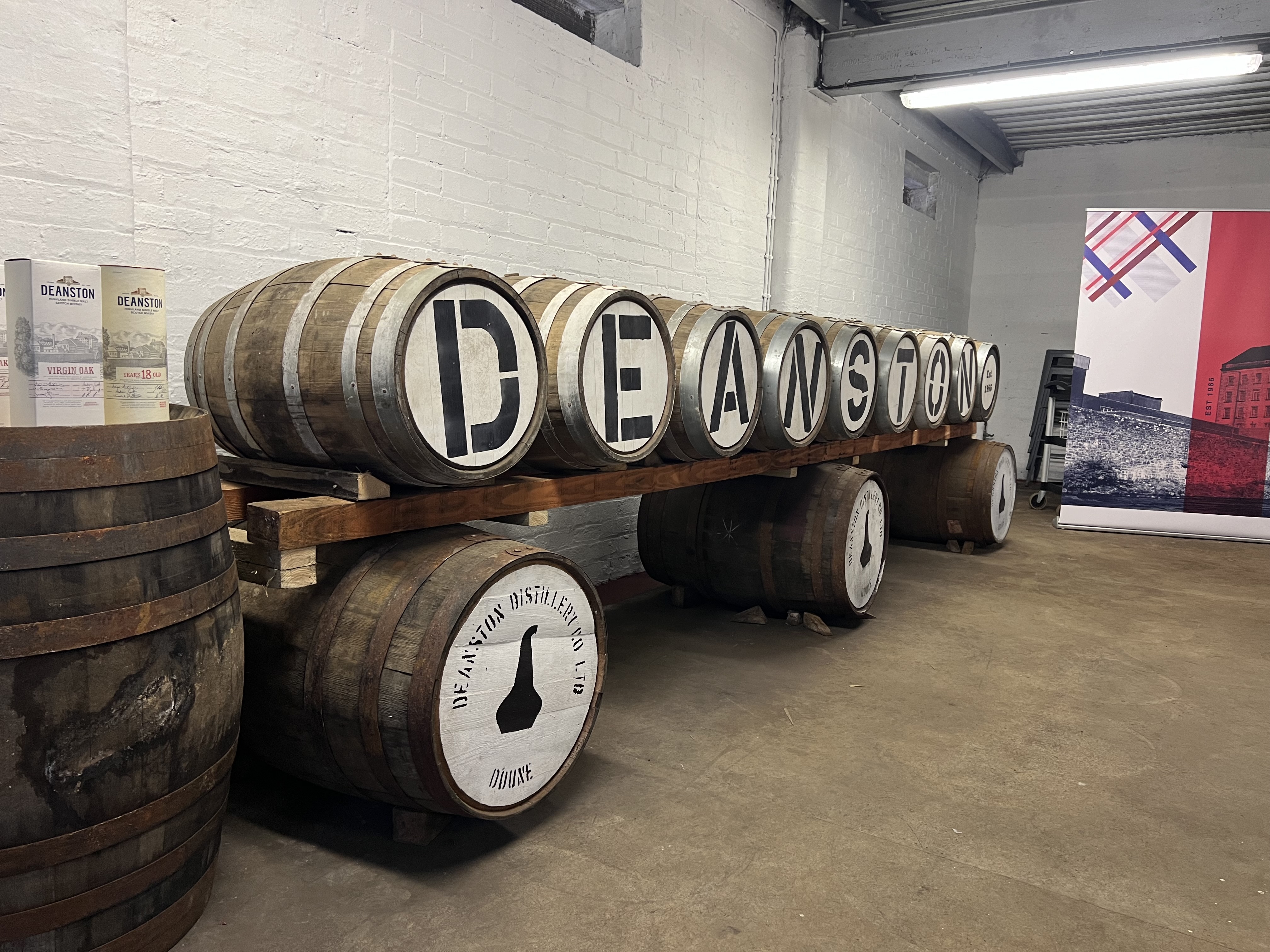
We drove up from Glasgow on a grey Stirlingshire morning, four of us, and what we found at Deanston was one of the best days we have had together. A converted cotton mill, a vaulted stone warehouse, copper stills that fill a room, and a sign on the wall that said everything you need to know about the place.
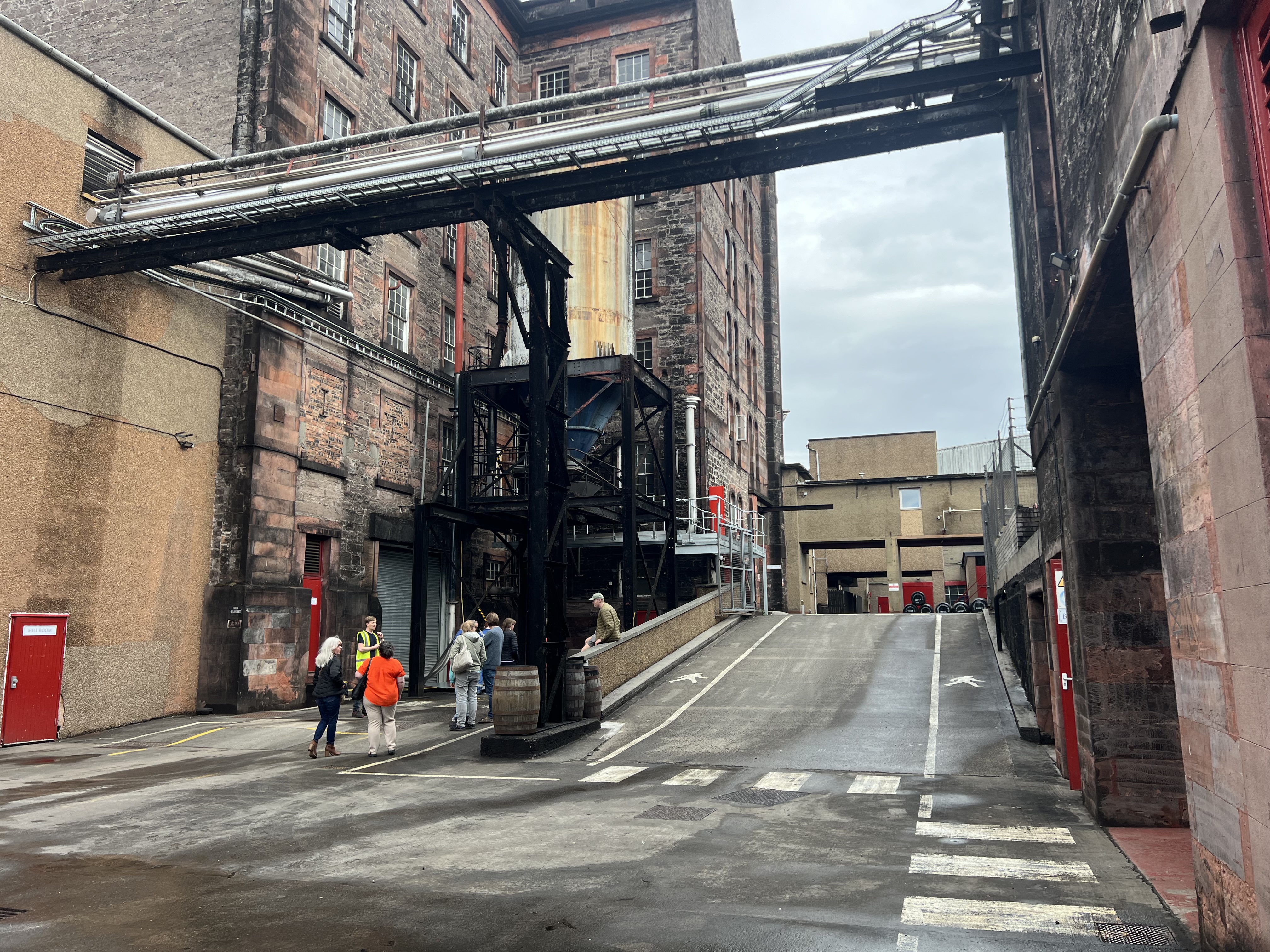
We drove up from Glasgow on a grey Stirlingshire morning. Four of us: me, Anne, her brother Stewart, and his wife Liz. Stewart had organised it, which meant it was going to be done properly. That is just how he operates. He has been in the whisky tour business long enough to know the difference between a visit and an experience, and he does not settle for the former.
Deanston sits on the River Teith near Doune, about an hour north of Glasgow. The building is a former cotton mill, built in the 1780s, and it became a distillery in 1965. When you pull into the courtyard and look up at those red sandstone walls and the steel pipe bridges running overhead, you understand immediately that this is not a place that was designed to impress tourists. It was built to work. The fact that it impresses you anyway is just a consequence of what it is.
The Turbine House: Where the Power Comes From
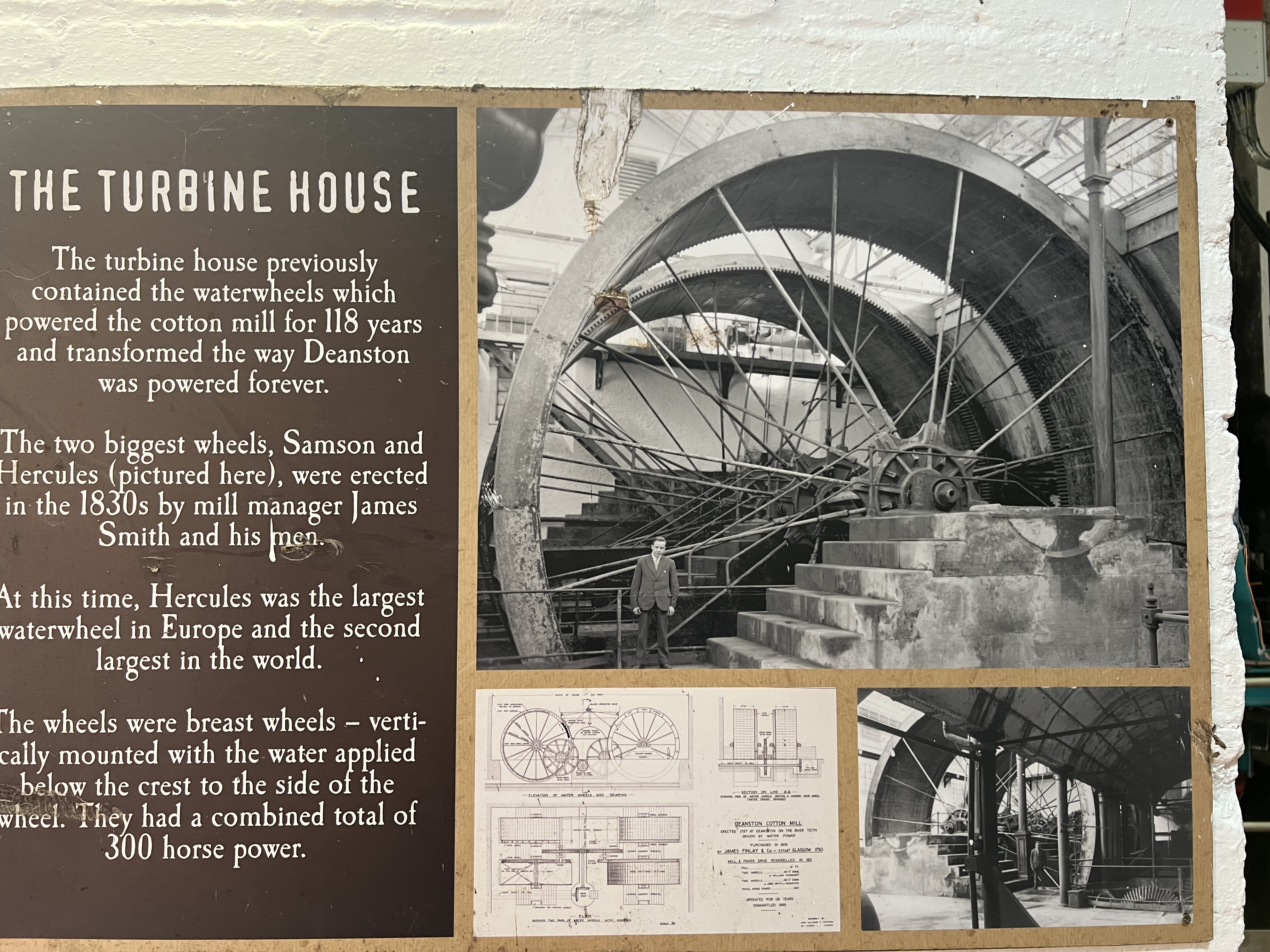
The first thing that stopped me was the turbine house. Deanston generates its own electricity from the River Teith, and they have been doing it in one form or another since the mill was built. The original waterwheels were named Samson and Hercules. Hercules was, at the time, the largest waterwheel in Europe. Three hundred horsepower combined, driving the cotton looms. Now the river drives the distillery.
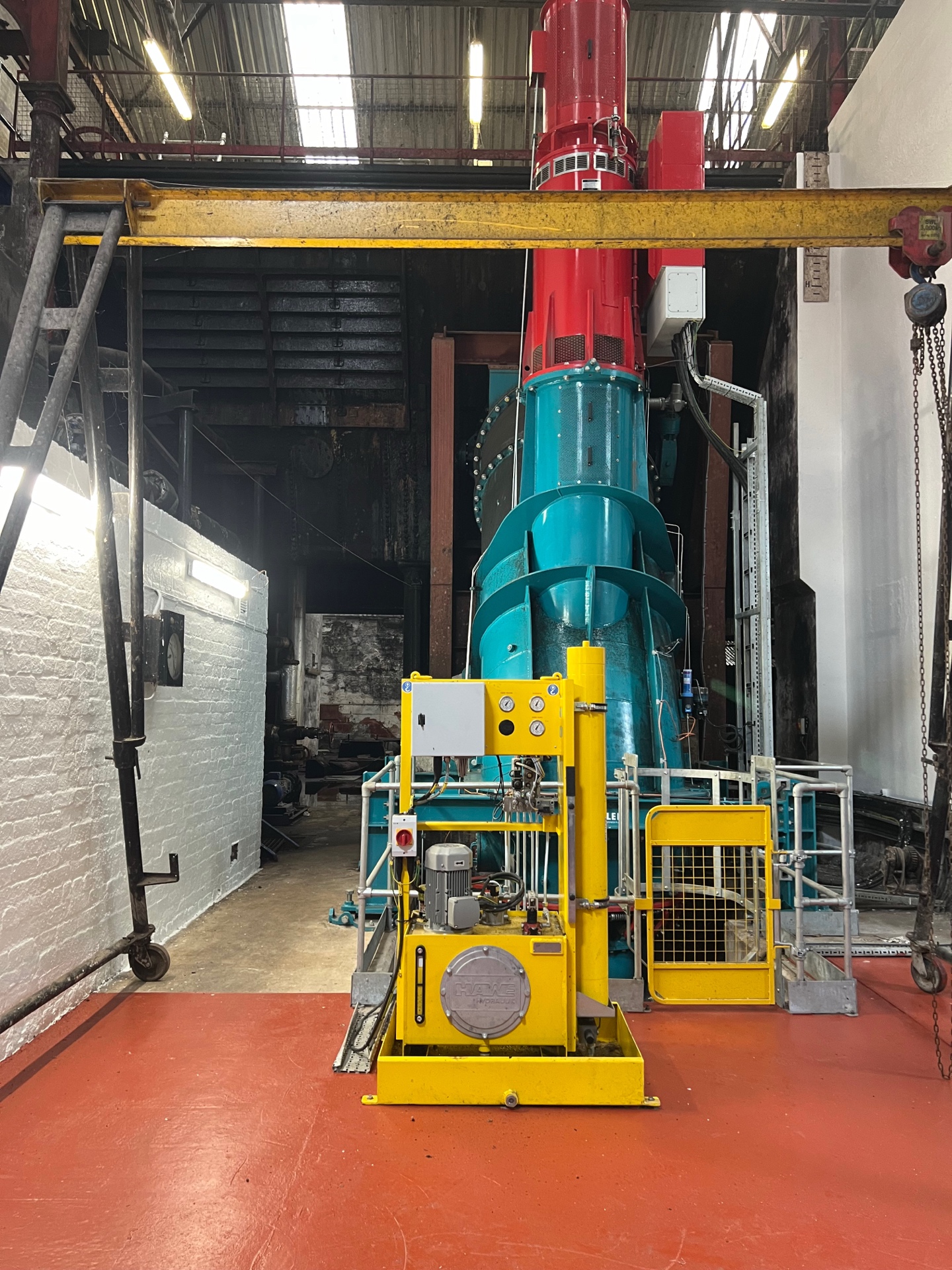
Stewart stood next to the modern turbine and explained what he was looking at to Liz with the patience of someone who genuinely loves this stuff. I took a photo. That is what you do when you are standing next to a teal and red turbine in a room that smells of old iron and river water, knowing that the whisky in your glass tonight was made possible by the same water that has been running past this building for two centuries.
Through the Mash House Door
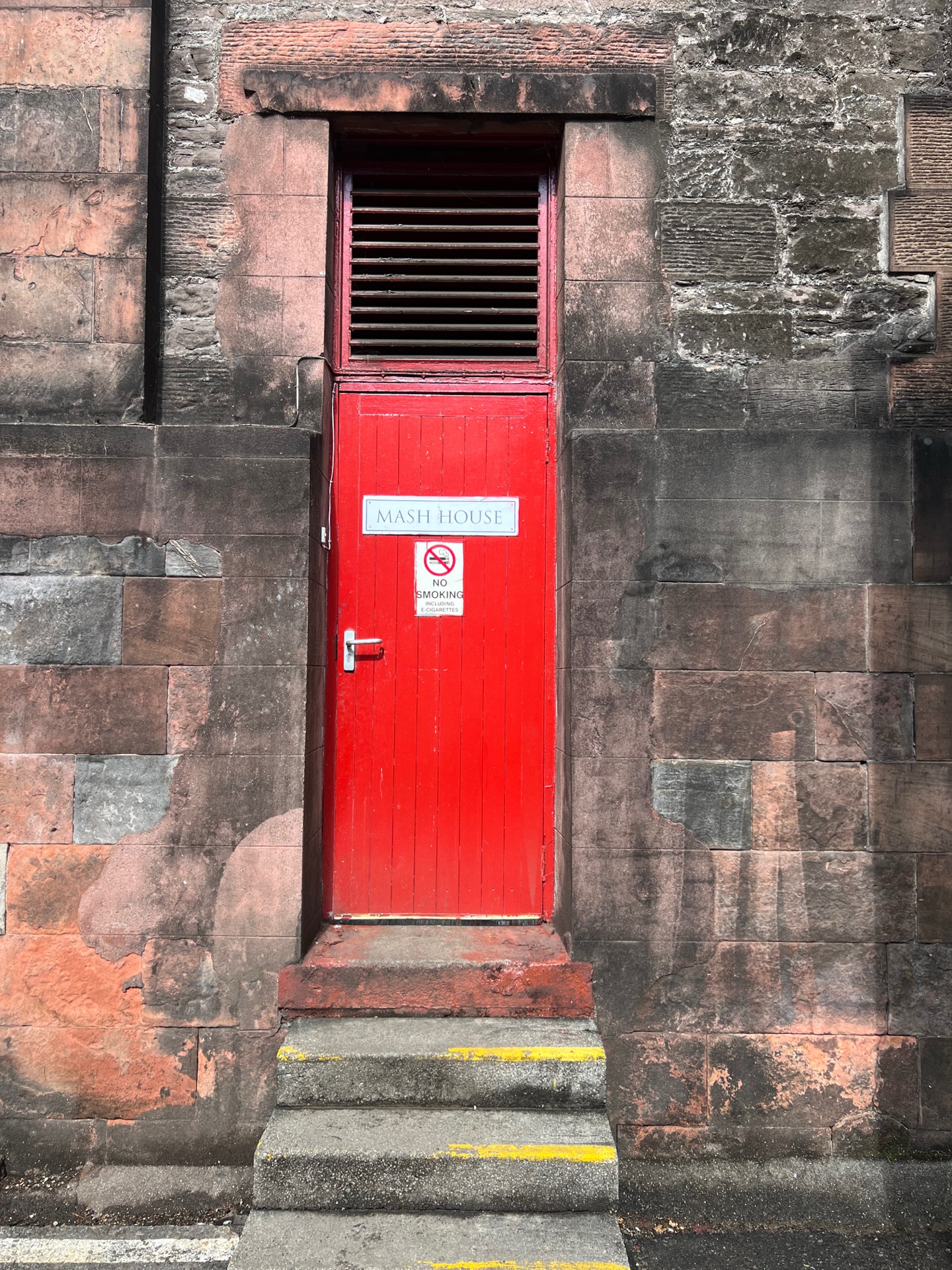
The tour takes you through the production process in order, and Deanston does something clever with it. The walls of the production area are painted dark navy and covered in hand-drawn murals that map out the entire process from barley to bottle. It is the kind of thing that sounds gimmicky until you are standing in front of it and realising that you are actually learning something.
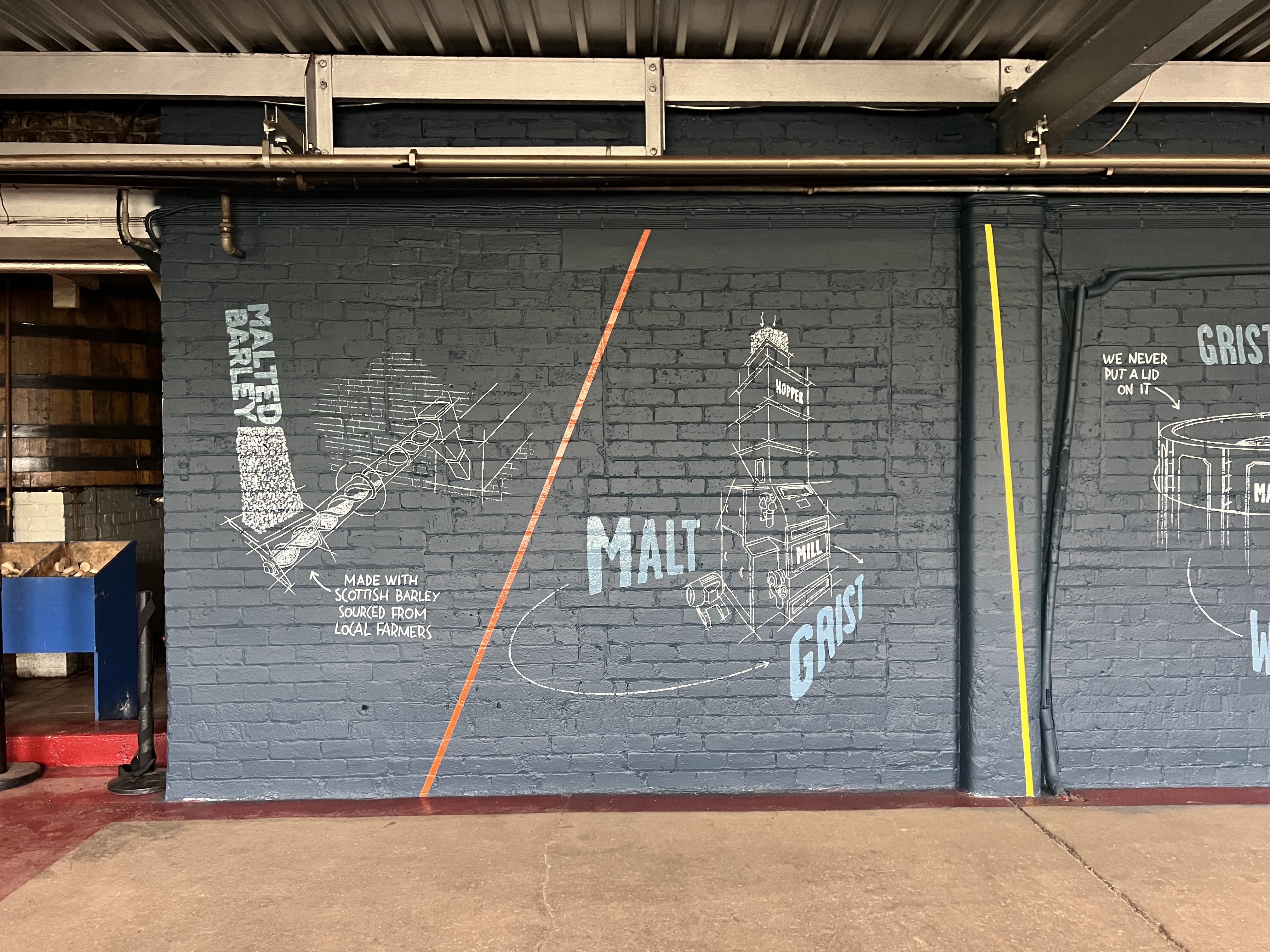
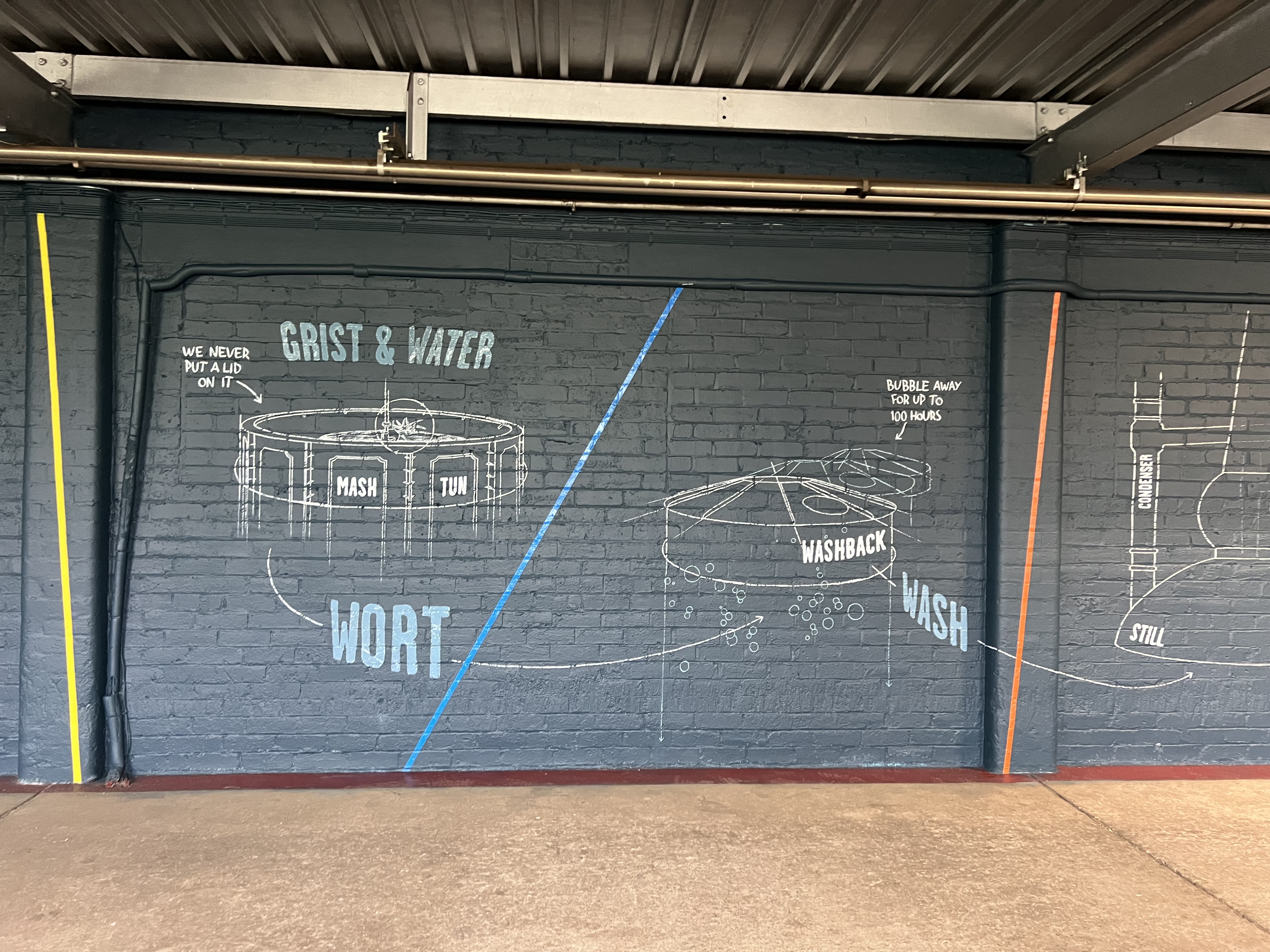
The barley is Scottish, sourced from local farmers. The water is from the River Teith. The process is unpeated, and the spirit goes into casks without chill filtration and without added colouring. What comes out is what the place and the ingredients produce. That is the Deanston philosophy, and you can taste it.
The Washbacks and the Stills
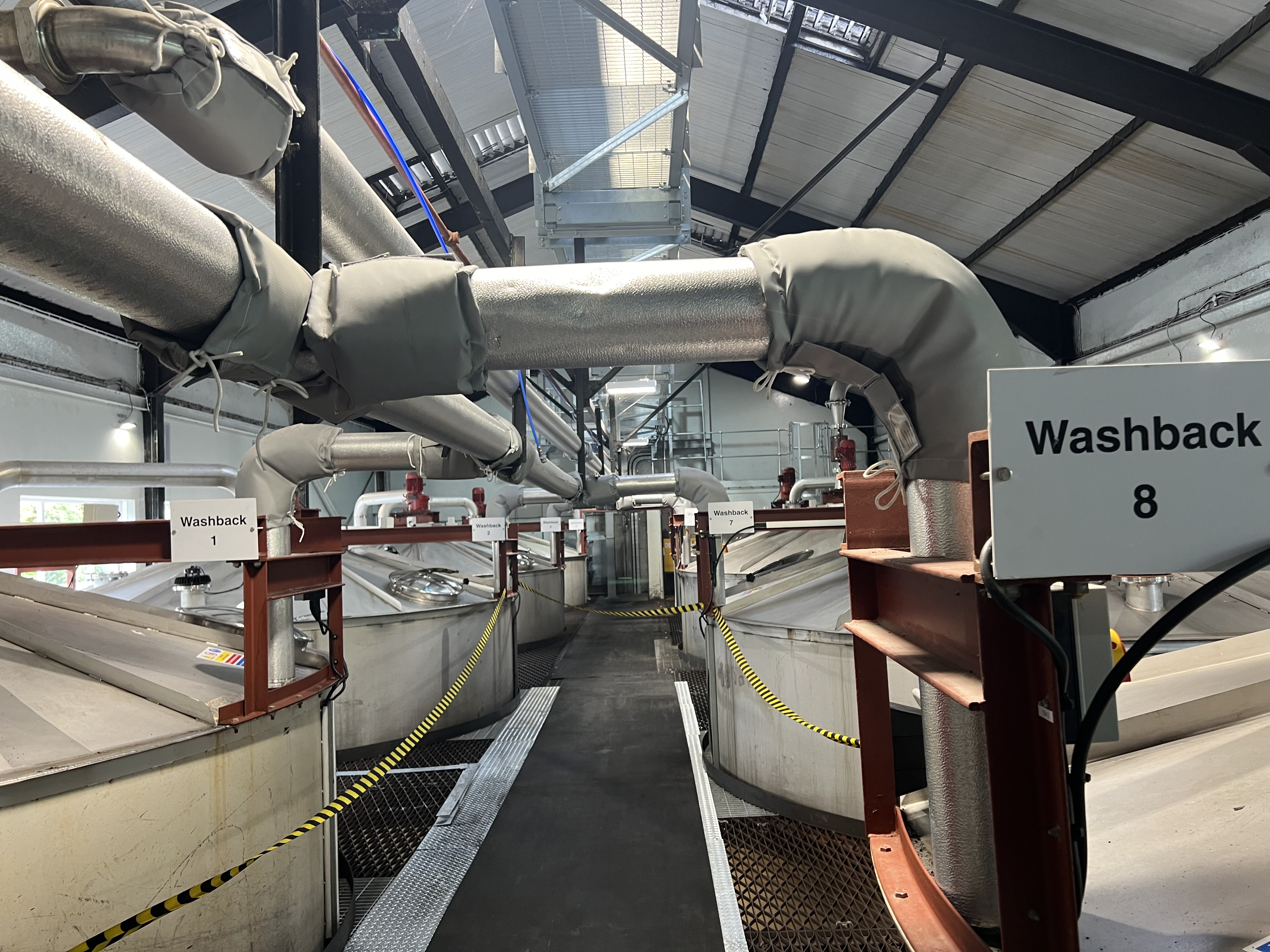
The washback room is long and industrial and smells of yeast and warm grain. Eight stainless steel vessels in a row, each one fermenting wash for up to 100 hours. Stewart pointed out that the long fermentation is part of what gives Deanston its character, the fruity, waxy quality that makes it different from most Highland malts.
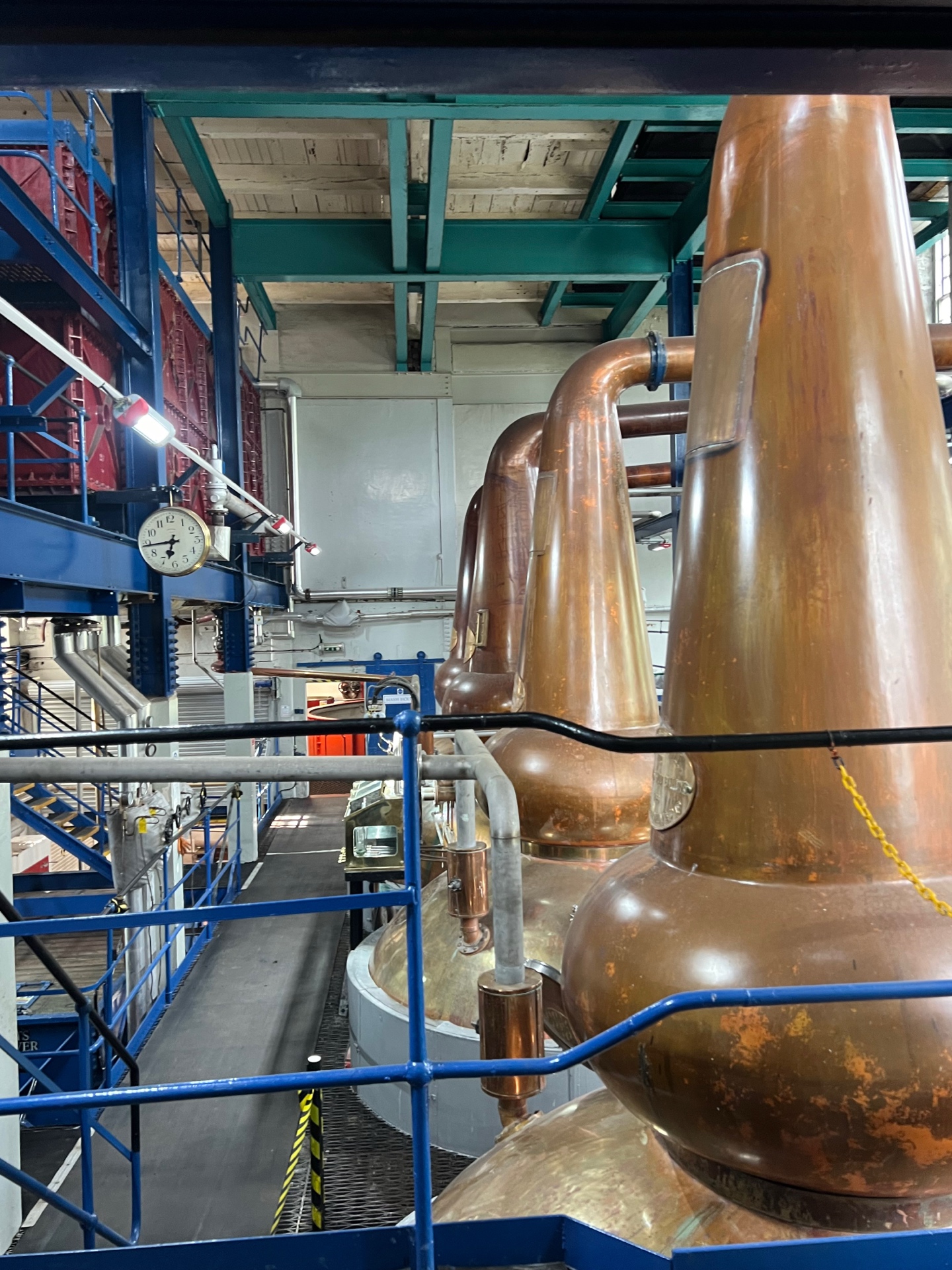
Then you come to the stills, and this is where the room earns its keep. Two large copper pot stills, warm and burnished, filling the space. There is an old brass clock mounted on the blue steel frame above them that has been watching over this room for longer than most people have been alive. I stood on the gantry and looked down at the still house and thought about the fact that this building was making cotton thread when America was still a young country, and now it is making some of the best whisky in Scotland.
Spirit Vat No. 1: 33,050 Litres
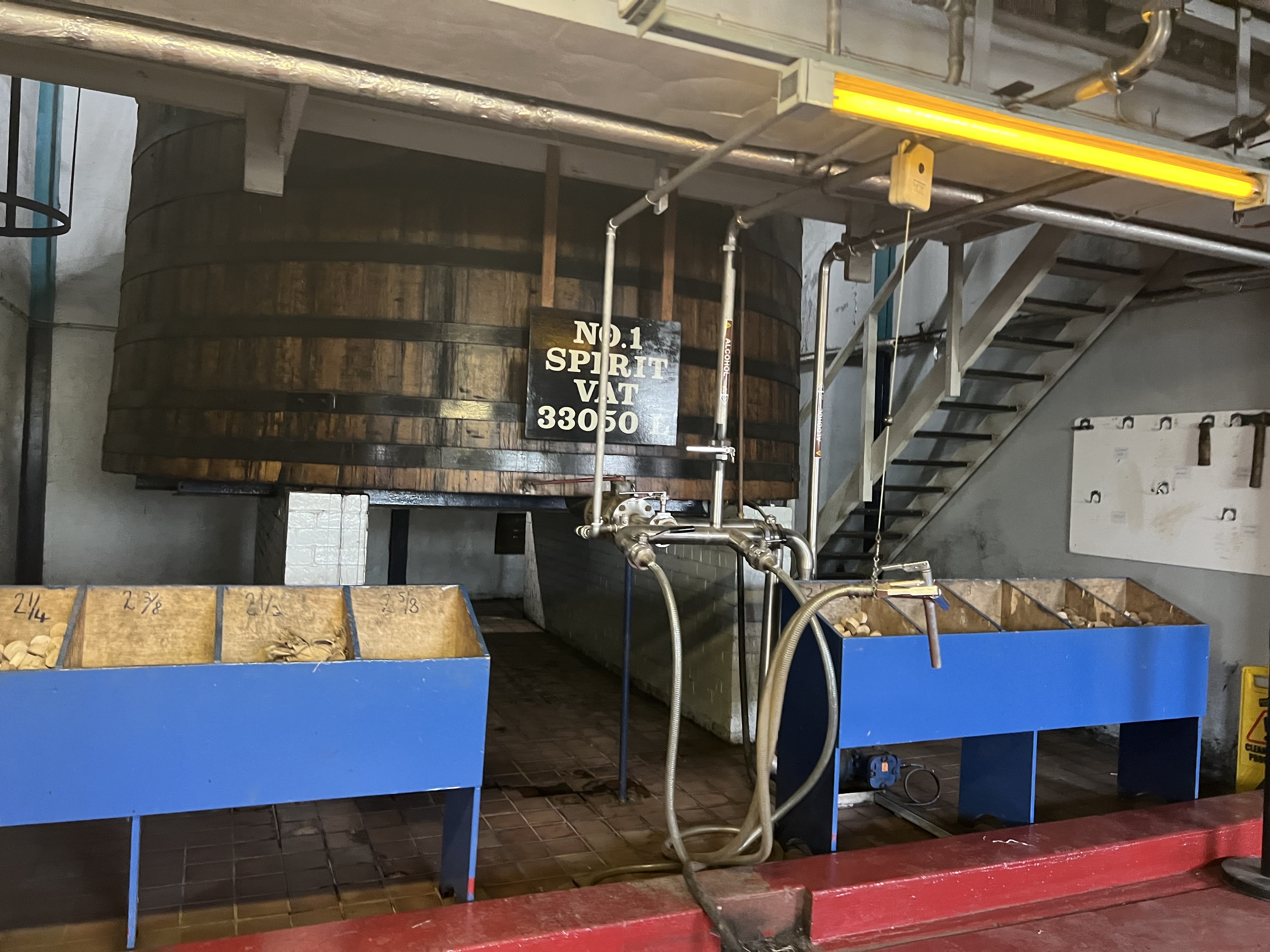
The spirit vat is a massive wooden vessel, dark and ancient-looking, sitting in a room with blue spirit safe trays lined up in front of it. The sign reads: No. 1 Spirit Vat, 33050 L. That is a lot of whisky in waiting. Stewart explained the cuts, the foreshots and feints, and why Deanston's particular approach to the spirit safe produces that distinctive waxy texture. I nodded and tried to look like I was keeping up.
Into the Warehouse
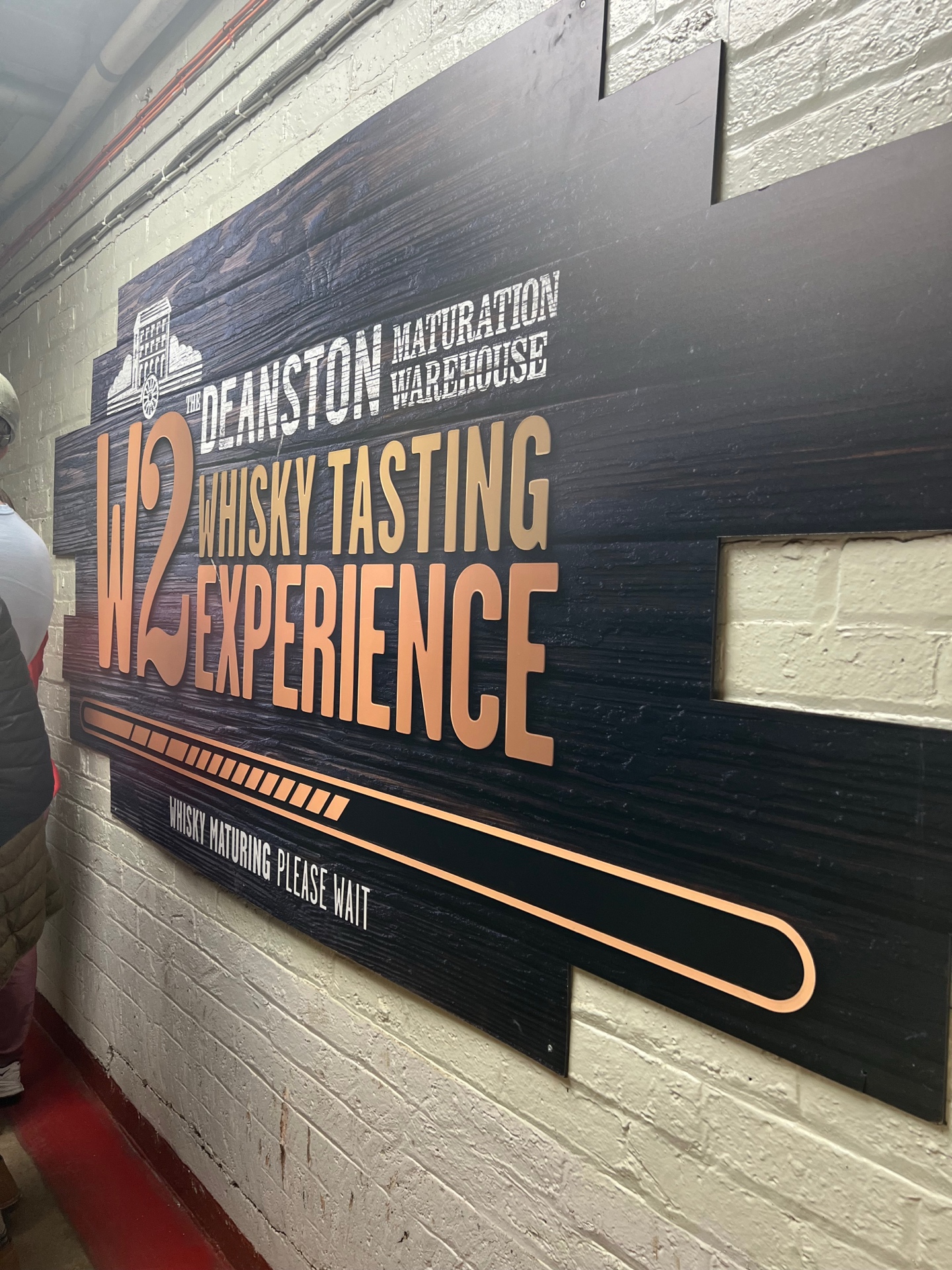
The sign outside Warehouse 2 says: Whisky Maturing. Please Wait. It has a loading bar graphic underneath it. I have seen a lot of distillery signage in my time, and that is the best of it. It is funny and it is true and it tells you everything about the patience that goes into what you are about to taste.
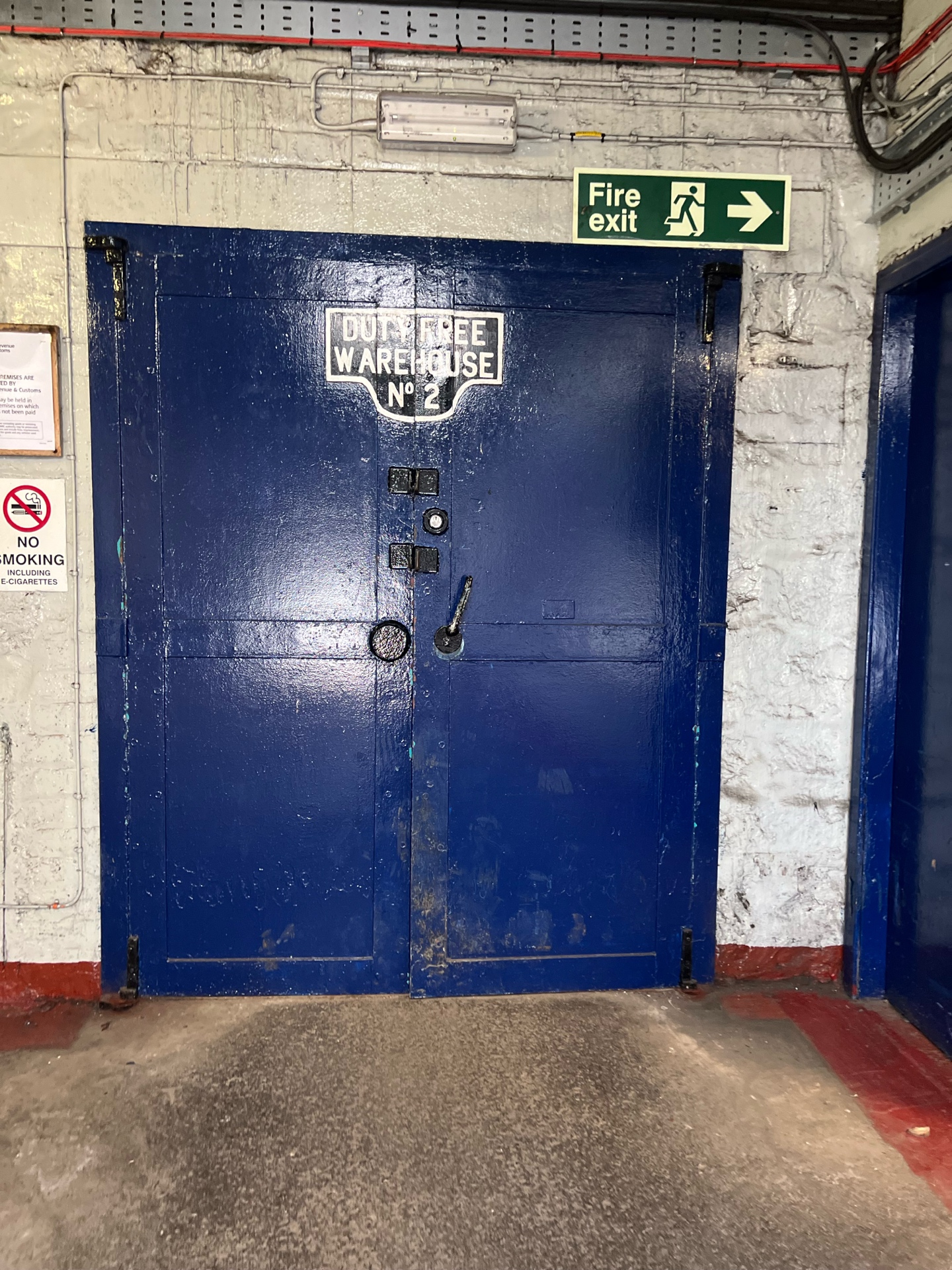
The warehouse itself is something else entirely. Vaulted stone arches, hundreds of barrels stacked three high, the ceiling dark with angel's share mould that has been building up for decades. It is cold and it is quiet and it smells of wood and time. Anne, who is not easily impressed by buildings, said it was one of the most beautiful rooms she had ever been in. She is from Glasgow. She has been in a lot of rooms.
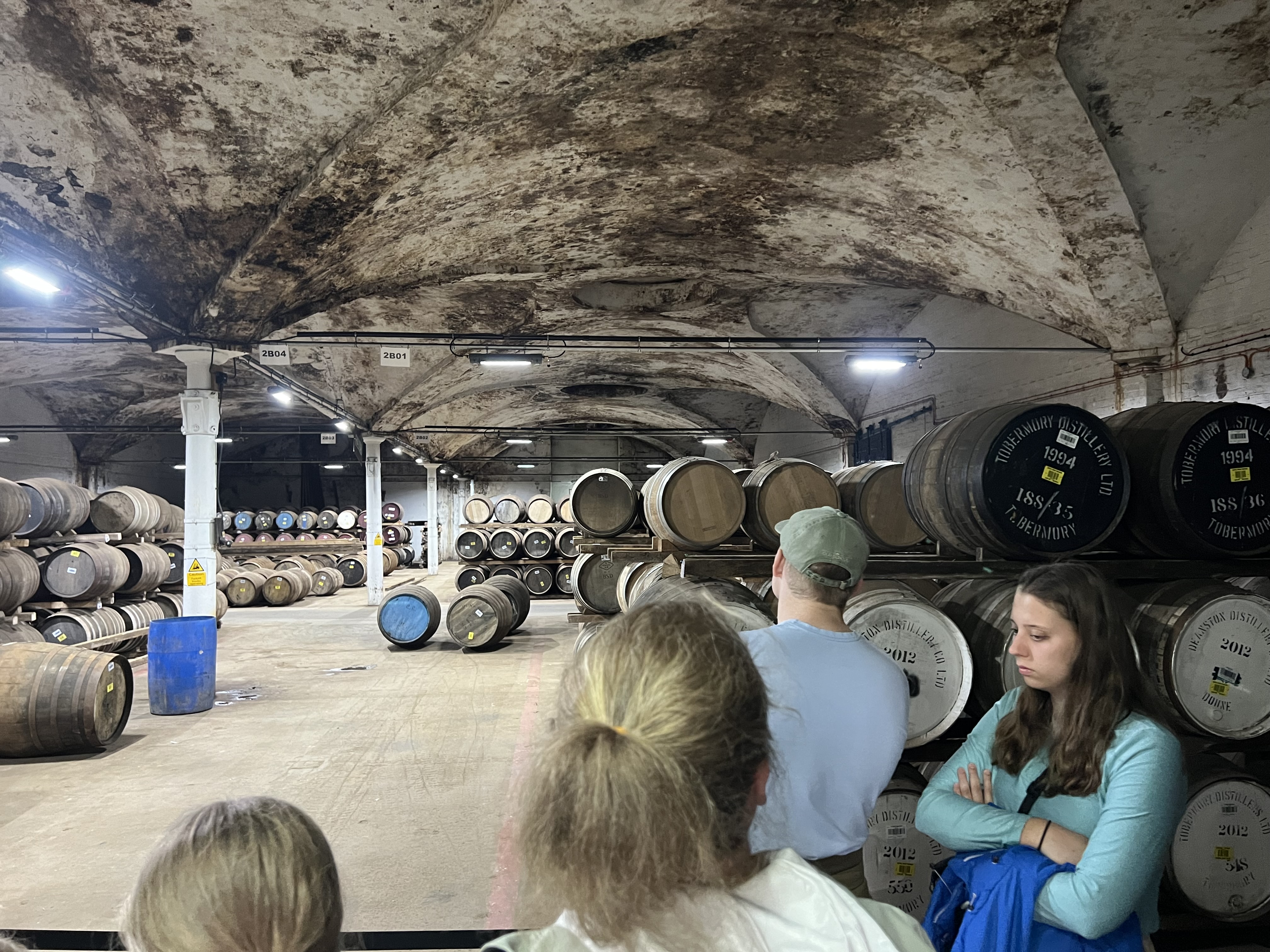
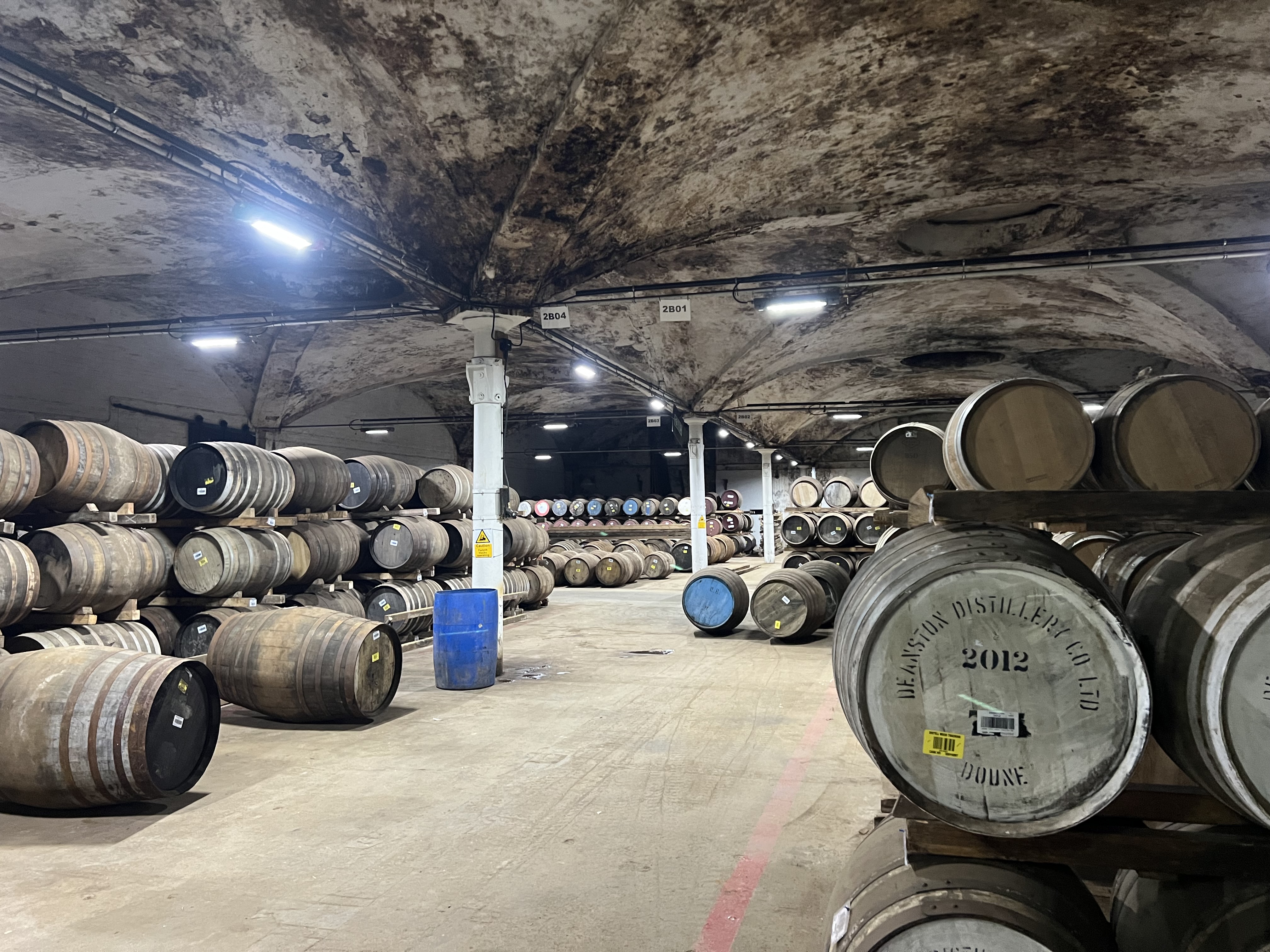
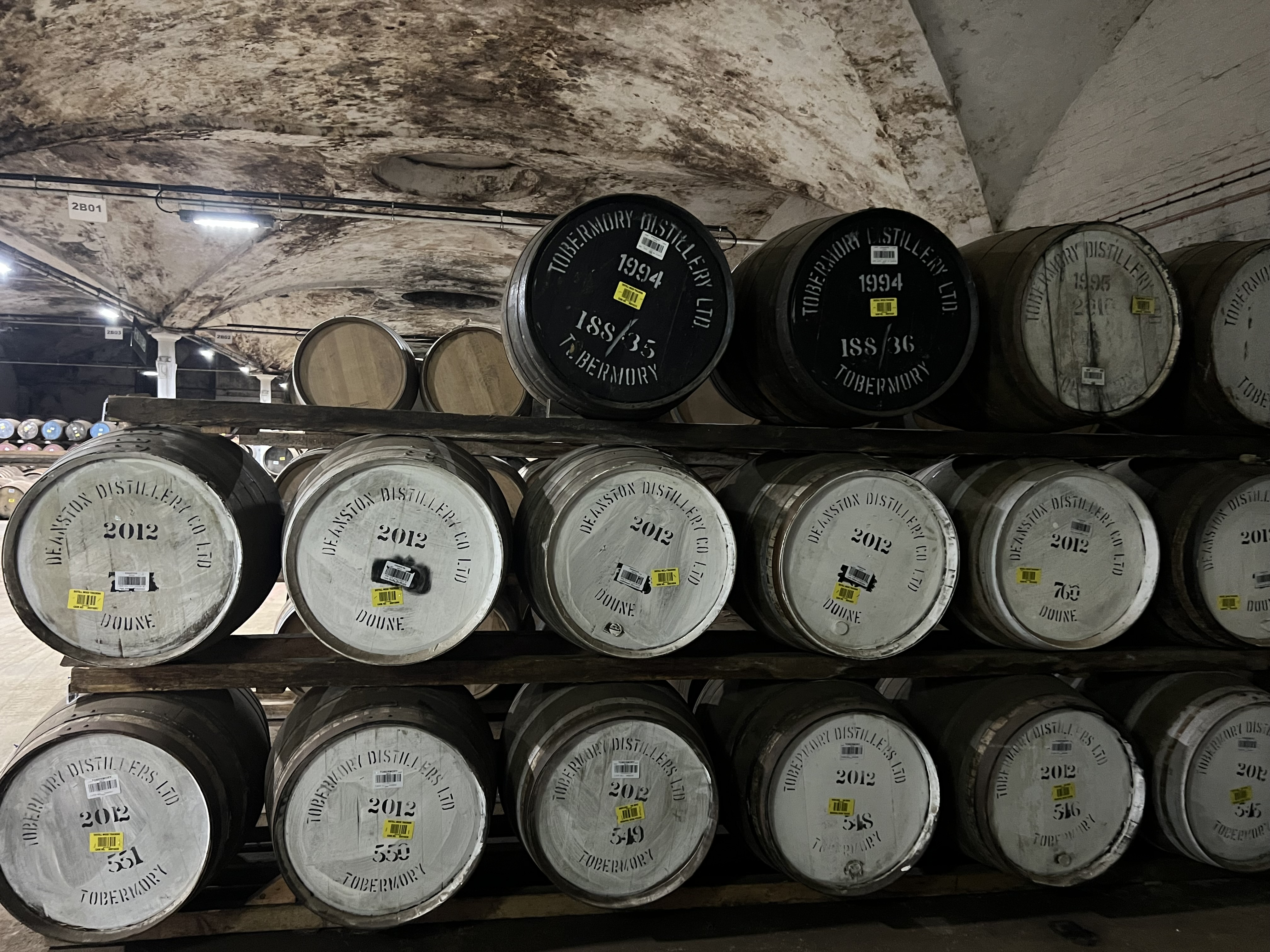
What struck me was seeing barrels from Tobermory Distillery in there alongside the Deanston casks. Deanston and Tobermory are both owned by Distell, and they mature spirit for both under the same roof. A 1994 Tobermory sitting next to a 2012 Deanston. Different islands, different characters, same patience.
The Cask Bar
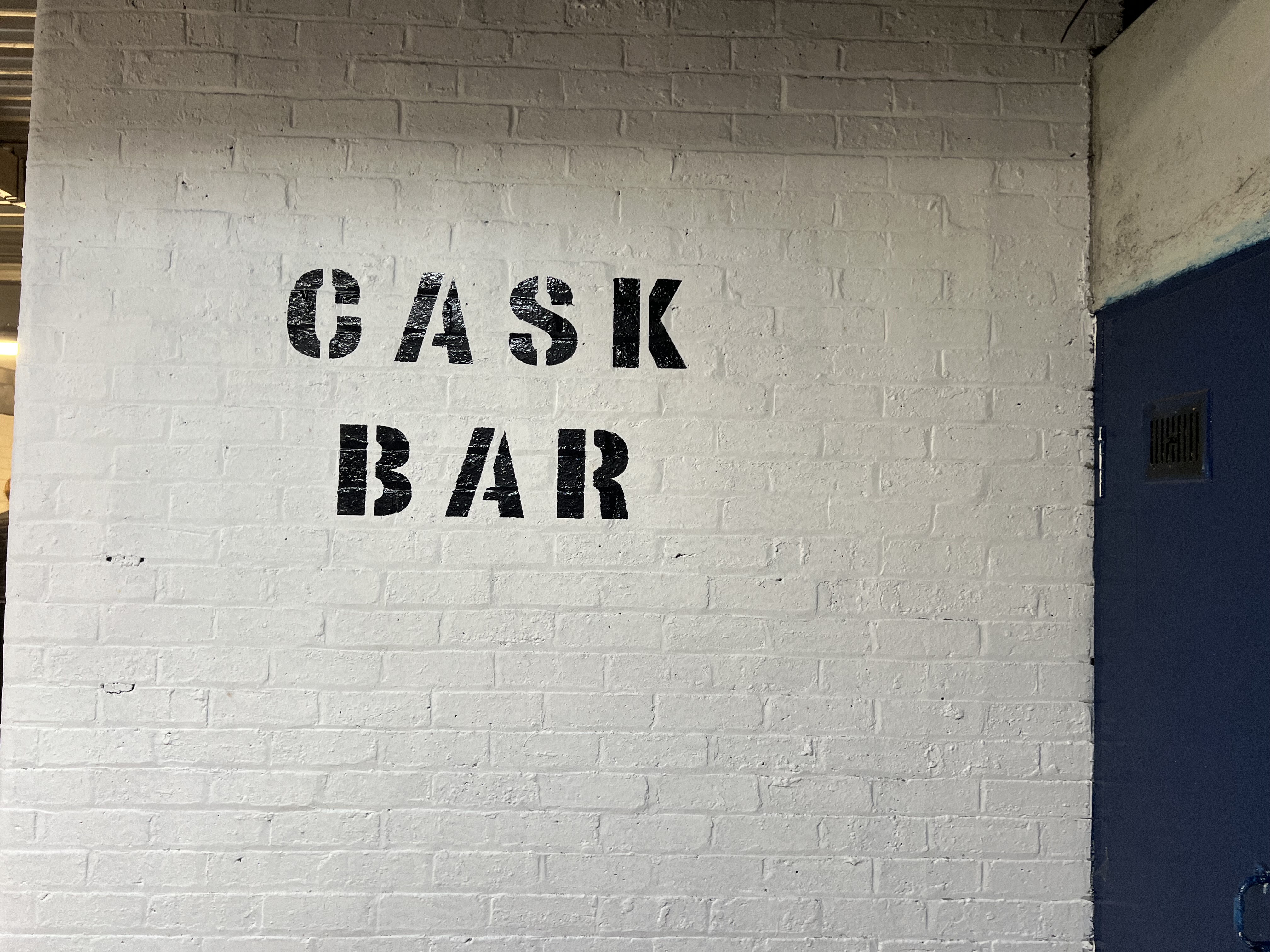
I will be honest with you. When we turned a corner and saw CASK BAR stencilled in big black letters on a white brick wall, I laughed out loud. We named this website Cask-It™ in memory of Anne's mum, and here we were standing in front of a Cask Bar at Deanston. Stewart said it was a sign. Liz said it was a coincidence. Anne said both of them were right.
The Tasting Room
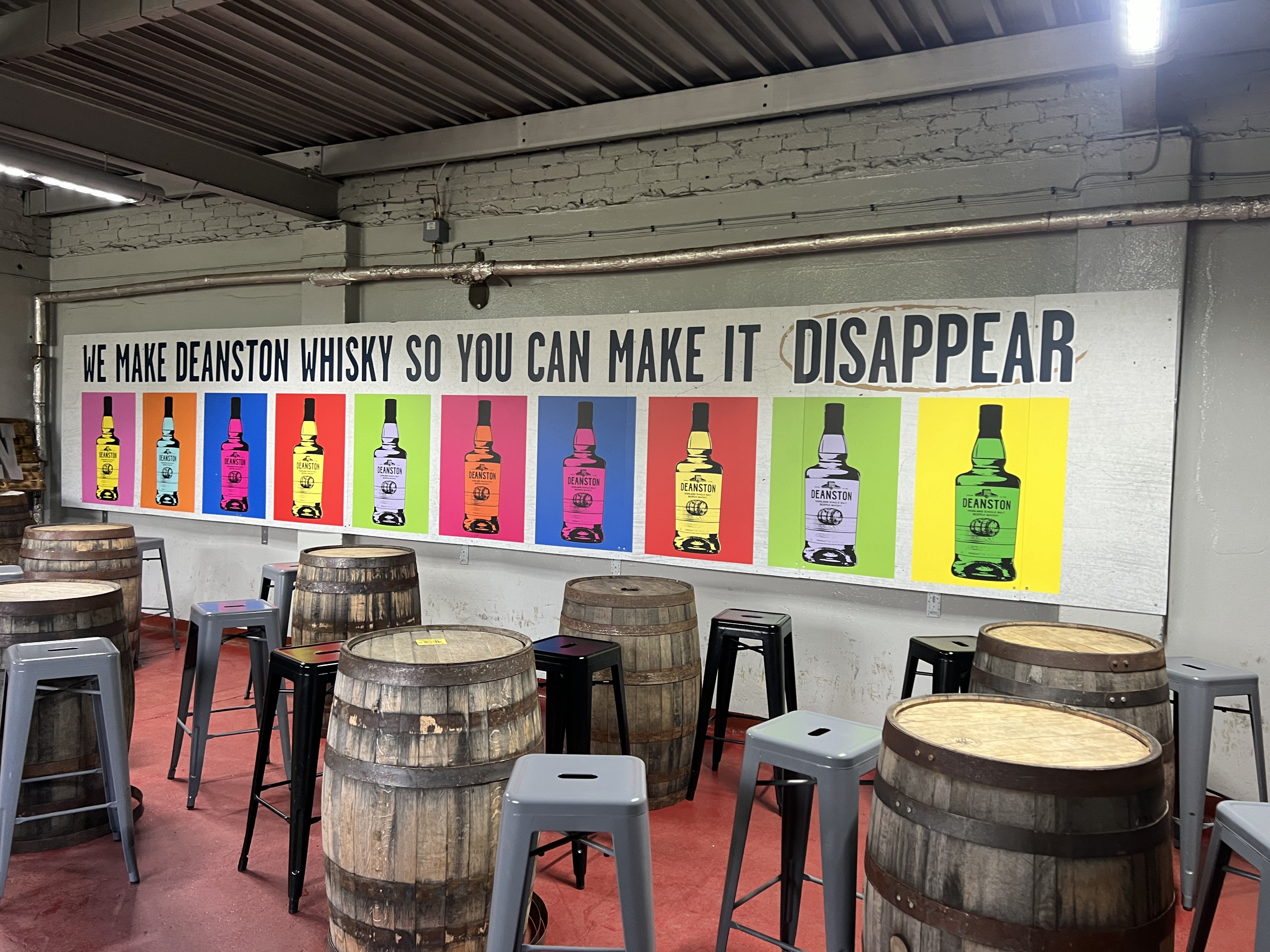
The tasting room is set up with barrels as tables and metal stools, and the wall behind it carries a mural that reads: We Make Deanston Whisky So You Can Make It Disappear. Below that, a row of Deanston bottles in Andy Warhol pop art colours, neon pink and blue and green and yellow. It is completely at odds with the 200-year-old stone warehouse you just walked through, and it works perfectly.
We tasted the Virgin Oak, the 12 Year Old, and the 18 Year Old. Stewart had the 18 with water, the way he always does with older expressions, to open it up. I had it neat first and then with a drop. He was right, as usual. The 18 Year Old at Deanston is honeyed and deep with a warmth that builds slowly and stays with you. Liz, who will tell you she is not a whisky person, found something she liked. That happens at Deanston.
What Stewart Said
On the way back to the car, Stewart and I walked behind Anne and Liz, who were already talking about something else entirely. He said that the best distilleries are the ones where you can feel the place in the whisky. Where the water and the stone and the years all end up in the glass somehow. Deanston is one of those.
I am an American. I came to Scottish whisky through Anne's family, through Stewart's knowledge, through years of sitting in pubs and distilleries and learning to slow down and pay attention. Deanston is the kind of place that rewards that attention. It is not flashy. It does not need to be. It is a working distillery that happens to be one of the most beautiful buildings in Stirlingshire, producing whisky that reflects exactly where it comes from.
If you are planning a trip to Scotland and you are going anywhere near Stirling or the Trossachs, Deanston is worth the detour. Book the W2 Warehouse Tasting Experience if you can. Take your time in the warehouse. Try the 18 Year Old. And if you go with someone who knows what they are doing, even better.
That is what Stewart is for.
Kevin White and Stewart Hunt are the co-founders of Cask-It™. Kevin writes about Scottish whisky from the perspective of an American who married into a Glasgow family and has been learning ever since - he is also the CEO of Asymit AI Marketing and the author of the AI Master Path book series. Stewart Hunt is a Glasgow-based whisky specialist and the founder of Hunt The Dram, one of Scotland's most respected private whisky tour operators.