Cask-It Journal
Highland Park: Why Orkney's Ancient Distillery Produces One of the World's Great Whiskies
At the very top of Scotland, on an island shaped by Viking history and Atlantic storms, Highland Park has been making whisky since 1798. It's one of the world's great distilleries, and here's why.
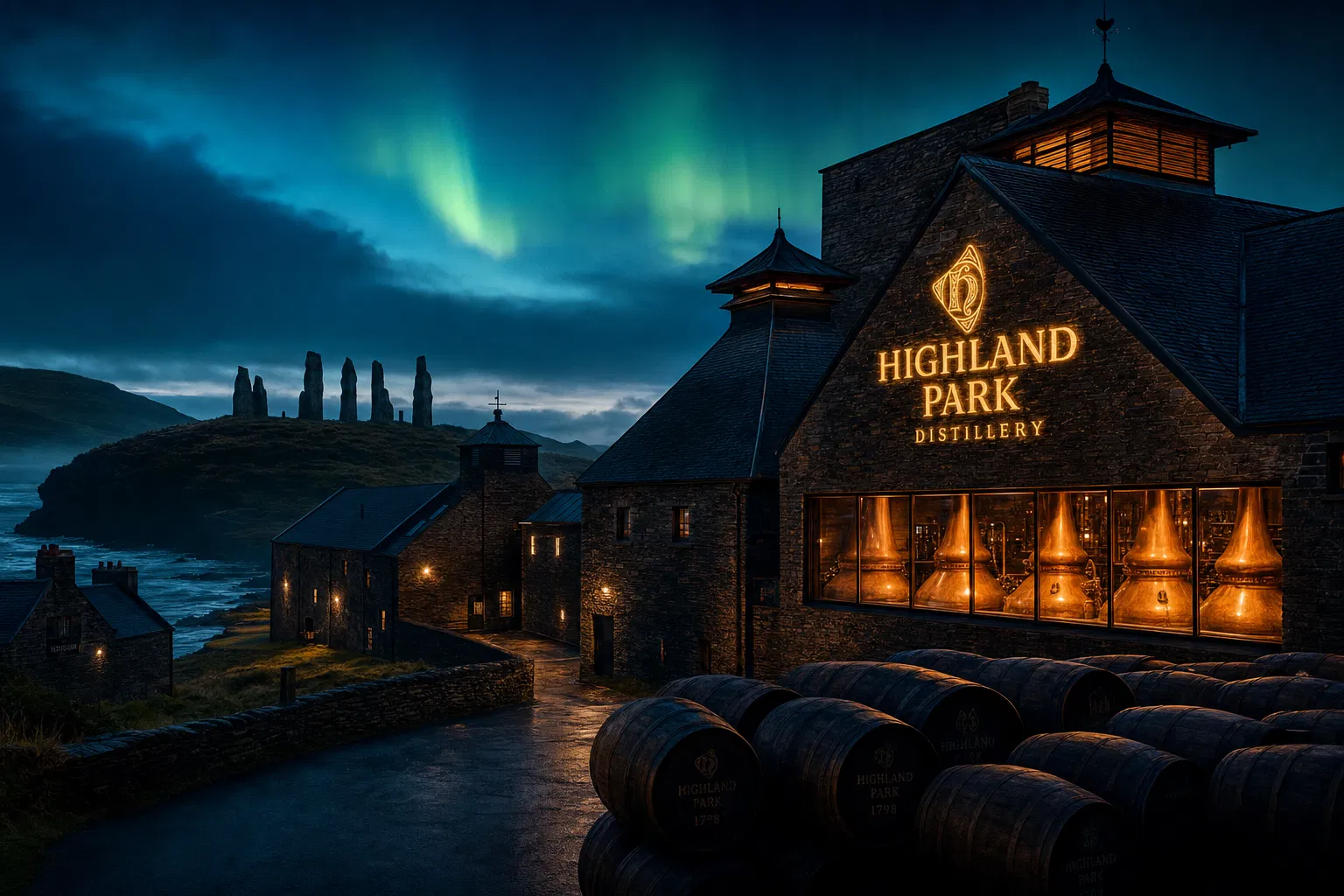
Kirkwall, the capital of Orkney, sits at the same latitude as Bergen in Norway and Juneau in Alaska. In winter, the sun barely clears the horizon. In summer, it barely sets. The wind blows almost constantly, carrying salt and peat from the surrounding moorland.
It is, in short, an extraordinary place to make whisky.
Highland Park was established in 1798 on the outskirts of Kirkwall, on a site that had been used for illicit distilling for decades before. The distillery's founder, Magnus Eunson, was a church officer by day and a smuggler by night - a combination that says everything about the spirit of early Scotch whisky production.
What Makes Highland Park Special
Highland Park is one of the few distilleries in Scotland that still malts a portion of its own barley on traditional floor maltings. The peat used to dry the malt is cut from the Hobbister Moor, just south of Kirkwall - a peat that is rich in heather and produces a distinctive aromatic smoke quite different from the maritime peat of Islay.
The distillery's warehouses are among the most atmospheric in Scotland, their stone walls thick enough to moderate the extremes of Orkney's climate. The whiskies mature slowly in this cool, damp environment, developing a complexity that is uniquely their own.
The Range
The Highland Park 12-year-old is the distillery's flagship expression and one of the world's most consistently excellent whiskies. Heather honey, vanilla, and a gentle peat smoke combine in a harmony that is both complex and approachable.
The 18-year-old is a step up in richness and complexity, with dried fruit, dark chocolate, and a more pronounced smokiness. The 25 and 30-year-old expressions are among the finest aged whiskies in Scotland.
The Viking series - Valhalla, Odin, Thor, and Loki - celebrates Orkney's Norse heritage with bold, characterful expressions.
Visiting Highland Park
The distillery is open year-round and offers a range of tours, from the standard distillery experience to exclusive private tastings in the historic warehouses. Kirkwall itself is worth a day or two - the magnificent St Magnus Cathedral, built by the Vikings in 1137, is one of Scotland's most impressive buildings.
Highland Park is the perfect reason to make the journey to Orkney. But once you're there, you'll find a hundred more.
Frequently Asked Questions
When was Highland Park distillery founded?
Highland Park was founded in 1798, making it one of the oldest legal distilleries in Scotland. The site on the outskirts of Kirkwall, the capital of Orkney, was originally associated with Magnus Eunson, a church officer and illicit distiller who is said to have hidden his whisky under the pulpit. The distillery was licensed in 1798 under John Robertson and has been in continuous production, with minor interruptions, ever since. It is the northernmost whisky distillery in Scotland.
What makes Highland Park whisky unique?
Highland Park is one of very few Scottish distilleries that still malts a significant proportion of its own barley on traditional floor maltings. The peat used to dry the malt is cut from the Hobbister Moor on Orkney, which is rich in heather. This heathery peat gives Highland Park its distinctive aromatic smoke, quite different from the more medicinal, iodine-heavy peat smoke of Islay. The combination of this heathery smoke with sherry cask maturation produces the distillery's signature style: honeyed, smoky, and complex.
What is the best Highland Park expression to try first?
Highland Park 12 Year Old Viking Honour is the ideal starting point. It is widely available, reasonably priced, and showcases the distillery's core character: heather honey, dried fruit, gentle smoke, and a long warming finish. The 18 Year Old Viking Pride is a significant step up in richness and complexity and is worth the premium for those who want to explore further. The 25 and 30-year-old expressions are among the finest aged whiskies in Scotland, though they come at a considerable price.
How do you get to Highland Park distillery?
Highland Park is located on Holm Road on the southern edge of Kirkwall, Orkney's capital. Orkney is reached by ferry from Scrabster (near Thurso) or Aberdeen on the Scottish mainland, operated by NorthLink Ferries. Loganair operates flights from Edinburgh, Aberdeen, Inverness, and Glasgow to Kirkwall Airport. The distillery is approximately 1.5 miles from the town centre and is easily reached on foot or by taxi. Tours run year-round and should be booked in advance through the distillery website.
Is Highland Park a peated whisky?
Yes, but moderately so. Highland Park uses lightly peated malt, with a phenol level of around 20 to 25 parts per million (PPM) in the malt, which translates to roughly 2 to 5 PPM in the finished whisky after distillation and maturation. This makes it significantly less peated than Islay whiskies like Ardbeg (55+ PPM) or Laphroaig (40+ PPM), but more peated than most Speyside or Highland expressions. The peat character in Highland Park is described as aromatic and heathery rather than medicinal or smoky.
What other things are there to do in Orkney besides visiting Highland Park?
Orkney is one of the most historically rich destinations in Scotland. The Heart of Neolithic Orkney, a UNESCO World Heritage Site, includes the Ring of Brodgar, the Standing Stones of Stenness, Skara Brae (a 5,000-year-old village), and Maeshowe chambered cairn. St Magnus Cathedral in Kirkwall, built by the Vikings in 1137, is one of Scotland's finest medieval buildings. The Italian Chapel on Lamb Holm, built by Italian prisoners of war during World War II, is a remarkable and moving site. The Orkney Museum in Kirkwall provides excellent context for the island's extraordinary history.