
Cask-It Journal
Is Scotch Whisky in Crisis? What the Numbers Actually Tell Us
The headlines have been brutal. One in five Scottish distilleries in financial distress. Diageo cutting 743 million pounds. Jobs at risk across the Highlands and Islands. Parliament launching a formal inquiry. Before you panic, here is what is actually happening and what it means for the industry you love.
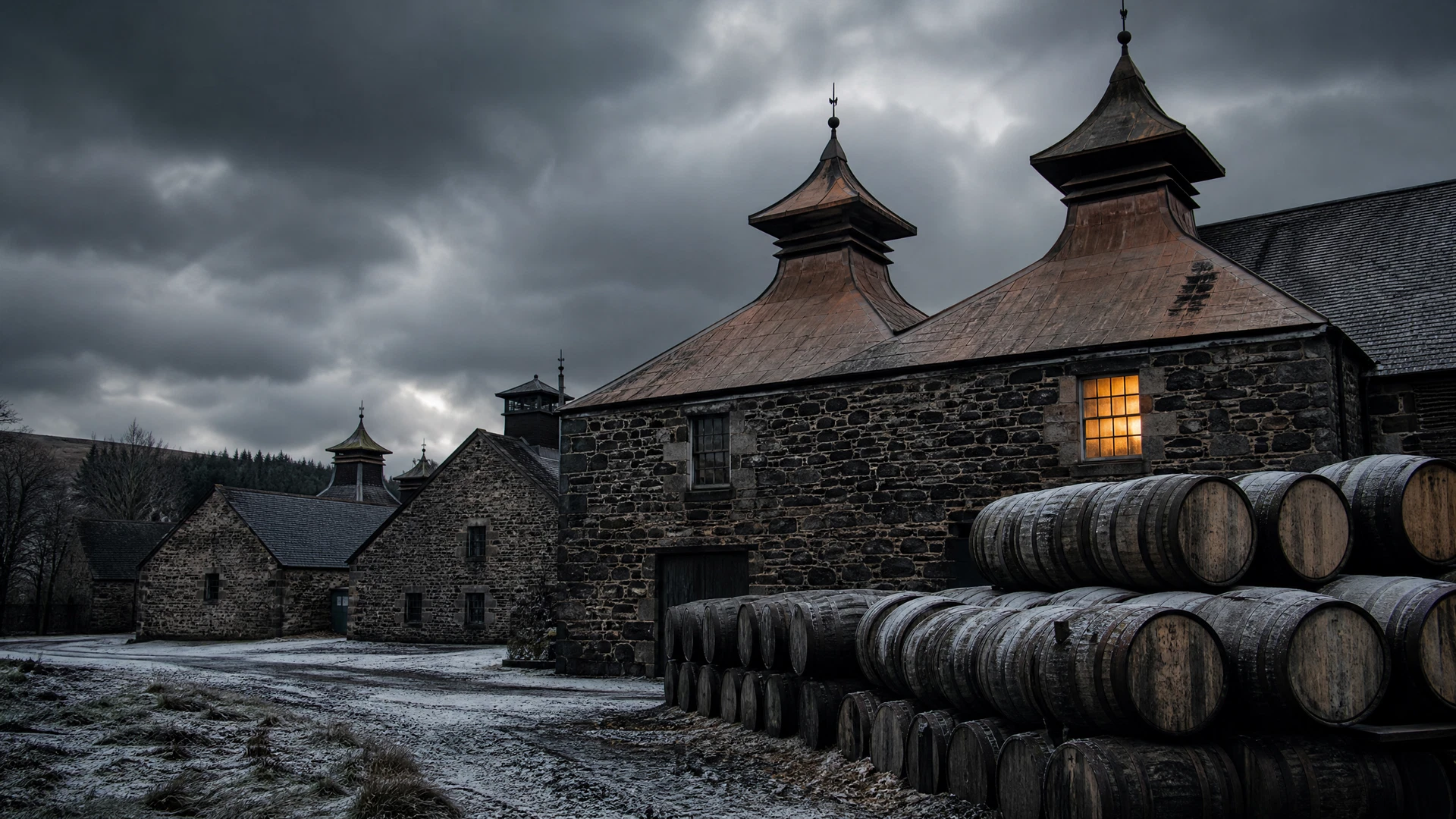
The headlines have been brutal. One in five Scottish distilleries in financial distress. Diageo cutting 743 million pounds. Jobs at risk across the Highlands and Islands. Parliament launching a formal inquiry into the health of the entire industry.
If you have been following the news over the past few weeks, you could be forgiven for thinking Scotch whisky is in serious trouble. Some of it is. But the picture is more complicated than the headlines suggest, and I think it is worth cutting through the noise.
Stewart and I have been watching this closely. Here is what the numbers actually tell us.
The Numbers That Started the Alarm
In February 2026, restructuring firm BTG published data showing that 19 percent of Scottish distilleries, 69 operations in total, were facing significant or critical financial stress. That figure got a lot of attention, and rightly so. Nineteen percent is not a rounding error.
At the same time, the Scotch Whisky Association reported that exports fell from a peak of 6.2 billion pounds in 2022 to 5.36 billion pounds in 2025. That is a meaningful drop. The US market, which is Scotland's single largest export destination by value, saw a 15 percent decline in 2025, partly driven by the 10 percent tariff imposed by the Trump administration. The SWA estimated that tariff was costing the industry 20 million pounds per week in lost revenue.
Then the corporate results started landing, and they were not pretty. Edrington, the group that owns The Macallan, Highland Park, and The Glenrothes, reported a 23 percent decline in pre-tax profit and a 14 percent drop in sales. Chivas Brothers, the Scotch division of Pernod Ricard, reported a 5 percent sales decline. Ian Macleod Distillers, which produces Glengoyne and Tamdhu among others, reported pre-tax profits down by nearly 46 percent.
And then, on 6 August 2026, Diageo announced the number that made the front pages.
Diageo: The Biggest Story of the Summer
Diageo is Scotland's largest whisky producer. The company owns 31 Scottish distilleries, including Johnnie Walker, Talisker, Lagavulin, Cardhu, and Port Ellen. It is a FTSE 100 company with net sales of 14.5 billion pounds in the year to June 2026.
At its Capital Markets Day on 6 August, Diageo announced a plan to cut one billion US dollars, approximately 743 million pounds, in costs over the next three years. Around 631 million pounds of that will come from operations. A further 111 million pounds will come from the supply chain. Total restructuring costs are expected to reach close to 890 million pounds.
The announcement came days after it emerged that 172 distillery workers in Scotland had been placed at risk of redundancy. GMB Scotland, the union representing those workers, accused Diageo of running a four-week consultation that was, in their words, "a box-ticking exercise" with "no serious attempt to engage with workers." Jobs at risk are spread across distilleries including Cardhu, Port Ellen, and Dufftown.
Diageo's new chief executive is Sir Dave Lewis, previously of Tesco, where he earned the nickname "Drastic Dave" for his approach to cost-cutting. He acknowledged there is "hard work ahead," particularly in North America, where net sales fell 9.1 percent over the year. He said the company is confident it can return to growth without profits "taking a step back."
For context: Diageo also reported 6.8 percent net sales growth in Great Britain, driven largely by soaring demand for Guinness, which grew by double digits. The problems are concentrated in specific markets and specific product categories, not across the board.
What Is Actually Going On
Here is the honest answer: this is a market correction, not a collapse.
Between 2020 and 2022, Scotch whisky had an extraordinary run. Low interest rates, pandemic savings, and a global surge in premiumisation pushed sales to record highs. Distilleries expanded production. Investors piled into cask ownership. Prices for aged expressions went through the roof. The industry was producing whisky at a rate that assumed the boom would continue indefinitely.
It did not. From 2022 onwards, inflation hit hard. Energy costs rose sharply. Consumer spending tightened. The ultra-premium end of the market, bottles priced above 200 pounds, saw significant declines. Edrington's own data showed that sales of 25 and 30-year-old Macallans, which cost more than 1,000 pounds a bottle, fell, while the 12-year-old, which comes in under 70 pounds, recorded double-digit growth.
That is not a dying industry. That is an industry where consumers are making different choices.
The mid-range bottle, priced between 40 and 120 pounds, is holding up well. The Scotch Malt Whisky Society, which specialises in single cask bottlings at that price point, reported strong growth in the US and double-digit growth in Australia. Independent bottlers are busy. Whisky tourism numbers remain high.
What is struggling is the top end, and the brands that over-invested in production capacity during the boom years.
The Whisky Loch Question
Anyone who knows their whisky history will be thinking about the Whisky Loch. In the 1980s, overproduction combined with a collapse in demand left the industry sitting on more whisky than it could sell. The result was catastrophic. Close to 30 distilleries were mothballed or permanently closed. The industry took a generation to recover.
Is that happening again? The short answer is no, and here is why.
The industry learned from the 1980s. This time, major producers are taking action early rather than hoping the problem goes away. Diageo has temporarily paused production at some distilleries. Others have scaled back operations. The difference between a temporary pause and a permanent closure is significant, and the fact that companies are making difficult decisions now rather than waiting is actually a sign of a more mature industry.
The parliamentary inquiry launched by the Scottish Affairs Committee on 20 July 2026 is also a positive development, even if it does not feel like one. The committee is examining trade policy, tariffs, the Deposit Return Scheme, workforce challenges, and rising energy costs. Evidence submissions are open until 18 September 2026. The SWA has welcomed it. Having Parliament scrutinise the industry's challenges and ask what government can do to help is not a sign of crisis. It is a sign that the industry has enough political weight to demand attention.
The Good News That Is Not Making Headlines
On 24 July 2026, the US tariff on Scotch whisky was removed. Zero tariff. Gone. The tariff that had been costing the industry 20 million pounds per week in lost revenue is no longer there. The first tariff-free shipment has already left Scotland. The US market, which drove so much of the pain over the past year, is now open again.
The UK-India Free Trade Agreement also came into force in July 2026. India charges 150 percent import tariff on Scotch whisky. The FTA cuts that to 75 percent immediately, with further reductions to follow. India is the largest whisky-consuming country in the world by volume. This is a long-term story, not an overnight fix, but it is the most significant trade development for Scotch whisky in a generation.
Analysts tracking the market believe the industry will reach a bottom in the second half of 2026, with single malt exports expected to increase by up to one million cases by the end of the financial year. The demand is still there. The whisky is still exceptional. The market is adjusting, not disappearing.
What This Means for Whisky Drinkers
If you drink Scotch, 2026 is actually a good time to be a consumer. Premium quality whisky is more accessible than it has been in years. Bottles that were impossible to find in 2021 and 2022 are back on shelves. Independent bottlers are releasing excellent single cask expressions at reasonable prices. The secondary market has cooled, which means you are less likely to pay inflated prices for bottles that should cost 60 pounds.
The distilleries that are struggling are, for the most part, the ones that over-extended during the boom. The ones that kept their heads down, maintained quality, and did not chase the ultra-premium trend are in better shape.
What This Means for Whisky Tourism
This is the question that matters most to us at Cask-It. If distilleries are cutting costs, what happens to visitor experiences?
Some are already scaling back. Diageo has proposed closing the visitor centre at Clynelish Distillery in Brora. The Lakes Distillery permanently closed its visitor centre in April 2026. These are real losses for whisky tourism.
But the independent distilleries, the ones that built their businesses around visitor experience rather than volume production, are largely holding firm. Annandale, Bladnoch, Springbank, Glenfarclas, Benromach: these are distilleries where the visitor centre is central to the business model, not an afterthought. They are not cutting that.
Our advice: if there is a distillery you have been meaning to visit, do not wait. The industry is going through a period of change, and some experiences that exist today may not exist in the same form in three years.
The Bottom Line
Scotch whisky is not dying. It is correcting. The industry got ahead of itself during the pandemic boom, and the hangover is real. Some distilleries will not survive it. Some visitor centres will close. Some jobs will be lost, and that is genuinely serious for the rural communities in the Highlands and Islands that depend on those jobs.
But the fundamentals are intact. The whisky is still world-class. The US market is open again. India is opening up. Parliament is paying attention. And the mid-range bottle, the one that most of us actually drink, is doing fine.
The industry has been through worse. It came back from the Whisky Loch. It will come back from this.
Frequently Asked Questions
Is the Scotch whisky industry in crisis?
The industry is under significant pressure, but most analysts describe the current situation as a market correction rather than a structural collapse. Exports have fallen from a peak of 6.2 billion pounds in 2022 to 5.36 billion pounds in 2025, and 19 percent of Scottish distilleries were reported to be facing financial stress in early 2026. However, the removal of US tariffs in July 2026 and the UK-India Free Trade Agreement are expected to support a recovery in the second half of the year.
Why is Diageo cutting jobs in Scottish distilleries?
Diageo announced a plan to cut one billion US dollars in costs at its Capital Markets Day on 6 August 2026, following declining sales and profits. Net sales fell 3 percent to 14.5 billion pounds in the year to June 2026, with North America down 9.1 percent. In Scotland, 172 distillery workers were placed at risk of redundancy, with jobs at risk at Cardhu, Port Ellen, and Dufftown distilleries. GMB Scotland has criticised the consultation process.
Which Scotch whisky companies are struggling most?
The companies facing the most significant challenges are those with heavy exposure to the ultra-premium market and the US. Edrington reported a 23 percent decline in pre-tax profit and 14 percent sales decline. Chivas Brothers reported a 5 percent sales decline. Ian Macleod Distillers reported pre-tax profits down nearly 46 percent. Diageo, the largest producer, is undertaking a major cost-cutting programme worth 743 million pounds.
What is the Scottish Affairs Committee whisky inquiry?
The UK Parliament's Scottish Affairs Committee launched a formal inquiry into the Scotch whisky industry on 20 July 2026. The inquiry is examining the impact of trade policy, tariffs, the Deposit Return Scheme, workforce challenges, and rising energy costs. Evidence submissions are open until 18 September 2026. The Scotch Whisky Association has welcomed the inquiry.
Will the US tariff removal help Scotch whisky?
Yes. The 10 percent US tariff on Scotch whisky was removed on 24 July 2026 following a UK-US trade agreement. The tariff had been costing the industry an estimated 20 million pounds per week in lost export revenue and contributed to a 15 percent decline in US exports in 2025. The removal is expected to support a recovery in the US market, which is Scotland's largest export market by value.
Is it still worth visiting Scottish distilleries in 2026?
Absolutely, and arguably more so than in recent years. Some visitor centres have closed or scaled back, but the majority of distilleries remain open and welcoming visitors. Independent distilleries in particular have maintained their visitor experiences. If anything, the current period of adjustment means distilleries are more focused on the quality of the visitor experience than they were during the boom years when demand was overwhelming.