
Cask-It Journal
The Puffer, Kirkintilloch -- Stewarty's Local
The Puffer sits on the canal in Kirkintilloch, and it is exactly the kind of pub you want to find when the evening calls for something more than a quick drink. Stewart knows it well. That tells you everything.
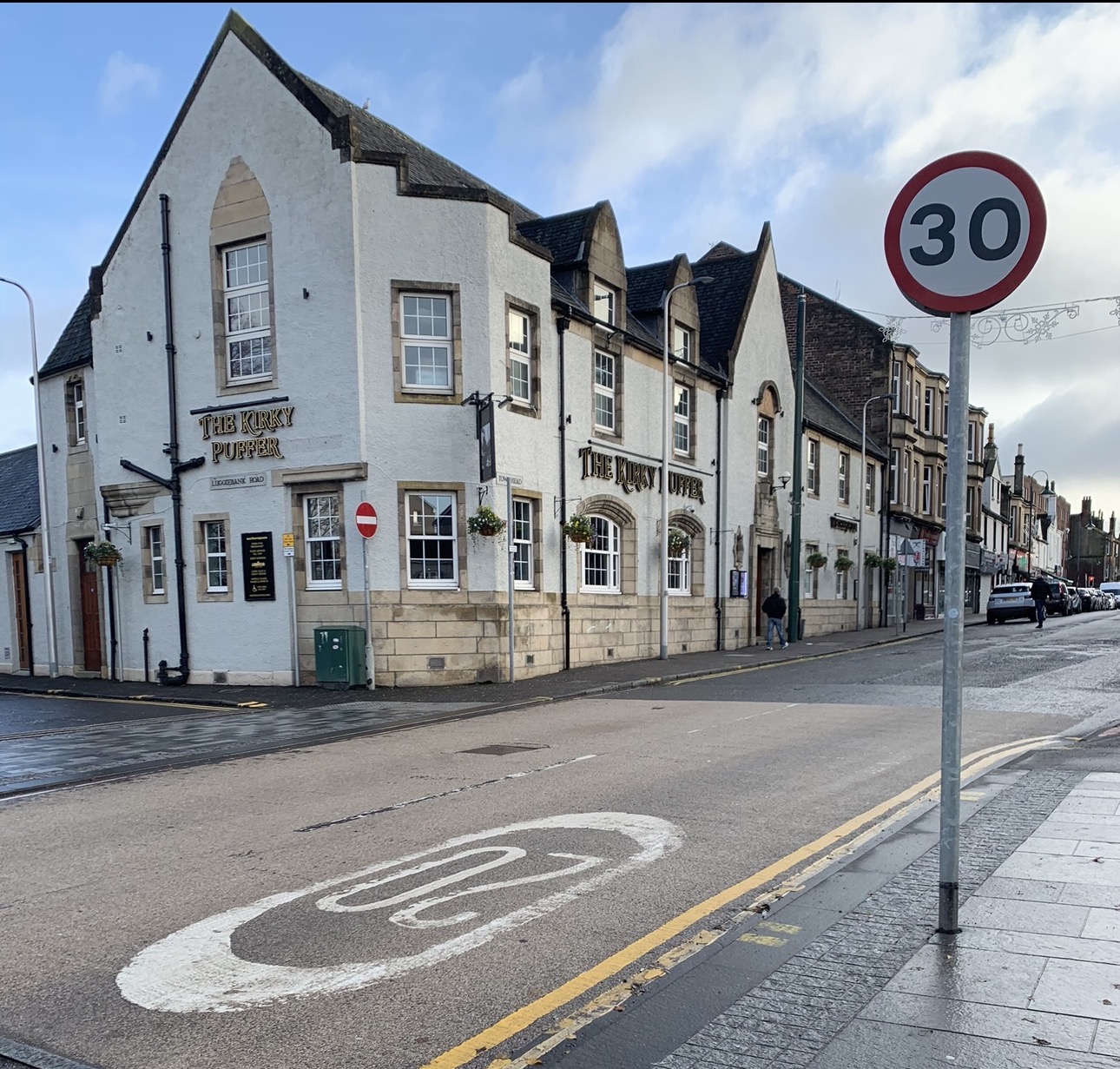
I should explain the name. We call him Stewarty sometimes, Anne and I. Not to his face in company, because to everyone else he is Stewart, and he carries that name with the kind of quiet authority that makes you use it properly. But between us, when we're talking about him, it slips out. Stewarty. It's affectionate. He'd probably deny it bothers him.
Kirkintilloch is the main town in East Dunbartonshire, a few miles east of Milton of Campsie and about eight miles north of Glasgow. It sits on the Forth and Clyde Canal, which cuts across the central belt of Scotland from the Firth of Forth to the River Clyde. The canal was built in the 1770s and for a hundred years it was one of the main arteries of Scottish industry. Coal, iron, grain, whisky -- all of it moved along this water. The Clyde puffers, the small steam cargo vessels that gave the pub its name, were part of that world. You can still see the canal from the Puffer's windows, and if you know what you're looking at, the history of it is right there in the water.
The Puffer is Stewart's kind of pub. Not because it's fancy -- it isn't -- but because it's real. It has the weight of a place that has been doing this for a long time and doesn't need to prove anything to anyone. The gantry is well-stocked. The staff know their way around it. And on a quiet Tuesday or a busy Saturday, it has the same quality: it feels like somewhere that matters to the people who drink there.
The evenings at the Puffer had a different rhythm from the Kincaid. The Kincaid was the village local, warm and familiar, the kind of place you ended up because it was there and because it was good. The Puffer was more of an occasion. We'd go when there was something to mark, or when Stewart had decided it was time for a proper night out rather than a quiet one. You could feel the difference in the way he'd suggest it. Not "shall we go to the Puffer tonight" but "I think we should go to the Puffer." That phrasing meant something.
The cigars came out at the Puffer. Stewart and I would step outside at some point in the evening, which in a Scottish November means standing in the cold with your collar up and your breath making clouds, and we'd light up and talk. About whisky, about business, about the state of things. The canal is right there, dark and still, and the cold comes off the water in a way that is unpleasant and somehow also exactly right. You don't notice it after a few minutes. Or you do notice it, but you stop caring.
Anne and Liz had opinions about the cigars. They were not complimentary opinions. But they tolerated them with the particular grace of women who have long since accepted that this is part of the deal and have decided to find it mildly amusing rather than genuinely annoying. At least, that's how I choose to interpret it. They'd be inside, warm, on the wine, and they'd give us a look when we came back in that said everything without saying anything. We'd sit back down and the evening would continue.
Stewart is in the whisky tour business. He knows Scotland's distilleries the way a pilot knows his routes: not just the destinations, but the details, the conditions, the things that make each one different from the others. Sitting with him over a dram is an education. He doesn't lecture. He just talks, and you find yourself knowing things you didn't know an hour ago. He'll mention a distillery in passing, something about the water source or the still shape, and you'll realise that what sounded like a casual observation was actually the key to understanding why the whisky tastes the way it does.
I'm an American. I came to Scotch whisky late, and I came to it partly through Stewart. He never made it feel like a test. He'd pour something and tell you what to look for, and then he'd let you find it yourself, and when you did, there was a satisfaction to it that I hadn't expected. That's a skill. Not everyone who knows a lot about something can teach it without making the other person feel like they're being taught.
We had some good nights at the Puffer. Not as many as the Kincaid, because the Kincaid was closer and more regular, but the Puffer nights had a particular quality. They were the nights that felt like they were going somewhere. The conversation would go longer, the drams would get more interesting, and by the time we were back outside for the second cigar of the evening, you'd lost track of the time in the way that only happens when the night is actually working.
The Puffer is still going. If you're in Kirkintilloch, it's worth your time. Find a table, order something from the gantry, and if the evening is going well enough, step outside for a few minutes and look at the canal. Think about the puffers that used to move along it, the whisky casks they carried, the places they were going. It's a good place to stand and think.
And if you happen to see a man there who looks like he knows exactly what he's doing with a whisky glass, there's a reasonable chance it's Stewart. Tell him Kevin sent you. He'll pour you something good.