
Cask-It Journal
How to Plan the Perfect Scottish Whisky Holiday in 2025
Scotland has over 150 active distilleries, five officially recognised whisky regions, and thousands of miles of spectacular scenery. Planning a whisky holiday can feel overwhelming. Here's how to do it right.
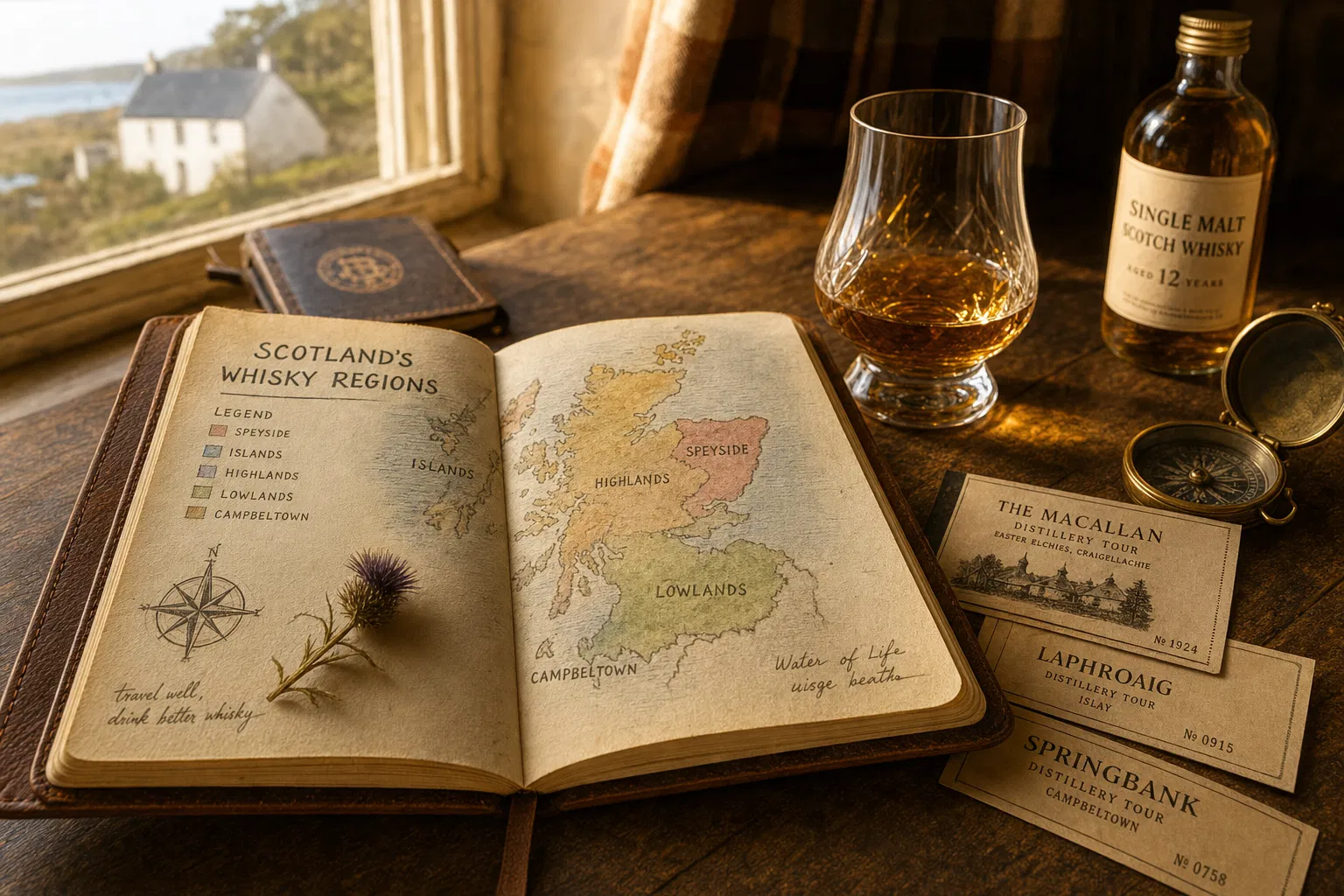
Scotland is the greatest whisky destination on earth. That's not a controversial statement - it's simply a fact. Over 150 active distilleries, five officially recognised regions, centuries of history, and some of the world's most spectacular scenery. The question isn't whether to go. It's how to make the most of it.
Start with a Region
Scotland is a big country, and trying to see everything in one trip is a mistake. Choose one or two regions and explore them properly.
First-time visitors should consider Speyside - the most concentrated whisky region, with excellent infrastructure for visitors and a wide range of distillery experiences. The Malt Whisky Trail provides a ready-made itinerary.
For peat lovers, Islay is non-negotiable. Allow at least three to four days on the island to do it justice.
For the complete Highland experience, a road trip from Perthshire through the Cairngorms to the north coast combines spectacular scenery with some of Scotland's most characterful distilleries.
When to Go
Scotland's whisky festivals are the highlights of the calendar:
- Spirit of Speyside (May): The Speyside region's annual festival, with distillery open days and special events.
- Feis Ile (May): The Islay Festival of Music and Malt - the world's greatest whisky event.
- Whisky Live Edinburgh (September): Scotland's largest whisky show.
- Spirit of Edinburgh (November): Edinburgh's whisky festival.
Outside of festival season, the distilleries are less crowded and the landscape is at its most dramatic in autumn (September-November).
Booking Distillery Tours
Most distilleries require advance booking for tours. The most popular experiences - The Macallan, Balvenie, and Springbank - can be booked out months in advance. Check distillery websites and book as early as possible.
Some distilleries offer exclusive experiences that go beyond the standard tour: private tastings, warehouse access, and cask selection. These are worth the premium for serious enthusiasts.
Getting Around
A car is essential for exploring Scotland's whisky regions. The roads are generally excellent, though some distilleries are down single-track lanes. Designated driver services are available in most regions for those who want to taste without worrying about driving.
For Islay, a car is essential once on the island. Book ferry crossings well in advance.
Where to Stay
The best whisky hotels in Scotland:
- Craigellachie Hotel (Speyside): The spiritual home of Speyside whisky tourism, with the legendary Quaich Bar.
- Gleneagles (Perthshire): Scotland's most iconic luxury hotel, with an exceptional whisky programme.
- Port Charlotte Hotel (Islay): The best hotel on Islay, with an excellent whisky selection.
Budget
A whisky holiday in Scotland can be done on any budget. Distillery tours range from free to £50+ for premium experiences. Accommodation ranges from budget B&Bs to five-star luxury hotels. The whisky itself is the main expense - but that's rather the point.
The Golden Rule
Don't try to visit too many distilleries in a day. Two or three is the maximum for a meaningful experience. Rushing from distillery to distillery means you'll remember nothing. Take your time, engage with the people, and savour every dram.
Frequently Asked Questions
When is the best time of year to visit Scotland for whisky?
May and September are the two best months. May coincides with the Spirit of Speyside Whisky Festival and Feis Ile on Islay, both of which offer exclusive distillery events and limited festival bottlings. The weather is mild and the days are long. September offers similar conditions without the festival crowds, and many distilleries are at full production after the summer break. Summer (June to August) is the busiest period for tourism, with the longest days, but distilleries can be crowded. Winter visits are quieter and more atmospheric, but some smaller distilleries reduce their visitor centre hours.
How much does a Scottish whisky holiday cost?
Costs vary enormously depending on the level of experience you want. Standard distillery tours run from free to around £20 per person. Premium experiences, such as private cask tastings or warehouse tours, range from £50 to £200 per person. Budget accommodation in guesthouses or B&Bs starts at around £60 per night. Mid-range hotels run £100 to £180 per night. The Craigellachie Hotel or Gleneagles will cost £250 to £500 per night. A well-planned 5-night whisky trip with mid-range accommodation, 2 to 3 distillery tours per day, and meals typically costs between £1,000 and £1,800 per person.
Do you need to book distillery tours in advance?
Yes, for most distilleries, especially the popular ones. Glenfiddich, The Macallan, Ardbeg, Lagavulin, and Laphroaig all require advance booking for their standard tours, and their premium experiences sell out weeks or months ahead. During festival periods, some experiences sell out within minutes of release. Smaller distilleries like Kilchoman or Daftmill are more flexible, but booking ahead is still recommended to avoid disappointment. The Cask-It™ interactive map links directly to each distillery's booking page.
Which Scottish whisky region is best for a first-time visitor?
Speyside is the best starting point for most first-time visitors. It has the highest concentration of distilleries in Scotland, excellent infrastructure, and a wide range of visitor experiences from world-class facilities at Glenfiddich and The Macallan to intimate family-owned distilleries like Glenfarclas. The Malt Whisky Trail provides a ready-made itinerary. Islay is the most dramatic and memorable destination, but the remoteness and the intensity of the whiskies make it better suited to those with some whisky experience.
Can you do a whisky holiday without driving?
It is possible but requires planning. Speyside has limited public transport, but the Speyside Way walking route connects several distilleries on foot. Organised whisky tours with a dedicated driver are available from several operators and are the best option for those who want to taste freely without worrying about driving. On Islay, a bicycle is a practical way to reach the southern shore distilleries from Port Ellen. Edinburgh and Glasgow both have excellent whisky bars and are easily accessible by train, making them good bases for those who prefer not to drive.
What should I pack for a Scottish whisky holiday?
Layered clothing is essential. Scottish weather is unpredictable at any time of year, and distillery tours often involve outdoor sections and warehouse visits where temperatures drop significantly. Waterproof jacket and boots are non-negotiable. A small notebook or tasting journal is useful for recording impressions. A Glencairn glass is worth packing if you have a favourite. Most importantly, bring a designated driver plan or a list of local taxi and driver services, particularly for Islay and Speyside where public transport is limited.