Cask-It Journal
The Woman Who Built the Backbone of Johnnie Walker
Helen Cumming ran an illegal still on a Speyside hillside, outwitted government excisemen with a red flag and a pot of tea, and went on to found Cardhu Distillery in 1824. Her malt became the backbone of Johnnie Walker Black Label. This is her story.
Helen Cumming ran an illegal still on a Speyside hillside for over a decade before the law caught up with her. When it did, she did not hide. She invited the excisemen in for tea.
While the officers sat at her kitchen table, Helen slipped out the back door and raised a red flag on the hill above Cardow Farm. Every illicit distiller in the valley knew what it meant. The excisemen would find nothing. Helen would return, smile, and pour another cup.
That red flag is still there today, on every bottle of Cardhu single malt. It is one of the most quietly extraordinary symbols in Scotch whisky history.
The Farm on Mannoch Hill
In 1811, Helen and her husband John Cumming took out a 19-year lease on Cardow Farm at Knockando, above the River Spey in the heart of what would become Speyside. The farm sat on a remote hillside with easy access to water and peat, two things a distiller needs above everything else.
Illicit distilling was common across Scotland at the time. The government's heavy excise duties made legal production uneconomical, and the Highlands and Speyside were full of small stills operating quietly on farms and in bothies. John Cumming was convicted three times between 1811 and 1823 for distilling privately. But it was Helen who was running the operation.
She was the one who managed the excisemen. On one occasion, warned that officers were approaching while she was brewing, she had just enough time to hide the distilling apparatus and substitute the materials of bread-making. When the knock came at the door, she opened it with a welcoming smile: "Come awa' ben, I'm just baking."
On other occasions, when the excisemen were billeted at the farm during their local investigations, Helen would cook them a meal and, while they ate, slip out and raise the red flag. The neighbours were warned. The evidence was gone. The officers found nothing.
Going Legal
The Excise Act of 1823 changed everything. The government, recognising that prohibition had failed, made legal distilling economically viable for the first time. The Cummings were among the first in Speyside to take out a licence, in 1824, with advice from George Smith, who would go on to found The Glenlivet.
Cardow Distillery, as it was then spelled, was officially born. Helen was its driving force from the start. She managed the day-to-day operation, handled the sales, and built the reputation that would eventually attract the attention of the most powerful blending house in Scotland.
Elizabeth Cumming and the Sale That Shaped Whisky History
Helen died in 1839, but the distillery she built did not stop. Her daughter-in-law Elizabeth Cumming took over the running of Cardow in the 1870s and proved to be every bit as capable. Under Elizabeth, the distillery was rebuilt and expanded. She installed new stills, improved the warehousing, and grew production significantly.
In September 1893, Elizabeth agreed to sell Cardow to John Walker and Sons for £20,500, plus 100 shares in the company worth £5,000 and a seat on the board for her son John. It was one of the most consequential transactions in the history of Scotch whisky.
The Walkers had been blending whisky in Kilmarnock since 1820. They recognised that Cardow's malt, with its light, honeyed, approachable character, was exactly what their flagship blend needed. Cardhu single malt became the backbone of what would eventually become Johnnie Walker Black Label, one of the best-selling Scotch whiskies in the world.
A year after the sale, Elizabeth Cumming died suddenly at the age of 67. She had spent her life building something that would outlast her by more than a century.
What Cardhu Tastes Like Today
Cardhu Distillery sits at Knockando on Speyside, in the same valley where Helen Cumming raised her red flag. The whisky it produces is light, sweet, and approachable, with notes of honeyed fruit, vanilla, and gentle warmth. It is an excellent introduction to Speyside single malts and one of the most historically significant distilleries on the Malt Whisky Trail.
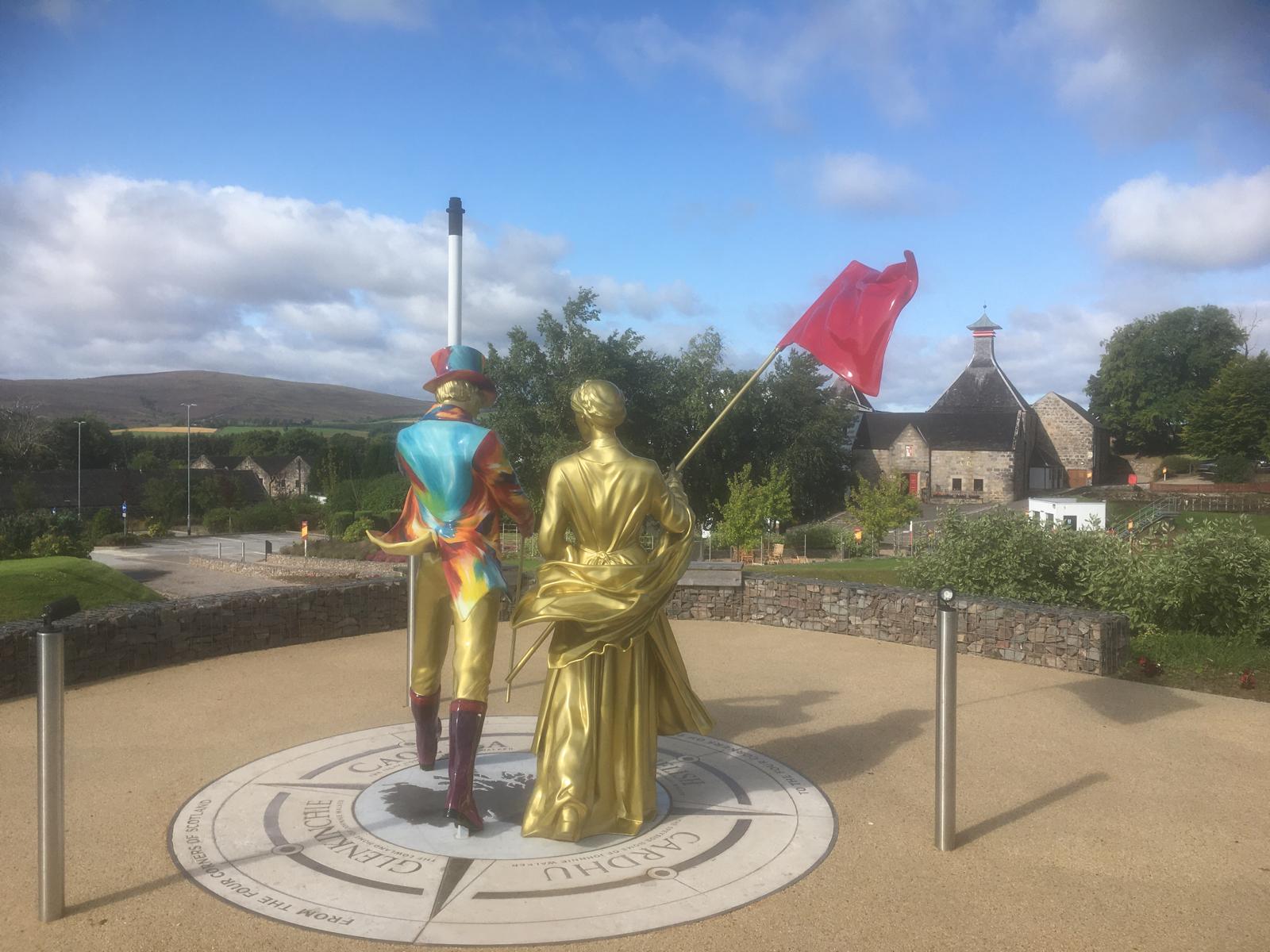
The visitor centre tells the full story of Helen and Elizabeth Cumming. Outside, the statue of two golden figures stands in the grounds: Helen Cumming with her red flag, and the Johnnie Walker Striding Man beside her. Two people, two centuries apart, both moving forward.
If you are planning a trip through Speyside, Cardhu is worth your time not just for the dram, but for what it represents. A woman on a hillside, a red flag, and the quiet determination that built one of the great names in Scotch whisky.
Explore the full Speyside Malt Whisky Trail guide and plan your visit to Cardhu Distillery on Cask-It.
Frequently Asked Questions
Who was Helen Cumming? Helen Cumming was the co-founder of Cardhu Distillery on Speyside, Scotland. Along with her husband John, she began illicit distilling at Cardow Farm in 1811 and was instrumental in obtaining one of the first legal distilling licences under the Excise Act of 1823. She is best known for using a red flag to warn neighbouring illicit distillers when government excisemen were approaching, while entertaining the officers inside with tea and food. Her legacy is commemorated on every bottle of Cardhu single malt whisky.
What is the red flag story at Cardhu Distillery? During the years of illicit distilling before 1824, Helen Cumming would raise a red flag on the hillside above Cardow Farm to warn neighbouring distillers when government excisemen were approaching. She would then invite the officers inside for a meal, keeping them occupied while the evidence of distilling was hidden. The red flag became the symbol of Cardhu and appears on every bottle of Cardhu single malt to this day.
When was Cardhu Distillery founded? Cardhu Distillery was officially founded in 1824, when John and Helen Cumming obtained one of the first legal distilling licences under the Excise Act of 1823. The Cummings had been distilling illegally at Cardow Farm since 1811. The distillery was originally spelled Cardow and was renamed Cardhu in 1981.
How is Cardhu connected to Johnnie Walker? In 1893, Elizabeth Cumming, Helen's daughter-in-law, sold Cardhu Distillery to John Walker and Sons for £20,500. The Walkers used Cardhu's light, honeyed single malt as a key component in their blends, and it became the backbone of Johnnie Walker Black Label, one of the best-selling Scotch whiskies in the world. Cardhu single malt remains a key component of Johnnie Walker blends to this day.
Can you visit Cardhu Distillery? Yes. Cardhu Distillery at Knockando, Speyside, is open to visitors and is part of the official Speyside Malt Whisky Trail. The visitor centre tells the story of Helen and Elizabeth Cumming, and the grounds feature a statue of Helen Cumming with her red flag alongside the Johnnie Walker Striding Man. Tours and tastings are available. The distillery produces a light, honeyed single malt that is an excellent introduction to Speyside whisky.
What does Cardhu whisky taste like? Cardhu single malt is light, sweet, and approachable, with notes of honeyed fruit, vanilla, toffee, and gentle warmth. It is one of the most accessible Speyside single malts and an excellent starting point for those new to Scotch whisky. The 12 Year Old is the most widely available expression. Cardhu is also a key component of Johnnie Walker Black Label.