Cask-It Journal
Why a Campbeltown Whisky Trip Is More Than a Bottle Hunt
Plan a Campbeltown whisky trip for access, history and time, not a rare bottle. Compare tours, tastings and a realistic stay on the Kintyre coast.
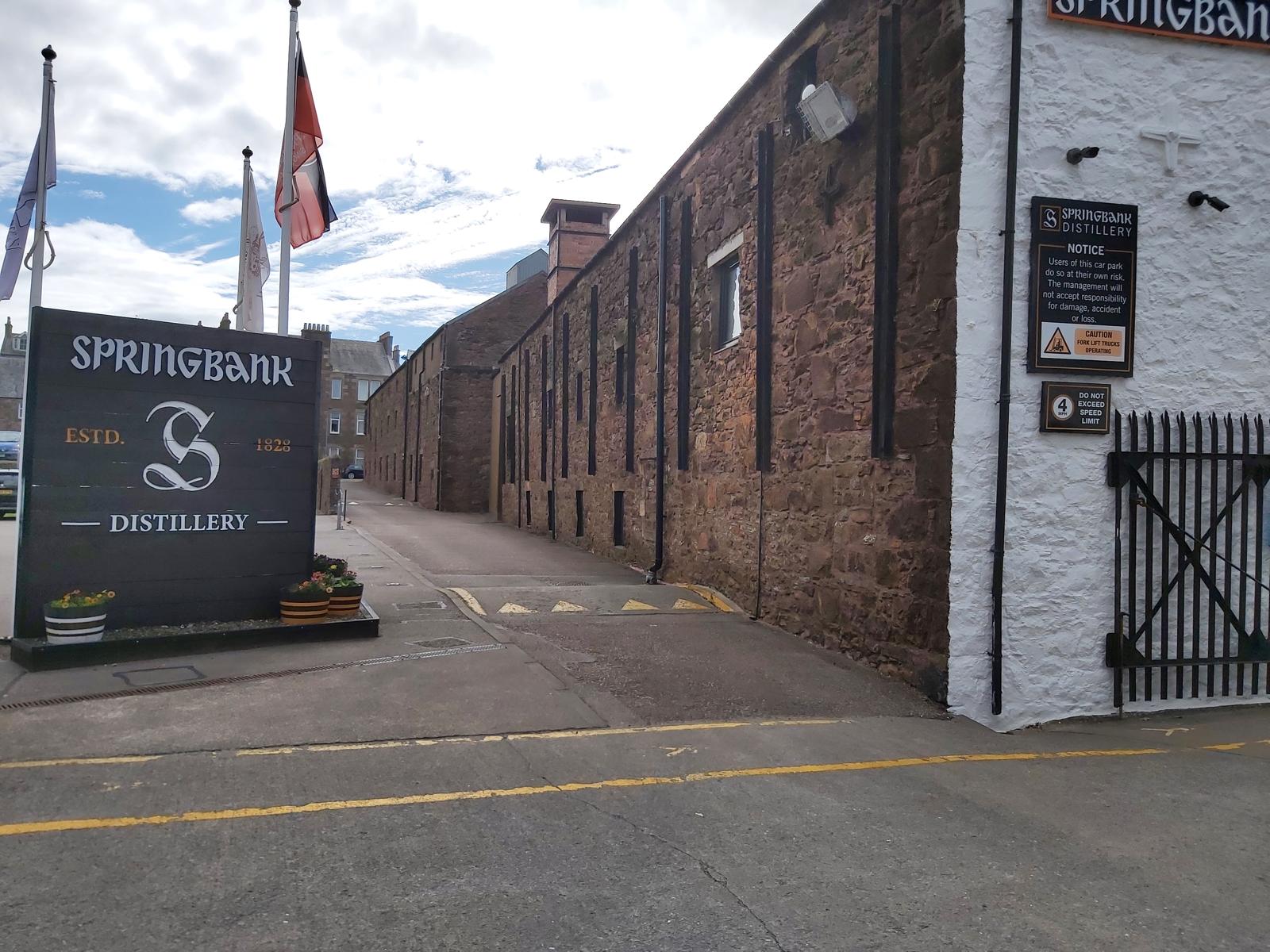
Why a Campbeltown Whisky Trip Is More Than a Bottle Hunt
Search for Campbeltown whisky online and the conversation often turns to the same subject: bottles that are difficult to find.
That scarcity can overshadow the better reason to travel. Campbeltown gives visitors an unusually concentrated choice of working-distillery tours, warehouse tastings, heritage walks and hands-on whisky experiences. The question worth carrying toward Kintyre is not about what might be waiting on a shop shelf.
Will I find something rare?
That is the wrong first question.
The better question is this: How close do I want to get to the work of making whisky?
Campbeltown offers something unusually concentrated. A visitor can compare a historic working distillery, a revived distillery, a dunnage warehouse, a heritage walk and a hands-on blending experience without treating the town as a collection of retail counters. The bottle you take home may matter. The access, people, production choices and town around it should matter more.
This is how we would plan a Campbeltown whisky trip that succeeds even if the bottle you hoped to buy never appears on a shelf.
Campbeltown Is Not a Footnote to Another Whisky Region
Campbeltown is one of the five official Scotch whisky areas, although the legal language is more precise than most travel guides. The Scotch Whisky Regulations identify Campbeltown and Islay as protected localities, while Highland, Lowland and Speyside are protected regions. That distinction does not make Campbeltown less important. It shows that the place name carries legal meaning when it is used to describe Scotch whisky.
The town earned that meaning through an extraordinary rise and collapse.
More than 30 distilleries operated in Campbeltown during the Victorian era. Local barley, peat, water, coal and a natural harbour helped turn the town into a production and shipping centre. The Argyll and Isles account of Campbeltown's whisky history describes how steamships connected its whisky to Glasgow, London and the United States.
Then the structure cracked. Some producers cut corners. The region's reputation suffered. Duties, war, Prohibition, changing tastes and the Great Depression reduced demand. By 1934, Springbank and Glen Scotia were the two operating survivors.
Today there are three working names to understand: Springbank, Glen Scotia and Glengyle, home of Kilkerran. Glengyle's return is part of the hidden story. The official Glengyle history records that the distillery stopped production in 1925, its buildings survived through other local uses, and Mitchell's Glengyle bought and rebuilt the site after 2000. The first new spirit ran in 2004.
This is not a museum town pretending whisky still happens here. Production survived, returned and remained visible.
Stop Ranking Tours Before You Know What You Want
The phrase best distillery tour sounds useful. It is usually incomplete.
A one-hour production tour, a warehouse tasting and a four-and-a-half-hour hands-on experience are not competing versions of the same product. They answer different questions.
| Experience type | What it is designed to reveal | Best for | What to confirm before booking |
|---|---|---|---|
| Standard distillery tour | The production sequence, site history and a guided dram | First-time visitors and mixed-interest groups | Whether production is operating, age rules and stairs |
| Warehouse tasting | Maturation, cask variation and spirit drawn from selected casks | Drinkers who already understand the basic process | Number and strength of samples, driver arrangements and age restrictions |
| Heritage walking tour | Lost distilleries, buildings, people and the town's whisky geography | Visitors who want Campbeltown, not only a brand | Weather plan, walking distance and accessibility |
| Hands-on production and blending | More time, deeper access, cask samples and a personal blend | Enthusiasts who value participation over speed | Exact inclusions, production calendar, food, duration and cancellation terms |
At the time of research, Springbank's tour menu listed a one-hour standard tour at £15 and a separate one-hour Kilkerran tour at £12. It also listed warehouse tastings and blending sessions.
The premium Barley to Bottle experience was listed at £250 and 4.5 hours, with a maximum group of eight. It included access across the process, cask samples, a blending session, a 70cl personal bottle, lunch, a glass and a visitor miniature.
That is not simply a more expensive standard tour. It is a different use of half a day.
Glen Scotia's visitor page showed the same principle from another angle. Its listed options ranged from a one-hour distillery tour to a two-hour dunnage warehouse experience, along with a whisky heritage walking tour through Campbeltown. Prices, dates and availability can change, and its page contains season-specific notices. Check the live booking page before relying on any listing.
A useful choice starts with one sentence:
I want this visit to help me understand ________.
Fill the blank with production, maturation, history, flavour, people, or place. Then book the experience that answers it.
Production Is Not Theatre on Demand
This is the detail many itinerary articles miss.
A working distillery does not reorganize production for every tour group. Maintenance happens. Silent seasons happen. Different sites run at different times.
Springbank's standard-tour page says its own production stops from early September through December, although tours continue. Its Barley to Bottle page says that from mid-September through the end of the year the itinerary adds Glengyle, which normally produces from late September into December. It also warns that there can be days when neither distillery is producing.
The Kilkerran tour page states the inverse: Glengyle normally has no production from January until late September, while tours still operate.
That is not a reason to cancel. It is a reason to ask the right question before paying:
What will be operating on my date, and how will the experience change if production is paused?
A silent mash tun can still be explained. A stillroom can still teach scale, shape and workflow. A warehouse can still reveal how maturation changes spirit. But if hearing, smelling and seeing active production is central to your trip, the calendar matters as much as the ticket.
Stewart's Trade Lens: Ask What Access the Ticket Buys
Stewart Hunt has spent more than 30 years in the whisky industry. That experience makes one distinction especially useful here: price is not the same as access, and access is not the same as learning.
A premium tour may buy more time with staff, smaller groups, entry to working or restricted areas, older or cask-strength samples, a meal, a blending exercise or something to take home. Those inclusions can be valuable. They should be visible before the booking is made.
The strongest booking questions are practical:
- How much of the time is spent in production areas?
- Will the distillery be operating on this date?
- Who leads the experience?
- How large is the group?
- What is tasted, and at what strength?
- Is a takeaway sample available for a driver?
- What parts of the route involve stairs, uneven floors or confined spaces?
- What remains valuable if production or one area is unavailable?
This is also why Campbeltown's different formats matter. Springbank says it carries out the full whisky-making process on one site, from traditional methods through maturation and bottling. Glen Scotia says its 1830s mash tun, stillroom and dunnage warehouse remain part of the working site. Glengyle gives visitors a different story: a distillery that closed, survived as buildings, and returned to production in the twenty-first century.
One town gives you three ways to think about continuity.
Kevin's American Lens: Protect the Time You Crossed an Ocean to Use
Kevin White's role in this partnership is different. He is Stewart's American brother-in-law, looking at Scotland with the questions an international visitor actually brings.
The most expensive part of a Campbeltown trip may not be the tour. It may be the day you lose by treating the journey as a quick detour.
The Argyll and Isles destination guide says the daily coach journey from Glasgow to Campbeltown takes about 4.5 hours. It also presents Kintyre as a place for beaches, seafood, walking, golf, heritage and the Kintyre 66 route, not merely a whisky stop.
That leads to a direct recommendation: do not plan Campbeltown as a rushed out-and-back day from Glasgow unless the transport and timetable genuinely work for you. A night in town changes the experience. Two nights make it easier to choose one deep whisky booking without sacrificing every other part of the peninsula.
A realistic one-night framework
Arrive with enough margin that a delayed coach, flight or drive does not destroy a fixed booking. Use the first afternoon for the town, a standard tour, a heritage walk or a tasting that does not depend on a tight connection. Stay overnight. Put your anchor experience the next morning, then leave buffer before the journey out.
A more comfortable two-night framework
Use the first day to arrive and understand the place. Walk the harbour and old whisky streets. Visit one distillery or heritage experience. Use the second day for the deeper booking, then add one shorter experience only if the timing is comfortable. Keep the second night so a long tasting does not become a transport problem.
If you book Barley to Bottle, recognize what 4.5 or 5 hours means. That is the centre of the day. Do not stack it between two more timed tours and call the result value.
For wider planning, use the Cask-It guide to choosing a whisky region, then compare places on the interactive whisky map. Campbeltown is a destination choice, not an accessory to an already crowded itinerary.
If you would rather build the route with a host, see the Hunt the Dram tour information. It covers private whisky experiences, small-group planning and bespoke Scottish itineraries led by Stewart Hunt. Check current availability and the exact scope of each itinerary directly.
The Bottle-Hunt Reality Check
Springbank's standard-tour page states that shop products cannot be reserved before the tour begins. That single sentence should reset expectations.
A distillery visit is not a guaranteed allocation event. Limited bottles can sell out. Shop rules can change. A product available to one visitor may not be available to the next.
Build a trip that is successful without the purchase.
Ask yourself before leaving home:
- Would I still make the journey for the production access?
- Would I still value the warehouse or blending session?
- Do I want to understand how three distilleries carry one town's history differently?
- Am I giving Campbeltown enough time to be a place rather than a queue?
If the answer is yes, a special bottle becomes a memory attached to a good trip. If the answer is no, the trip has been built around an outcome no operator promised.
A Campbeltown Pre-Booking Checklist
Use this before paying for a tour, tasting or package.
- Choose one anchor experience. Make it the booking that answers your main whisky question.
- Confirm the production calendar. Ask what will operate on your exact date.
- Check the live inclusions. Prices, drams, meals, bottles and group sizes can change.
- Protect the transfer. Do not place a fixed tour too close to your arrival.
- Plan the driver before the dram. Scottish Government guidance is blunt: the only way to be sure you are not over the limit is to avoid alcohol before driving.
- Ask about takeaway samples. Never assume a driver sample is available.
- Confirm age and access rules. Springbank allows accompanied under-18s on its standard Springbank and Kilkerran tours, but not on Barley to Bottle or its warehouse tasting.
- Read the cancellation terms. Weather, transport and rural travel can disrupt a plan.
- Separate shop hopes from tour value. No rare bottle should be the condition for a successful day.
- Leave room for Campbeltown. The town's harbour, old distillery sites and surviving buildings are part of the whisky story.
The Cask-It first distillery tour guide will help with the basics. The Campbeltown region guide and individual pages for Springbank, Glen Scotia and Glengyle will help you compare the places.
Frequently Asked Questions
Is the Springbank Barley to Bottle tour worth the price?
It can be worth the listed £250 to a visitor who wants a long, small-group, hands-on experience with production access, cask samples, blending, lunch and a personal 70cl bottle. It is not automatically better for someone who wants a concise introduction. Compare the inclusions with your main question, available time and total trip budget.
How many days do you need in Campbeltown for whisky?
One night is the practical minimum for many visitors coming from Glasgow, because the destination authority estimates the coach journey at about 4.5 hours. Two nights give you room for one deep experience, one shorter visit and the town itself without stacking tastings around a long return journey.
Can you visit Springbank, Glen Scotia and Glengyle in one trip?
Yes, but do not assume every experience will fit on one day or that all three sites will be producing. Check current booking calendars, choose one anchor experience and add shorter visits only when transfer and tasting times remain comfortable.
Do you need a car for a Campbeltown whisky trip?
No. Daily coach services connect Glasgow and Campbeltown, according to the regional destination authority. A car can open more of Kintyre, but it creates a drinking-and-driving constraint. Decide on transport before choosing tastings.
Will the distilleries be producing whisky during my visit?
Not necessarily. Springbank and Glengyle publish different production periods, and both say tours can continue when production is paused. Ask what will be operating on your date and what the guide will substitute if a production area is silent.
Can children join Campbeltown distillery tours?
Policies vary by experience. Springbank currently allows accompanied under-18s on its standard Springbank and Kilkerran tours, but not on Barley to Bottle or the Cadenhead's Warehouse Tasting. Confirm the current rule directly before booking.
Can I expect to buy a rare Springbank bottle at the distillery?
No. Springbank says products cannot be reserved before its standard tour, and availability can change. Treat any special purchase as a bonus, not the purpose or promised outcome of the trip.
About the authors
Stewart Hunt has worked in the whisky industry for more than 30 years. Kevin White, his American brother-in-law, explores Scotland's whisky places with him. They write Cask-It as family, combining trade experience with the questions international visitors actually ask.
Explore more distilleries, whisky places and family stories in the Cask-It Journal and interactive whisky map.
Sources and tour planning
- The Scotch Whisky Regulations 2009, Regulation 10
- Campbeltown's whisky history from Wild About Argyll
- Glengyle Distillery history
- Springbank tours and tastings
- Glen Scotia distillery tours
- Campbeltown and Kintyre destination guide
- Scottish Government drink-drive guidance
- Hunt the Dram tour information