Cask-It Journal
Balblair 15: The Whisky From a Distillery That Moved
Balblair 15 comes from a Highland distillery that moved for the railway. Explore its bourbon and sherry casks, vintage history and what to ask on a visit.
By Stewart Hunt & Kevin White
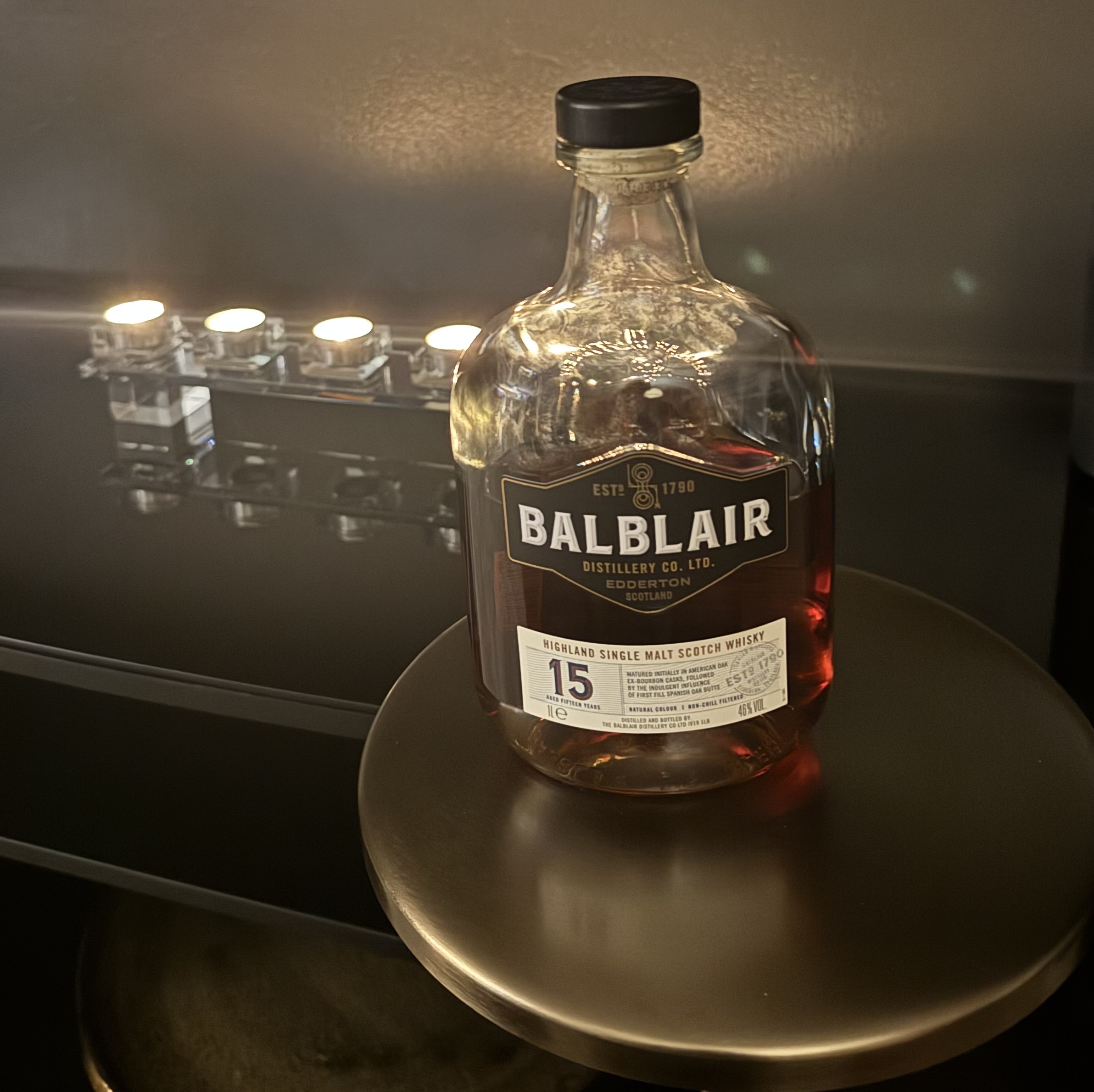
Balblair 15, bottled at 46% ABV. Photograph supplied by Kevin White.
Balblair moved half a mile to meet a railway. The distillery's own account says it took its stills, warehouses and walls along with it. That is a more interesting introduction than another paragraph calling a Highland whisky smooth. Balblair tells the relocation story here.
The bottle in the photograph is Balblair 15: a 15-year-old Highland single malt Scotch whisky bottled at 46% ABV. Its maturation starts in American oak ex-bourbon casks and continues in first-fill ex-sherry oak butts. It is bottled at natural colour and without chill filtration. The product specifications are documented here.
There are two useful stories behind that bottle. One explains how the distillery reached a wider market. The other explains why the label says 15 instead of a vintage year.
Both help you understand what you are buying and give you better questions to ask at the distillery.
The railway changed where Balblair made its whisky
Balblair traces its foundation to John Ross in 1790. It sits in Edderton, near Tain, in the northern Highlands. The founding date is worth knowing, but the practical decision that followed is the better story. Its official history records the Ross family connection.
In the railway era, Balblair moved north to meet the line. The distillery describes the move as taking its “stills, warehouses, walls and all.” ScotchWhisky.com dates the relocation to 1895. ScotchWhisky.com gives the historical chronology.
The railway brought coal and barley in. It also connected the whisky with a wider market, according to Balblair's account. This was a working business adapting to transport, not a distillery preserved outside ordinary economic life. The distillery explains that connection.
That matters when you hear a whisky described only through tradition. Tradition does not mean nothing changed. Here, the people making the whisky changed its physical position to improve access to supplies and customers.
The relocation gives you something specific to ask about on a visit. Where was the earlier site? What survives from that period? How did the railway affect the work?
Those questions lead to the people and practical decisions behind the buildings. They are more revealing than asking a guide to repeat the founding date.
The other move happened on the label
In March 2019, Balblair announced a new age-statement collection. The launch included 12-, 15-, 18- and 25-year-old expressions, all bottled at 46% ABV. The core range moved away from the vintage releases for which the distillery had become known. The Spirits Business reported the launch.
That is where Balblair 15 belongs. It is not an old vintage bottle with a different name stuck on it.
A vintage tells you the calendar year in which the whisky was distilled. An age statement tells you the age of its youngest alcoholic component. These are different pieces of information, not rival ways of saying the same thing. The Scotch Whisky Regulations distinguish them.
The difference can confuse a buyer looking at two Balblair bottles. One might carry a large distillation year. Another carries a large 15. You need the older bottle's bottling information or declared age before comparing their maturation periods.
Subtracting a vintage year from today's date will not tell you how long that whisky spent in wood. Once it was bottled, its time in the cask had ended.
At the launch, Balblair's brand manager presented the change as a new collection that would reinvigorate the brand. The company also said limited vintage expressions would continue. That is not evidence that every old vintage and every new age-statement release taste alike. The contemporary reporting makes that distinction possible.
For you, the practical change is easier navigation between age-statement bottles. What the number cannot do is choose your favourite flavour.
If old Balblair vintages interest you, treat each release as its own bottle. Check the distillation year, bottling information, cask details and strength. Do not buy it simply because an older-looking date feels more impressive.
The Cask-It guide to reading a Scotch whisky label explains the other details worth checking.
Bourbon first. Sherry second.
Balblair's current description of the 15 is straightforward: American oak ex-bourbon casks first, then first-fill ex-sherry oak butts. The earlier launch reporting identifies that second stage as Spanish oak sherry butts. The current product page describes the sequence.
This is not a claim that the whisky spent its entire life in sherry casks.
It is also not 15 years plus an unspecified extra age that you should add yourself. The age statement applies to the whisky's maturation, including its youngest component. The current official product page does not state an exact number of years for each stage.
You will find more precise splits in some reviews. Do not mistake repeated numbers across websites for a current specification from the producer. If that split matters to your buying decision, ask Balblair about the bottling in front of you.
The sequence is useful even without a timetable for every cask. It gives you a reason to look for both the lighter fruit-and-vanilla side of the whisky and the influence of the later sherry casks.
It also explains why “sherry whisky” is too broad a shopping category. A whisky that starts in bourbon casks and moves to sherry wood is not described by the same maturation history as one matured throughout in sherry casks.
Neither method automatically wins. The better question is which combination suits what you enjoy.
Our earlier story, The Second Cask Changed Scotch Whisky, explains why that distinction deserves more attention than a colour comparison.
Fruit and chocolate, not just a dark colour
Balblair's own tasting description names gingerbread, honey, prunes and lemon on the aroma side. It describes dark chocolate, tropical fruit and vanilla on the palate, with citrus and vanilla in the finish. Those are Balblair's published tasting descriptors. Read Balblair's tasting description.
Use those words as a direction, not an examination paper. You do not need to identify every named fruit to enjoy a whisky or decide whether it suits you.
A more useful tasting question is whether the fruit remains clear beside the oak and spice. Another is whether the finish leaves you wanting another small sip or feels too drying for your preference.
Those questions help you form your own view. They also make more sense than choosing a bottle because several reviewers agree on a score.
Natural colour and non-chill filtration are useful label details. They do not establish that a whisky is better than every bottle that uses a different presentation. Nor does the darkness tell you its exact age or how much sherry influence you will enjoy.
The specifications tell you what Balblair has bottled. Your own preferences decide whether it belongs on your shelf.
If you can try a small measure before buying, do that. Taste it as served first. If you choose to add water, add a little and compare rather than assuming one method is correct for everyone.
There is no need to manufacture a long list of flavours. A clear answer to “Would I want a bottle of this?” is more useful than an impressive paragraph you do not believe.
Balblair 15 versus 12: compare the casks before the birthdays
The 2019 collection did not present the 12 and 15 as identical recipes with different ages. The 12's launch description used ex-bourbon and double-fired American oak casks. The 15 added the first-fill Spanish oak sherry-cask stage. The launch report sets out both maturations.
That gives you a better starting point than deciding that 15 must beat 12.
If you prefer a brighter whisky, a lighter-looking bottle deserves a fair hearing. If you want a whisky with a documented sherry-cask stage, the 15 gives you that specific production detail. Check the current description of each bottle rather than treating a launch document as a permanent recipe guarantee.
An older number does not settle personal preference. It does not tell you which bottle offers better value at the prices available where you live.
If you have the chance to taste the two together, keep the comparison simple. Use comparable glasses and serving amounts. Notice the fruit, the oak influence and the finish before looking at a review score.
Then look at the price difference. Would you pay it for the whisky you actually preferred? That is a more useful buying decision than paying for a bigger age statement.
The one-litre bottle changes the price comparison
The bottle pictured here is a one-litre Balblair 15. Its label also shows 46% ABV, natural colour and non-chill filtration.
That bottle size matters when you compare prices. A review discussing a 70cl bottle is not necessarily discussing the same quantity as the bottle pictured here.
Compare price per litre, alcohol strength and the actual expression. Include delivery costs and any taxes that affect your purchase. A lower headline price can be a poor comparison if the bottles contain different amounts.
The bottle already gives us enough to work with: the distillery, age statement, strength, presentation and cask description. Those are the details that make a buying comparison useful.
Follow the bottle back to Edderton
Balblair advertises distillery tours at its Edderton site. Its visitor pages also describe a shop with older and rarer bottlings and a bottle-your-own experience. Those are advertised offerings, not a guarantee that a particular tour slot or bottle will be available. Check Balblair's visitor information and current tour booking page.
Visitor information was checked on 25 October 2026. Confirm arrangements directly before travelling, especially if you want a particular tasting or access to a particular part of production.
The bottle gives you a short list of good questions to take with you.
Ask how the 15 is selected and how the bourbon and sherry stages shape the intended style. Ask about the earlier vintage releases if there are examples available. Then ask about the railway relocation and the earlier site.
The current product page names Sarah Burgess as Master of Whisky Creation and says she selects the maturation casks. That brings the bottle back to a person's choices, rather than treating an age statement as the whole production story. Balblair identifies that role here.
Start planning with the Cask-It Balblair distillery listing. Use the whisky map to place it within your wider route, rather than assuming every Highland distillery is a short drive from the next.
For help building a whisky trip around your interests, see Hunt The Dram. And if this is your first distillery visit, read what to expect on a Scottish whisky tour.
Balblair 15 offers a useful way into this distillery: a clear age statement, a documented two-stage maturation and a place that changed to meet a railway. Read the label carefully, taste for yourself when you can, and let the bottle lead you to better questions.
Frequently Asked Questions
What is Balblair 15?
Balblair 15 is a 15-year-old Highland single malt Scotch whisky bottled at 46% ABV. It starts in American oak ex-bourbon casks and continues in first-fill ex-sherry oak butts. It is bottled at natural colour and without chill filtration. The specifications are listed here.
Is Balblair 15 fully matured in sherry casks?
No. Balblair describes an initial maturation in American oak ex-bourbon casks followed by first-fill ex-sherry oak butts. The current official page does not specify an exact duration for each stage. Check the producer's description.
Why did Balblair change from vintages to age statements?
Balblair introduced an age-statement core collection in 2019 as part of a brand and packaging revamp. It described the collection as a way to reinvigorate the brand and said limited vintage releases would continue. The change did not make a vintage year and an age statement mean the same thing. Read the contemporary report.
What does the 15 on Balblair mean?
It is an age statement referring to the youngest alcoholic component, expressed in years. It does not mean the whisky was distilled in a year ending in 15. A distillation-year statement is governed separately by the Scotch Whisky Regulations. The legal distinction is set out here.
Why did Balblair distillery move?
Balblair says it moved half a mile north to meet the railway, which brought coal and barley in and connected its whisky with a wider market. ScotchWhisky.com dates the relocation to 1895. Read Balblair's account and the independent chronology.
Can you visit Balblair distillery?
Balblair advertises tours at Edderton, near Tain, in the northern Highlands. Check its current booking page for dates, availability and what each experience includes. Visitor information in this article was checked on 25 October 2026, not guaranteed for a future travel date. Check current tours.
About the authors
Stewart Hunt has worked in the whisky industry for more than 30 years. Kevin White, his American brother-in-law, explores Scotland's whisky places with him. They write Cask-It as family, combining trade experience with the questions international visitors and whisky buyers actually ask.
Find more distillery stories in the Cask-It Journal, or use the whisky map to plan the places you want to understand better.