
Cask-It Journal
The Second Cask Changed Scotch Whisky. Here Is What Your Label Leaves Out.
A Scotch whisky cask finish can transform a dram, but the label rarely reveals the full timeline. Here is how to read what happened in the wood.
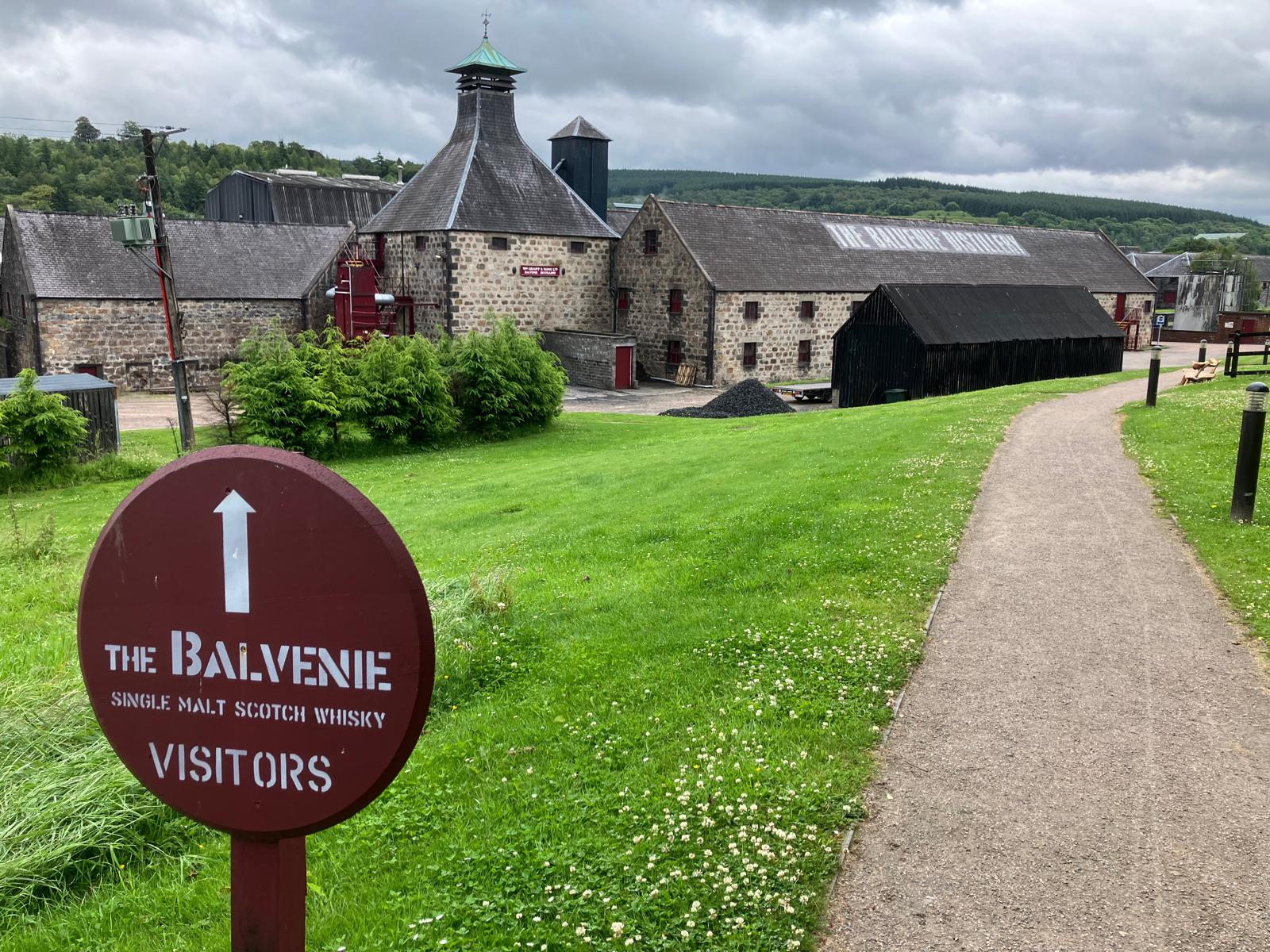
The Second Cask Changed Scotch Whisky. Here Is What Your Label Leaves Out.
In 1982, a quiet experiment at The Balvenie helped change the way whisky is made around the world.
David Stewart took mature single malt from American oak and moved it into European oak that had held sherry. The second cask was not meant to replace the first twelve years. It was there to add another layer.
The result became The Balvenie Classic in 1983. Ten years later, it was renamed DoubleWood. Today, finished whiskies appear in almost every serious whisky range, from sherry and port to rum, Madeira, wine, beer, and less familiar cask types.
That success created a new problem for drinkers. A label may tell you the final cask, but not the complete life of the whisky.
Sherry cask, Oloroso finish, and double matured can look like variations of the same promise. They are not. One might describe a whisky that spent nine months in sherry wood after twelve years in American oak. Another might describe a whisky that spent all fifteen years in Oloroso casks. The cask word can be identical while the timeline is completely different.
This is the hidden story behind the modern Scotch whisky cask finish. It begins with an experiment, but it ends with three questions that can make you a better buyer, taster, and distillery visitor.
The Experiment That Became an Industry
Whisky merchants had used casks that previously held wine for generations. In the nineteenth century, merchants who imported sherry and port often reused the empty casks for whisky. Those were practical decisions about available containers, and they commonly involved long or complete maturation rather than a carefully planned final stage.[1]
Modern cask finishing was more deliberate.
David Stewart joined William Grant & Sons in 1962 at the age of seventeen. He spent twelve years learning the work that would make him one of Scotch whisky's longest-serving malt masters. In the early 1980s, he began moving mature Balvenie whisky from American oak into European oak casks that had held sherry.[2]
William Grant & Sons says Stewart invented cask finishing through the Balvenie Classic range. A broader trade history describes him as one of the first distillers to experiment with the method and notes that Glenmorangie and others were exploring similar ideas during the same period.[2] [3]
That distinction matters. Whisky history is full of parallel experiments and competing firsts. The defensible claim is that Stewart and The Balvenie were central pioneers of the modern practice, and that the 1983 Balvenie Classic gave the idea a lasting commercial form.
The modern DoubleWood 12 still makes the timeline unusually clear. It matures in American oak for twelve years, then moves to European oak sherry casks for an additional nine months.[4] The second cask does not erase the first. It works on a whisky that already has an established structure.
Stewart later described wood as the key and experimentation as slow work. Different casks do not merely supply a flavour name. They have to fit the spirit, the existing maturation, and the intended house style. Some experiments reach a bottle. Others stay in the warehouse.[2]
That is the real invention. It was not simply using a sherry cask. It was treating the second cask as a controlled final decision.
What a Cask Finish Actually Means
The Scotch Whisky Association gives a useful definition. Finishing is an extension of maturation in which spirit is moved into empty casks that previously held another wine or spirit for a relatively short period at the end of maturation. The previous liquid must be drained. Any change must result from the spirit's interaction with the wood over time.[5]
Scotch whisky law sets the foundation. The spirit must mature in Scotland, in oak casks no larger than 700 litres, for at least three years. It must mature in an excise warehouse or other permitted place, and it must retain the colour, aroma, and taste derived from production and maturation.[6]
The law does not create a separate category called full maturation. That phrase is useful producer language, not a sixth legal category of Scotch.
The practical distinction is about time and sequence:
| Maturation description | What usually happened | What the label may not tell you |
|---|---|---|
| Cask finish | Most maturation occurred in one cask regime, followed by a shorter final period in another cask. | The finish duration, cask fill history, and exact share of each component. |
| Secondary or further maturation | The whisky moved to another cask for a meaningful second period, sometimes measured in years. | Whether the producer considers that period a finish, further maturation, or part of a multi-cask recipe. |
| Full maturation | The named cask type governed the entire stated maturation. | Whether every cask was identical in size, oak species, prior use, or activity. |
These are not quality grades. Full maturation is not automatically better. A short finish is not automatically superficial. The question is whether the wood and time suit the spirit.
The Label Gives You a Cask Name, Not a Biography
Our existing guide to reading a Scotch whisky label explains the major terms. The deeper lesson is that a cask word is only the headline.
Consider two bottles.
Cù Bòcan 15 Year Old 2023 Edition was matured fully in Oloroso sherry casks for at least fifteen years. Tomatin also states that it was bottled at 50 percent alcohol by volume, at natural colour, and without chill filtration.[7]
The Borders Distillery's inaugural single malt presents a different sequence. First-fill bourbon barrels form the foundation. The whisky then receives a Madeira finish. The distillery describes eight years in the Scottish climate, while trade reporting identifies the second stage as Malmsey Madeira casks.[8] [9]
Both bottles ask the drinker to think about a wine-related cask. Only one spent its complete fifteen-year maturation in that named cask type. The other built its base in bourbon wood before the Madeira stage added a final influence.
Neither method wins by definition.
A fully sherry-matured whisky can become deeply shaped by that environment. It can also become too woody if the casks are very active or the spirit is not strong enough to carry the influence. A finish can add lift, fruit, spice, or contrast. It can also cover the distillery character if the finishing cask is too forceful.
The words on the label do not settle that argument. They tell you where to begin asking.
Why the Second Cask Is Harder Than It Looks
Cask finishing sounds simple when reduced to a diagram. Empty one cask. Fill another. Wait. Bottle.
The real decision has more variables.
A whisky team has to consider the spirit's weight and character, the age and previous use of the finishing cask, the oak species, the cask size, the char or toast, the warehouse conditions, and the amount of time already spent in the first cask. The second cask may be more active than the first because it has held liquid fewer times. A small cask can create faster contact because more liquid touches wood relative to volume.
The permitted cask universe also has boundaries. Scotch may be matured or finished in new oak or in oak casks previously used for wine, beer, ale, or spirits, subject to conditions. Casks previously used for cider are not permitted. Nor are casks associated with certain stone-fruit products or drinks altered with flavouring or sweetening after fermentation or distillation. Any cask must still produce the colour, taste, and aroma generally found in Scotch whisky.[10]
Then there is the question of what actually moves from wood to spirit.
A peer-reviewed study compared Scotch distillates matured in oak casks with different histories over their first three years. Chemical analysis found differences in wood-derived compounds and clear changes over time. Sensory analysis also detected changes associated with early maturation and differences between casks, including spicy, smooth, vanilla, and woody descriptors.[11]
The study does not give a simple formula for predicting a finished whisky. It supports the opposite conclusion. Time and cask history both matter, and the interaction is complex.
Trade specialists still debate how much influence comes from liquid held within the wood, how much comes from chemical changes to the oak, and how quickly either effect appears. What they agree on is that the finishing cask must complement the spirit rather than smother it.[3]
This is where Stewart's three decades in whisky provide the experienced lens. The professional question is not, Which cask sounds most impressive? It is, What job was this cask asked to do?
Kevin's American perspective supplies the next question. If a bourbon drinker sees sherry finish on a Scotch label, what should he expect the first cask to contribute, and what belongs to the second?
That is a better way to approach the bottle than memorising a list of flavour words.
Three Questions That Reveal the Real Whisky
Before buying a cask-led Scotch, ask three questions.
1. What was the primary maturation?
This is the whisky's foundation. If the producer says the spirit spent twelve years in American oak before nine months in Oloroso casks, the American oak had much more time to shape the liquid. The finish may still be vivid, but it arrived late.
If the label says only sherry cask finish, look at the producer's website or ask at the distillery shop. The primary cask may explain more about the structure than the larger words on the front label.
2. Was the whisky transferred, and for how long?
A named finish without a duration leaves the timeline incomplete. Some producers disclose months. Others disclose years. Some say only that the whisky was finished.
There is no universal length that turns a finish into secondary maturation. The Scotch Whisky Association calls finishing a relatively short final extension, while producers use terms such as finish, further matured, double matured, and secondary maturation with different levels of detail.[5]
Do not treat the absence of a duration as proof of poor quality. Treat it as missing information.
3. Was the named cask the whole maturation or the final layer?
This is the most useful comparison.
A fully Oloroso-matured whisky and an Oloroso-finished whisky may share dried-fruit, nut, spice, or chocolate associations. They did not arrive there through the same route. One lived in that cask environment from the beginning. The other brought an existing whisky into it later.
That difference can help you compare bottles, but it cannot tell you which one you will prefer.
Try This at a Bar or Distillery
You do not need a laboratory to understand the distinction. You need two disclosed whiskies and a little patience.
Choose one bottle that identifies a primary maturation and a finish. Choose another that states full maturation in the same broad cask family, such as sherry. Keep age and strength reasonably close if possible.
Taste each slowly. Do not try to assign every flavour to one cask. Instead, ask four practical questions:
- Does the whisky still show a clear cereal, fruit, smoke, wax, mineral, or coastal distillery character?
- Does the secondary cask feel integrated, or does it sit on top as a distinct late layer?
- Does the wood add structure and length, or only sweetness and colour?
- Which producer disclosed enough information for you to understand the timeline?
There is no correct winner. The exercise teaches you to separate method from preference.
If you want to see why cask condition matters before any spirit enters it, read our story on the craft of coopering. If you are travelling through Speyside, the Balvenie Distillery listing connects this history to the place where the modern experiment took hold. Our Speyside guide can help build the wider journey.
The Best Label Is the One That Respects Your Curiosity
The modern whisky shelf is full of strong cask stories. That is one of the pleasures of Scotch today. Producers can use wood to protect a house style, add contrast, rescue a quiet parcel, build a limited release, or create something that did not exist before.
But the most impressive cask name is not always the most informative label.
Look for sequence. Look for time. Look for clarity about what came first and what came second. Then taste the whisky rather than the marketing adjective.
David Stewart's experiment mattered because the second cask became a new creative tool. More than forty years later, drinkers can honour that innovation by understanding what the tool actually does.
The second cask changed Scotch whisky. The next step is learning to read the years between the words.
Frequently Asked Questions
What is a cask finish in Scotch whisky?
A cask finish is a final extension of maturation. The whisky moves from its primary cask or casks into another drained oak cask that previously held an allowable wine, beer, ale, or spirit. The finishing period is relatively short compared with the primary maturation, although Scotch law does not set one universal finishing duration.[5] [10]
What is the difference between a cask finish and full maturation?
A finish adds a later cask stage after the whisky has spent most of its life elsewhere. Full maturation means the named cask type was used for the complete stated maturation. Full maturation is descriptive producer language, not a separate legal category under the Scotch Whisky Regulations.[6]
How long does a Scotch whisky cask finish last?
There is no single required duration. Finishes may last months, while some secondary maturations last several years. The producer may disclose the time, but many labels do not. The Balvenie DoubleWood 12, for example, spends twelve years in American oak followed by nine months in European oak sherry casks.[4]
Does sherry cask mean the whisky was fully matured in sherry wood?
No. Sherry cask finish means sherry wood was used at the end. Fully matured in Oloroso sherry casks describes a complete maturation in that cask type. If the label says only sherry cask, check the producer's technical information before assuming the sequence.
Is a fully matured whisky better than a finished whisky?
Not automatically. Quality depends on spirit character, cask quality, prior use, oak, cask size, warehouse conditions, time, and the skill of the whisky maker. A well-judged finish can add complexity without masking the original spirit. A full maturation can be profound or overly woody.
What should I ask about casks on a distillery tour?
Ask what the primary cask was, whether the whisky moved to another cask, how long each stage lasted, and whether the casks were first-fill or refill. Those questions reveal more than asking only whether a whisky is sherry cask or bourbon cask.
About the authors
Stewart Hunt has worked in the whisky industry for more than 30 years. Kevin White, his American brother-in-law, explores Scotland's whisky places with him. They write Cask-It as family, combining trade experience with the questions international visitors actually ask.
Explore more hidden history, distilleries, and journey ideas in the Cask-It Journal and interactive whisky map. Please enjoy Scotch whisky responsibly and only if you are of legal drinking age.