
Cask-It Journal
What Is Peated Whisky? The Complete Guide to Smoke, Peat, and PPM
Peated whisky divides opinion more than almost anything else in the whisky world. Some people taste it for the first time and never look back. Others never understand the appeal. Here is everything you need to know about what peat actually is, how it gets into whisky, and which bottles to try first.
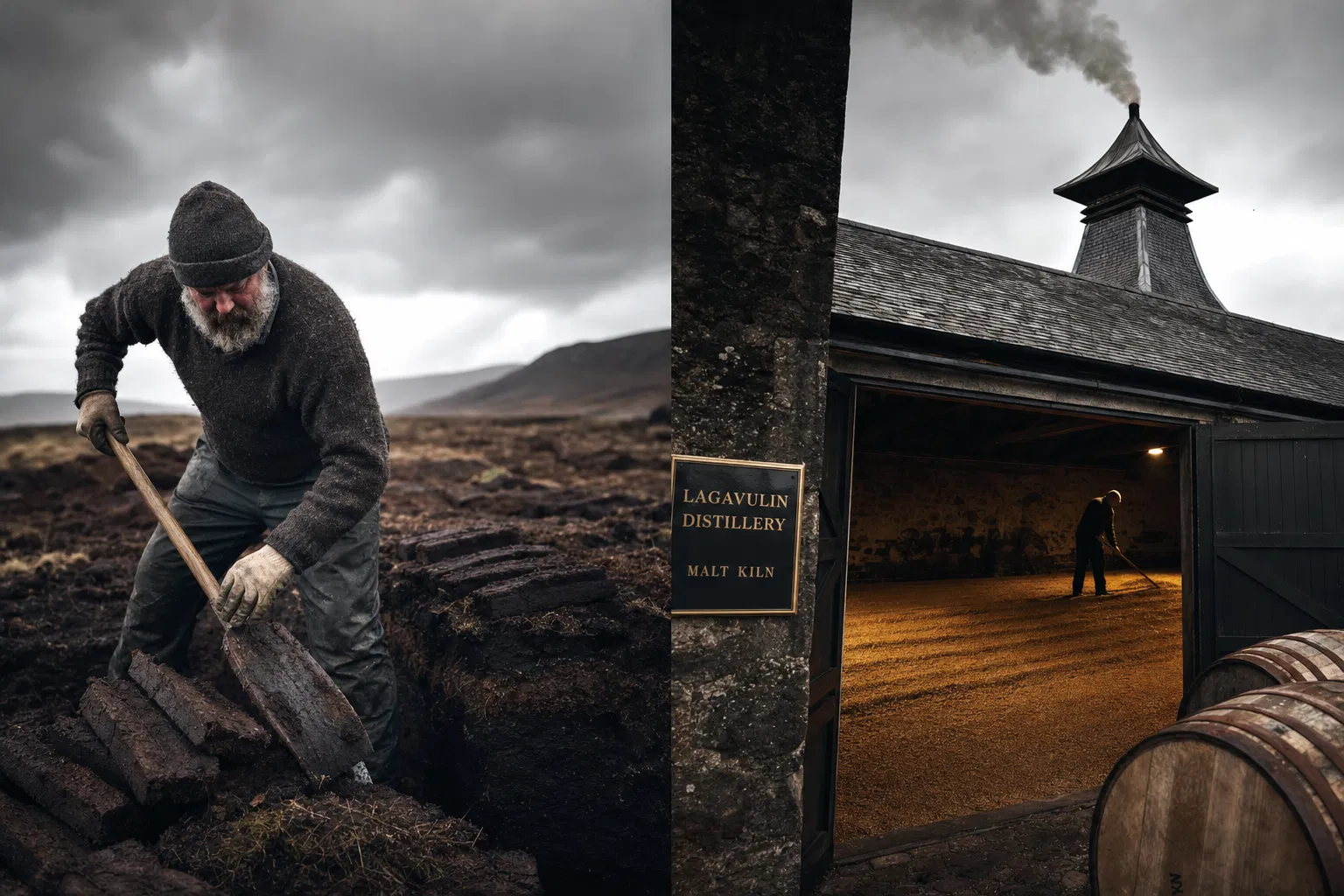
Peated whisky is one of the most misunderstood things in the drinks world. People hear "smoky" and assume it is an acquired taste, something for experts. That is not true. Peat is simply a flavour. Like oak, or sherry, or sea salt. Once you understand where it comes from and how it works, the whole thing makes sense.
This guide covers everything. What peat is, how it gets into whisky, what PPM means, which regions produce the most peated whisky, and which bottles to start with if you are new to it.
What Is Peat?
Peat is partially decomposed organic matter. Specifically, it is thousands of years of compressed plant material - heather, sphagnum moss, sedge grass, roots - that has accumulated in waterlogged ground over millennia. In Scotland, peat bogs cover roughly 23% of the land area. They are most concentrated in the Highlands (including the islands) and especially on Islay.
Peat forms at a rate of about 1mm per year. A peat bog that is 3 metres deep is approximately 3,000 years old. When you burn Islay peat to dry barley for whisky, you are burning something that was growing when the Romans were building Hadrian's Wall.
That age matters. The organic compounds in ancient peat - particularly phenols - are what give peated whisky its distinctive smoky, medicinal, earthy character.
How Does Peat Get Into Whisky?
The process is specific to malted barley. Here is the sequence:
Barley is soaked in water to begin germination. As the grain germinates, it converts starches into fermentable sugars. At a precise point in germination, the maltster needs to stop the process by drying the barley. Traditionally, this was done in a kiln. In Scotland, many distilleries historically burned peat in those kilns because it was the most abundant fuel available.
When peat burns, it produces smoke containing phenolic compounds. Those phenols are absorbed by the wet barley as it dries. The longer the barley is exposed to peat smoke, the more phenols it absorbs, and the more heavily peated the final whisky will be.
Not all distilleries malt their own barley anymore. Most buy it from commercial maltsters like Port Ellen Maltings on Islay or Simpsons Malt in the Borders. When ordering malt, distilleries specify the peat level they want. That specification is measured in PPM.
What Does PPM Mean in Whisky?
PPM stands for parts per million. In the context of whisky, it measures the concentration of phenolic compounds in the malted barley. The higher the PPM, the more heavily peated the malt, and the smokier the resulting whisky will be.
Here is a rough guide to PPM levels and what they mean in practice:
| PPM Level | Character | Example Distilleries |
|---|---|---|
| 0-5 PPM | Unpeated or lightly peated | Glenlivet, Glenfiddich, Auchentoshan |
| 5-15 PPM | Subtly smoky | Highland Park (12 PPM), Springbank (15 PPM) |
| 15-30 PPM | Noticeably smoky | Talisker (18-20 PPM), Benromach (12 PPM) |
| 30-50 PPM | Heavily peated | Caol Ila (35 PPM), Bowmore (25 PPM) |
| 50+ PPM | Intensely peated | Ardbeg (55 PPM), Laphroaig (40-45 PPM), Octomore (80-309 PPM) |
One important note: PPM in the malt does not directly translate to PPM in the finished whisky. Phenols are lost during fermentation, distillation, and maturation. A malt peated to 50 PPM might produce a whisky with 20-25 PPM in the glass. Bruichladdich's Octomore, the most heavily peated whisky in production, uses malt at over 300 PPM but the finished spirit is considerably lower.
Where Does Peated Whisky Come From?
Peat is not exclusive to one region, but some areas are far more associated with it than others.
Islay is the spiritual home of peated whisky. The island has 11 distilleries, most of which produce heavily peated single malts. Ardbeg, Laphroaig, Lagavulin, Bowmore, Caol Ila, and Kilchoman are all Islay distilleries. The peat on Islay is particularly rich in phenols because of the island's coastal location and the high concentration of seaweed in the ancient bog material. This gives Islay peat smoke a distinctive medicinal, iodine-like quality that you do not find in mainland peat. Read our complete guide to planning an Islay whisky pilgrimage for everything you need to know about visiting.
The Highland islands produce varied peat character. Highland Park on Orkney uses locally cut Orkney peat, which produces a lighter, more heathery smoke than Islay. Talisker on Skye is moderately peated with a more peppery, coastal character. Both are officially part of the Highlands region. Highland Park is one of the best entry points into peated whisky because the smoke is integrated rather than dominant.
The Highlands have several peated producers. Ardmore in Aberdeenshire is one of the most heavily peated mainland distilleries. Dalmore and Edradour produce occasional peated expressions. The new Struie Distillery in Sutherland, opening in late 2026, has announced plans to use locally cut peat from the surrounding moorland.
Campbeltown has Springbank, which produces a lightly peated expression alongside its unpeated Hazelburn. Longrow, also made at Springbank, is heavily peated at around 55 PPM.
Speyside is predominantly unpeated, but there are exceptions. BenRiach produces peated expressions. Benromach uses a small amount of peat. The Balvenie has released peated limited editions.
What Does Peated Whisky Taste Like?
The flavour of peat in whisky is not simply "smoke." It is a complex combination of compounds that interact with the other flavours in the spirit. Broadly, peated whisky can taste like:
Campfire smoke, bonfire ash, and charcoal. Medicinal notes: TCP, iodine, antiseptic. Seaweed, brine, and coastal salt. Tar, rubber, and engine oil at higher PPM levels. Earthy notes: wet soil, forest floor, mushroom. Sweet smoke: bacon, smoked meat, barbecue.
The specific character depends on the type of peat used, the PPM level, the distillation style, and the cask maturation. Ardbeg at 55 PPM tastes very different from Highland Park at 12 PPM, even though both are "peated."
How to Start Drinking Peated Whisky
The biggest mistake beginners make is starting with the most heavily peated whisky available. Jumping straight to Ardbeg Supernova or Octomore 14.1 is like starting your wine journey with a 16% Amarone. It is not wrong, but it is not the easiest introduction.
A better approach is to start in the middle and work outward.
Start with Highland Park 12 (12 PPM). It is the most approachable peated whisky in the world. The smoke is present but balanced with heather honey, vanilla, and dried fruit from the sherry cask maturation. Most people who claim they do not like peated whisky enjoy Highland Park.
Move to Talisker 10 (18-20 PPM). More smoke, more coastal character, a distinctive black pepper finish. Still very approachable. One of the best value single malts available.
Try Bowmore 12 (25 PPM). Islay peat, but gentler than the big three. Good balance of smoke, fruit, and sea salt.
Then try Caol Ila 12 (35 PPM). This is where Islay peat starts to show its full character. Oily, medicinal, smoky, with citrus underneath.
If you enjoy Caol Ila, Laphroaig 10 and Ardbeg 10 are the natural next steps. Both are around 40-55 PPM and represent the classic heavily peated Islay style. If you want to visit these distilleries in person, read our guide to what is cask strength whisky to understand how to taste at full strength on a distillery tour.
Peated vs Unpeated: Is One Better?
No. This is a matter of personal preference, not quality. Some of the world's most celebrated whiskies are completely unpeated: The Macallan, Glenfarclas, Springbank's Hazelburn. Some of the world's most celebrated whiskies are heavily peated: Ardbeg Uigeadail, Laphroaig 10 Cask Strength, Octomore.
The best approach is to drink both and decide what you enjoy. Many whisky drinkers love both styles and choose between them based on mood, season, and occasion. A heavily peated Islay dram on a cold winter evening is a different experience from a light, floral Speyside on a summer afternoon. Both are valid.
Frequently Asked Questions
What is peated whisky? Peated whisky is Scotch whisky made from barley that has been dried over burning peat during the malting process. The peat smoke infuses the barley with phenolic compounds, which carry through distillation and maturation to give the finished whisky its characteristic smoky, earthy, and sometimes medicinal flavour.
What does PPM mean in whisky? PPM stands for parts per million and measures the concentration of phenolic compounds in malted barley. It is the standard way distilleries specify how heavily peated their malt is. Higher PPM means more smoke. Lightly peated malts are typically 5-15 PPM. Heavily peated malts like Ardbeg are 50-55 PPM. Bruichladdich's Octomore uses malt at over 300 PPM.
Is peated whisky the same as smoky whisky? Essentially yes, but the terms are not identical. Peated whisky gets its smokiness from peat. Some whiskies can have smoky notes from heavily charred casks or other production methods without being peated. In practice, when people say "smoky whisky" they almost always mean peated whisky.
Which Scotch whisky regions produce the most peated whisky? Islay is the most famous region for peated whisky, home to Ardbeg, Laphroaig, Lagavulin, Bowmore, Caol Ila, and Kilchoman. The Highlands region also produces notable peated whiskies, particularly Highland Park on Orkney and Talisker on Skye - both island distilleries that fall under the official Highlands designation. The Highlands mainland has several peated producers including Ardmore and Clynelish. Speyside is predominantly unpeated.
What is the best peated whisky for beginners? Highland Park 12 is widely considered the best entry point into peated whisky. At 12 PPM, the smoke is present but balanced with heather honey, vanilla, and dried fruit. Talisker 10 is another excellent starting point with a more coastal, peppery character. Both are widely available and reasonably priced.
Why does Islay whisky taste medicinal? The medicinal, iodine-like character in Islay whiskies comes from the specific phenolic compounds in Islay peat. Islay's peat bogs contain high concentrations of seaweed and coastal plant material that accumulated over thousands of years. When burned, this peat produces a smoke rich in cresols and guaiacol, which are the compounds responsible for the antiseptic, TCP-like notes in whiskies like Laphroaig and Ardbeg.
Can you add peat to whisky after distillation? No. Peat character in whisky comes entirely from the malting process. Once the barley is malted and the spirit is distilled, the peat level is fixed. You cannot add peat flavour to a finished whisky. Some producers use heavily peated malt for specific expressions and unpeated malt for others, producing entirely different flavour profiles from the same distillery.