
Cask-It Journal
The Whisky Job Most Visitors Miss: Turning Barley by Hand
Floor malting prepares barley for whisky. Discover why it is turned by hand, what Laphroaig and Springbank do, and what to ask before booking a tour.
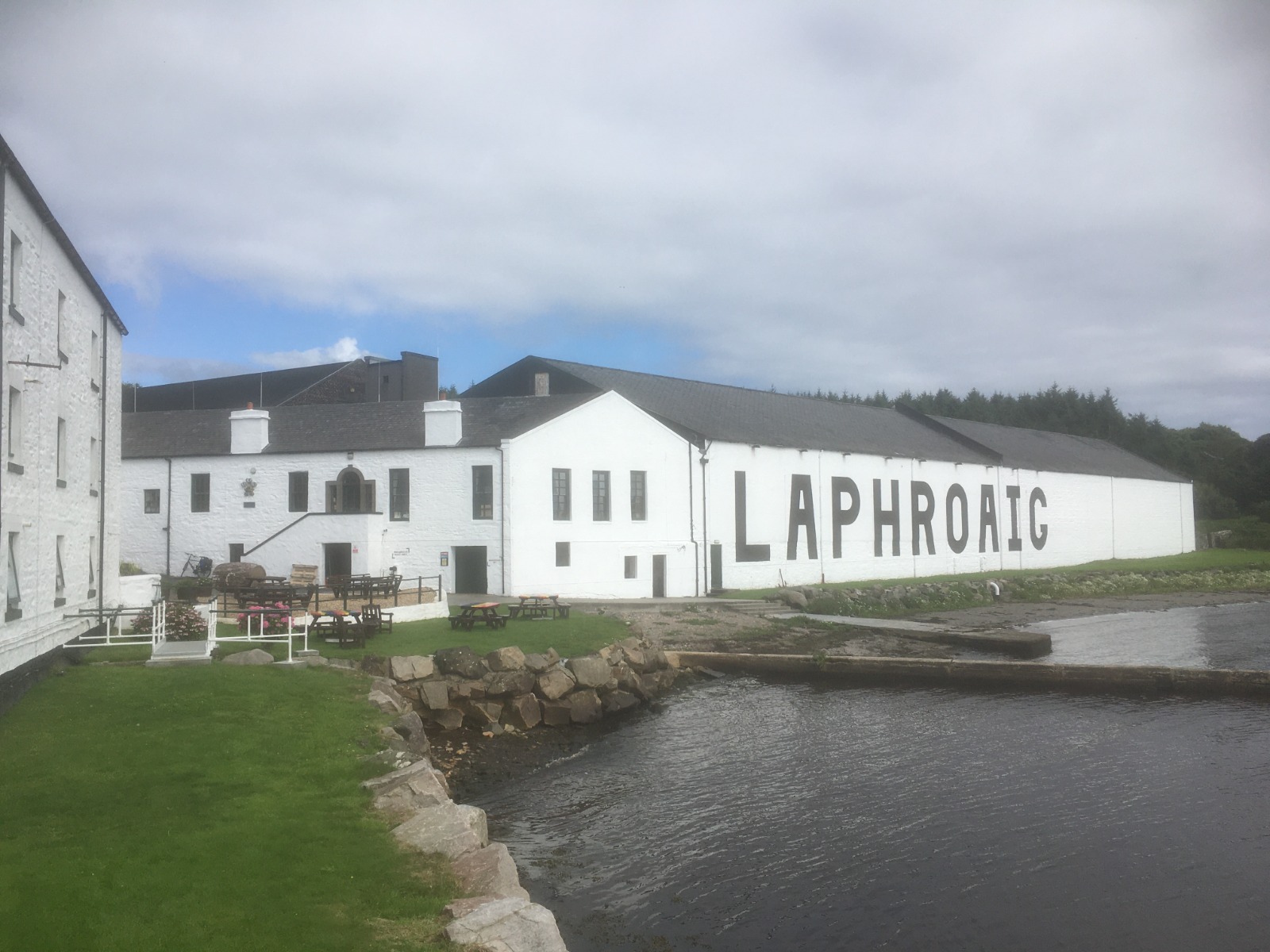
Laphroaig Distillery on Islay. The photograph shows the distillery exterior, not its malting floor.
By Stewart Hunt & Kevin White
A copper still cannot do its job until someone has prepared the barley. At a few Scottish distilleries, that preparation still includes turning a floor of germinating grain by hand.
It is not a performance put on for visitors. The barley is growing, generating heat and changing inside the grain. Someone has to manage it.
Floor malting means spreading steeped barley across a floor, allowing it to germinate under controlled conditions, then drying it in a kiln. Turning helps keep the grain bed evenly conditioned. It prepares the barley for the work that follows in the mash tun, long before there is alcohol to distil. The Maltsters' Association of Great Britain explains that sequence.
The stills and warehouses get plenty of attention. This earlier job deserves some of it. Understanding the malt floor gives you a better question to ask on a whisky tour, and a clearer idea of what a distillery's production claims mean.
It does not give you a shortcut to choosing the best bottle. That is where the story needs a little care.
The grain starts growing. The maltster decides when it stops.
Barley is a seed, not a ready-made supply of fermentable sugar. Malting uses the seed's own growth process to prepare it for brewing or distilling.
First comes steeping. The barley takes up water, and germination begins. On a traditional malting floor, the damp grain is spread out so that growth can continue under controlled conditions.
During germination, enzymes develop and modify the grain. Some help make its starch accessible. Others are needed later to convert that starch into fermentable sugars during mashing. That distinction matters: the floor is preparing the grain, not doing the entire mash tun's job. Kilchoman describes those changes in its account of traditional malting.
The grain at this stage is called green malt. The term describes its place in the process, not the colour of the whisky it will eventually make.
Leave it growing indefinitely and the plant uses the material the distiller wants. The maltster needs enough development to prepare the grain, then has to stop it. Kilning dries the green malt and halts germination, while preserving the enzymes needed for the next stage.
Think of the worker's task as controlling growth, not simply moving grain around a room. Too little development and the barley is not properly prepared. Let it continue unchecked and the growing plant consumes what the whisky-making process needs.
The industry association's explanation of malting makes that balance clear. A good malt floor depends on judgement about the grain in front of the team, not just the age of the building around it.
Why the barley has to move
Germinating barley produces heat. A bed of grain also needs air and suitable moisture. Turning is one way the maltster manages those conditions.
Kilchoman gives a particularly useful account of the work. In its published process explanation, the Islay distillery says its team spreads green malt by hand and changes the depth according to conditions.
In colder weather, a deeper bed helps retain warmth. In warmer conditions, the team spreads the grain more thinly and may open windows to help cool the room. Kilchoman says it turns the floor every four hours to maintain aeration and an even temperature.
That is Kilchoman's described routine, not a timetable for every distillery in Scotland. The important detail is the response to conditions. The team monitors the grain and adjusts its handling as the batch develops.
This is why the job involves more than a strong back. Moving barley is physical work, but deciding how to spread and manage it requires an understanding of what is happening within the grain bed.
There is a practical question here for your next visit: what tells the maltster that a batch needs attention?
That can lead to a much better explanation than asking whether an old shovel makes the whisky taste better. One question gets you into the actual work. The other starts with an assumption.
Laphroaig's maltmen work before the stills do
At Laphroaig, the official production account puts people at the centre of this stage. It describes barley steeped for two days, then moved to malting floors holding up to seven tonnes.
The distillery says the barley is turned daily and its maltmen manage the process seven days a week. Those are Laphroaig's descriptions of its own operation, not measurements we are applying to every floor malting.
Seven tonnes gives you a sense of the material involved. This is a production task, not a small tray of barley placed beside a tour display.
The distinction between having working maltings and malting every grain on site is just as important. Laphroaig retains its own floors, but that does not mean all the malt used in its whisky comes from them.
In a September 2026 account, distillery manager George Campbell describes a portion of the barley being turned by hand. Its current process page does not give a sourcing percentage. Ask the distillery how its own malt fits into production today, rather than treating an older estimate as a current specification.
A photograph of the shoreline buildings can tell you where you are. It cannot tell you the proportion of a batch that was floor malted, or whether anyone is turning barley at the moment you arrive.
If Laphroaig is part of your itinerary, start with the Cask-It Laphroaig listing, then check the operator's own experience details. The process story and the booking decision are connected, but they are not the same thing.
Springbank shows why the wording matters
Springbank provides a different production model. The Campbeltown distillery says it malts its own barley using traditional floors, spreading the grain in a six-inch layer and turning it regularly.
Its visitor information also states that it completes 100% of its whisky-making process on site. Those are Springbank's own process and visitor claims, supported by its tour description.
That gives you a meaningful comparison with a distillery which retains floor maltings for part of its malt supply. Both can have working malt floors. Their sourcing and production arrangements can still differ.
The useful question is not simply whether a distillery is traditional. Ask which stages it carries out itself and what those stages contribute to its production.
Malting on site also does not, by itself, tell you where the barley was grown. Preparing the grain and growing it are separate activities. If farm provenance matters to you, ask about it separately.
You do not need to turn a tour into an examination. A clear question gives a guide something specific to explain. It also helps you separate an exact production statement from a broad impression created by a building, photograph or familiar phrase.
The Cask-It Springbank listing is a starting point for the place. For the wider trip, use our Campbeltown whisky guide rather than assuming one production feature should decide your whole itinerary.
A hand-turned floor is not a quality certificate
Floor malting is not a legal requirement for Scotch whisky.
The Scotch Whisky Regulations require malted barley as part of Scotch production. Single Malt Scotch Whisky must be made from water and malted barley at one distillery, by batch distillation in pot stills. The rules do not require hand turning, a traditional floor or on-site maltings.
A distillery can therefore use malt supplied by a commercial maltster without that arrangement making its single malt less legally authentic.
There are sound reasons for commercial malting. The Maltsters' Association describes how production developed from labour-intensive floors to systems capable of handling far more malt per worker. Its comparison of old and new methods explains the efficiency of mechanisation.
That history is not evidence that modern malt is inferior. Nor does keeping a floor prove that the finished whisky will be better than another bottle.
A production choice can be interesting without becoming a ranking system. If a brand asks you to value its in-house malting, find out what the claim covers. Is it all its malt, part of the supply, or a particular expression?
Then judge the whisky you actually drink. Fermentation, distillation and maturation still follow. The malt floor does not replace those stages or explain a finished bottle on its own.
Our guide to reading a Scotch whisky label helps with the claims printed on the bottle. The floor adds another question behind them.
Floor malting and peat smoke are different jobs
Turning barley by hand does not make it smoky.
The floor is where germination is managed. Peat smoke can be introduced during kilning, when the barley is being dried. Kilchoman's account describes moving its green malt from the floor to the kiln, where smoke from burning peat passes through the grain.
That distinction stops two familiar production images becoming one confused claim. Hand turning describes the treatment of germinating barley. Peating describes exposure to smoke. They are connected stages at some distilleries, not interchangeable terms.
A reference to traditional maltings is therefore not a complete specification of smoke level. Ask what the producer does during kilning, rather than inferring it from the floor.
If smoke is what interests you most, our peated whisky guide explains that part of the process. Here, the point is simpler: understand the job before assigning it a flavour.
Book the experience, not a picture of the floor
A distillery can preserve working maltings without offering access to them on every visit. A tour can run without production running that day.
Springbank's tour information, checked on 20 October 2026, says tours continue during its early September to December period without production. Laphroaig's visitor information records a 2026 silent season when its experiences did not include production-area access. These are operator-specific arrangements, not a Scottish-wide schedule; Laphroaig's own page explains its access changes.
Do not use a photograph or an old review to settle what your ticket includes now.
Before paying, ask four things:
- Does the named experience include the malting floor, or only an explanation of malting?
- Is malting expected to be running on the date you want?
- If it is running, does the experience include watching the work, subject to access and safety restrictions?
- What will the operator offer if production is quiet or the route changes?
An honest answer may be that you can see the equipment but not an active batch. That can still be worthwhile. You will understand more if you arrive knowing what the room does.
Start with our guide to a first distillery tour. For help planning an itinerary, contact Hunt The Dram, Stewart's tour business. Confirm admissions, access and availability for your chosen dates before booking travel around them.
The best outcome is not collecting a photograph of every production stage. It is leaving with a clearer understanding of the people and decisions behind the whisky.
On your next tour, give the malt floor some attention. The person managing that grain is preparing the material the rest of the distillery depends on.
Frequently Asked Questions
What is floor malting in whisky?
Floor malting is a traditional way of preparing barley. After steeping, the grain is spread across a floor and allowed to germinate under controlled conditions. Turning helps manage the bed, then kilning dries the green malt and stops germination before milling and mashing. The industry association describes the sequence.
Why is barley turned by hand?
Turning helps maintain aeration and an even temperature as the barley germinates and generates heat. Kilchoman says its team turns the grain every four hours, but that is its own routine, not a universal schedule. Floor depth and handling depend on the producer's conditions.
Is floor malting required for single malt Scotch?
No. The Scotch Whisky Regulations require water and malted barley, production at one distillery and batch distillation in pot stills for Single Malt Scotch Whisky. They do not require the distillery to malt its own barley or use a floor.
Is all Laphroaig barley floor malted?
No. Its distillery manager describes a portion of the barley being turned by hand, rather than its entire supply. Laphroaig's current process page does not state a sourcing percentage. Ask the operator for current details rather than treating an older estimate as today's specification.
Does floor malting make whisky smoky?
Not by itself. Floor malting concerns germination; peat smoke is introduced during kilning when a producer uses that method. Kilchoman's production explanation describes these as separate stages. Hand turning alone does not establish the smoke level of a whisky.
Can you see a working malting floor on a distillery tour?
It depends on the distillery, the experience and the production schedule. Laphroaig and Springbank publish their own visitor arrangements, with Springbank distinguishing tours from active production. Confirm that your booking includes the floor and whether malting is expected to be running. Do not assume a tour guarantees live hand turning.
About the authors
Stewart Hunt has worked in the whisky industry for more than 30 years. Kevin White is his American brother-in-law. They explore Scottish whisky together as family, bringing trade experience and an international visitor's perspective to Cask-It.
Explore the Cask-It whisky map, choose the places that interest you, and ask about the work behind the bottle. A good whisky trip should leave you with more than a souvenir.
References
Production and visitor pages checked on 20 October 2026. Process details are attributed to the named operator. Visitor access can change after the check date.
- Maltsters' Association of Great Britain: How Malt Is Made
- Kilchoman: What Is Traditional Floor Malting? Published 9 February 2022
- Laphroaig: Our Process
- Springbank: Our Process
- Springbank: Springbank Tour and production-period information
- The Scotch Whisky Regulations 2009: Regulation 3
- Maltsters' Association of Great Britain: Old and New Production Methods
- Laphroaig: Tours and Experiences
- George Campbell, Laphroaig distillery manager: production account published 25 September 2026 as partner content